
Blog
Here's PensionBee customer, Tony, three years on
In one of our first ever customer case studies, we met 53-year-old Tony. We recently caught up with him to find out if he’s on track for a happy retirement, and learn how PensionBee is helping him achieve his goals.

In one of our first ever customer case studies three years ago, we met Tony, who was approaching retirement and living in Weston-Super-Mare with his wife. He had only recently joined PensionBee, after getting fed up with his previous ‘old-fashioned’ provider, and was starting to think more about his plans for retirement. We recently caught up with Tony to find out if he’s on track for a happy retirement, and learn how PensionBee is helping him achieve his goals. Here’s what he had to say...

PensionBee: What made PensionBee stand out when you were looking for a new provider?

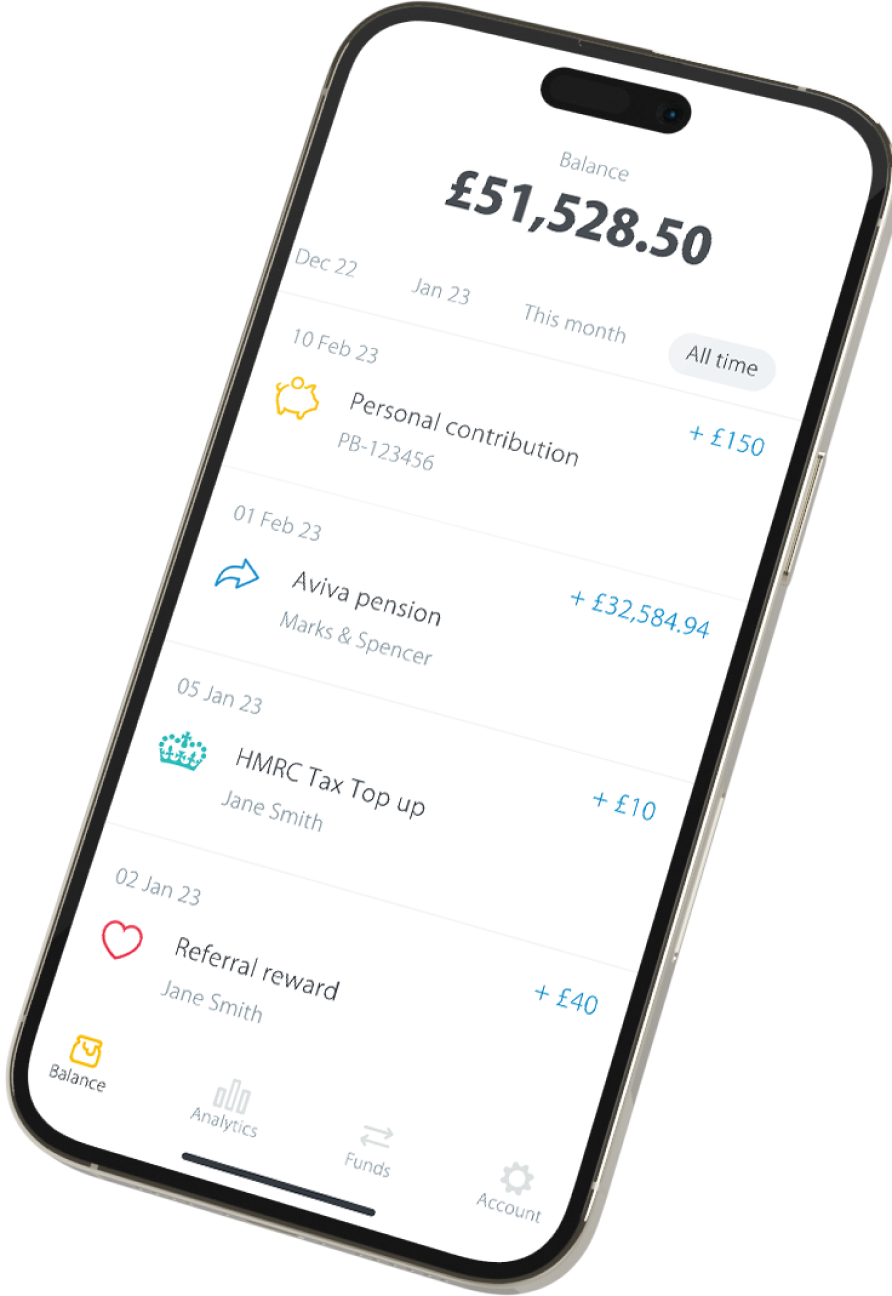
Tony: What stood out for me straight away was the fact PensionBee is a digital platform. I’d had trouble trying to transfer my pensions between providers before, and when I was looking for alternatives, I saw your advert and PensionBee immediately stood out. Corporate providers and the pensions industry as a whole seems somewhat outdated now. The idea of being able to manage my pension through my phone seemed like a no-brainer and much more convenient. Just getting updates by email was a big change!

Even when you were a smaller company, the reviews and comments I’d seen showed lots of people felt the same and addressed any concerns I had.

PensionBee: You originally spoke about wanting to use your pension to buy a new home with your wife. Have you been able to do this? If so, what has your drawdown experience with PensionBee been like?

Tony: Funnily enough I have. I recently turned 55 and took my _corporation_tax tax-free lump sum, but have left the remaining 75% invested. My wife and I moved to Northern Ireland a few years ago to be closer to her daughter. We’ve been renting here up ‘til now, but we’re just about to buy a house and I’ve used some of my pension for this.

If I had to describe the PensionBee withdrawal process in one word... I’d say ‘fluid’. Everything has just been at the touch of a button and easy to do.

In the run up to this, last year there were some market fluctuations, and this worried me a little with the purchase coming up. I knew I was invested in the Tailored Plan, but you had less risky plans I could choose. So I switched my pension to the Preserve Plan, as this gave me the reassurance that my funds were fairly stable. Being able to switch plans like this meant I could plan ahead and protect my pension, ready for when I needed the money.


PensionBee: How has PensionBee helped you become pension confident?

Tony: Everything is just easier and you’re able to do it with the touch of a button in your app. It’s helped with real-time thinking and planning for my pension and retirement plans. I used to only see my pension balance once a year, which didn’t give me much idea or understanding, even though it’s my money. But it’s now just more tangible and flexible to align with me and my needs.

It’s helped with real-time thinking and planning for my pension and retirement plans.

I can’t see myself retiring anytime soon, I think I’ll be working to at least State Pension age, similar to lots of other people I think. But I know my money is in safe hands, and I can easily consider and change my investment options as I get closer to retirement. Lots of people are nervous about digital services, but it’s a no-brainer for me, especially moving forward.

PensionBee: Looking back, what advice would you give to a younger Tony?

Tony: I suppose when I was younger and started my pension, I didn’t really have any idea about it. I knew I was paying into one with my employer, but the process was a bit of a ‘sign here’ one, You accepted you were paying into it each month but I didn’t really understand where my money was going I guess, or even give it much thought. So I think I should have looked after my money better as a whole and thought about the future more to put me in the position I wanted to be in.

PensionBee: What do you enjoy most about PensionBee?

Tony: Just the overall offering. The app and newsletters are great. It’s nice to see your profiles on Twitter and Facebook, it just isn’t something I’d expect from a provider and it’s reassuring I suppose. Being kept in the loop and having these insights into the company and the brand is brilliant.

I’ve also enjoyed growing with PensionBee as a company, I joined quite early on and have seen how far you’ve come and how the services have grown too. Even though you’ve increased in size a lot, and quickly, it’s been seamless and communicated really well throughout.

{{main-cta}}

PensionBee: How do you think the pensions industry could improve to help consumers?

Tony: It needs to be more tangible and visible to customers. It’s people’s money, so they should be able to see in real-time what’s happening, not just getting an update once a year like I used to. There needs to be a better, more fluid arrangement around the whole pension system. Nothing is combined across the industry, it feels broken almost and just takes a long time for things to happen.

Where PensionBee are working with banks and other providers to bring together services and systems for its customers, others aren’t shifting. You’re setting the example for others to follow.

PensionBee: Can you describe your experience with us in 3 words?

Tony: Second to none!

As always, we’d love to hear your feedback, so leave your comments below or get in touch with the team on Twitter!

Celebrating Pride Month at PensionBee
Promoting diversity and inclusivity is a key focus at PensionBee. Find out how we’re celebrating Pride Month and the LGBTQ+ movement as a company.

Throughout June we’re proud to be celebrating LGBTQ+ Pride Month at PensionBee, and even though we can’t join our local parade this year, there are lots of fun things we’re doing internally.

LGBTQ+ Pride is about appreciating community and diversity, remembering the progress that has been made against discrimination, and celebrating love in all its forms. Pride Month takes place every year in June, and is celebrated across the world in recognition of the LGBTQ+ movement. June was selected as the month to celebrate Pride as it was the month when the Stonewall riots took place in New York in 1969.

A year after the Stonewall riots, Mark Segal, an LGBTQ+ pioneer and witness to the riots, founded the first New York City Pride march in 1970, which has been running ever since. The first Pride festival in the UK took place in 1972 in London, with around 2,000 people in attendance. Now more than a million people turn out in London to celebrate each year.

LGBTQ+ at PensionBee

Whilst Pride Month brings visibility to the LGBTQ+ community and the issues they face in society, promoting diversity and inclusion within our team culture is a key focus at PensionBee all year round. The concept of diversity and inclusivity encompasses acceptance and respect and is central to our five company values of Love, Innovation, Honesty, Simplicity and Quality.

At PensionBee we have two Diversity Champions, Rachael and James, and are planning to expand the team in the coming weeks. Our Diversity Champions are responsible for running internal events that help us to celebrate our differences, highlight our similarities and create a safe space where important discussions can take place.

This month, Pride has provided us with an opportunity to discuss love and identity as a team, sharing experiences and increasing our knowledge about the LGBTQ+ community. James, one of our Diversity Champions, says: “It’s important for us to embrace and celebrate our diversity in all it’s forms, so it’s great that myself and Rachael can bring colleagues together to celebrate Pride.

At PensionBee, we believe that having a diverse and inclusive team allows us to better understand our diverse customer base, leading to better business decisions. Our CMO, Jasper Martens, says: “We’re stewards of our customers’ hard-earned pension money and can only do our job well if we’ve built a pension product with input from a diverse, inclusive and happy team.

Our vision is to live in a world where everyone has a happy retirement, and we believe that a happy team will lead to happy customers. That’s why happiness is at the heart of our team culture and so everyone at PensionBee has a ‘Happiness!’ Manager who they meet with every 6-8 weeks. A ‘Happiness!’ meeting focuses solely on how someone’s feeling, and what the company can do to support them. During these meetings conversations cover everything from a colleague’s work and home life to their emotional wellbeing which includes encouraging them to be their full self in all aspects of their life, particularly when it comes to their identity.

Our LGBTQ+ Bar

One event that we’ve set up during Pride Month is our LGBTQ+ Bar which opens every Friday at 5pm. In our virtual bar we have themed discussions as a team, providing an opportunity for colleagues and friends to come together to share stories and learn from each other. Each week has had a different topic of conversation, ranging from gender binary and fluidity, to how people’s experiences have changed within the workplace. While we’ve only had two sessions to date, we believe it’s initiatives like this that help make PensionBee such a fun and inclusive place to work, and speaks to the culture we’ve created where everyone feels valued and supported.

Sam, one of our Nectar Collectors, who joined our first LGBTQ+ Bar said “I have become so comfortable in my identity at work that I recently hosted a Q&A session centred on gender identity and what it means to be non-binary. I never expected to succeed in the financial industry as a queer, transgender person, until I joined PensionBee.

Pride Slack channel

We have also set up a ‘PensionBee Pride’ Slack channel which allows everyone in the company to share ideas and resources and discuss the ways we can support the LGBTQ+ community. Ari, a member of our marketing teams says: “It’s been great to hear from everyone and learn about the LGBTQ+ history, get recommendations for some podcasts to listen to and just be a part of general chat around the Pride movement.

Donut catch-ups

Another initiative we have at PensionBee to promote diversity and inclusivity is our Donut program. Two members of staff get randomly paired together and go out for a donut (getting a donut isn’t compulsory though!). This is an opportunity to get to know other members of the company who you may not usually get a chance to interact with in the office. Whilst the topic of conversations vary, lots of recent Donut’s have been centred around the issues that matter most to us from Pride Month to the Black Lives Matter movement.

At PensionBee we know that everyone is unique, from our team members through to our 280,000 registered customers, and we frequently celebrate this both internally and externally. We’re passionate about challenging the outdated pensions industry, and part of that is challenging the traditional outlook of what a workplace should look like. That’s why we think it’s important to champion diversity year-round at PensionBee, not just during Pride Month.

Listen to our CEO, Romi, talking pensions with Times Money Mentor
Our CEO, Romi Savova, recently took part in a Times Money Mentor webinar discussing pensions, planning ahead and how to simplify your finances.

On Friday 5 June our CEO, Romi, was invited to join a live webinar for Times Money Mentor, a free website from The Times designed to help you make smarter financial decisions and grow your money through how-to guides, articles, Q&As, inspirational stories and videos. The event saw Romi, Gemma Godfrey, Executive Editor of Times Money Mentor and Kate Palmer, Senior Money Reporter for The Times and The Sunday Times, discuss the importance of planning ahead for a happy retirement.

Romi discussed what coronavirus means for your pensions and investments, making the most of your pension contributions and answered viewers’ questions live with Gemma and Kate. You can watch a full recording of the webinar below. If you have any questions that weren’t covered, let us know in the comments below or get in touch with us on Twitter!

Watch Money to the Masses’ live pension Q&A with our CEO
Our CEO, Romi Savova, recently took part in a live Q&A with Money to the Masses, answering your pension related questions.

On Friday 15 May our CEO, Romi, took part in a live pensions Q&A, hosted by Money to the Masses director Damien Fahy. Money to the Masses is one of the UK’s leading independent personal finance websites, empowering consumers to take control of their finances. Romi answered reader questions about consolidating your pensions, the options you have when drawing down your pension, and how to make the most of the Money Purchase Annual Allowance (MPAA).

Here are some of the key topics Romi covered:

You can watch the full replay of the Q&A below. If you have any questions that weren’t covered, let us know in the comments below or get in touch with us on Twitter!

8 questions that can speed up your pension transfer
Whilst our aim is to make pension transfers as easy as possible, some providers are still stuck in the dark ages. Find out some of the questions you can your provider to speed your transfer up.

This article was last updated on 21/05/2025

Transferring a pension should be simple, however this isn’t always the case. At PensionBee we want to make transfers as easy as possible, but unfortunately not all providers share our vision. When we looked at pension transfer times across the industry, we found that some providers take over two months to complete a transfer.

We know that slow pension transfers can make it even harder for you to stay engaged with your retirement savings. This can potentially leave you worse off in the long run. Our Cost of Disengagement Report dives into the risks of ignoring your pension and highlights why the industry urgently needs to make saving for the future easier.

As soon as we know the details of your pension, we’ll try to do all the legwork for you. But there are a few things you can do to speed up your transfer. Here are eight questions to ask both your pension provider and yourself to make your transfer quicker.

1. What type of pension do I have?

Most workplace and personal pensions are defined contribution pensions. Transferring a defined contribution pension should be fairly straightforward. Pension transfers can be more complex if you have a defined benefit pension (also known as a ‘final salary’ pension). You may have one if you’ve worked for a large company or in the public sector. With defined benefit pensions, you’ll have to seek independent financial advice if it’s worth over £30,000, which can delay the transfer.

2. Will I lose any benefits or face charges when I transfer?

Pensions can sometimes come with guarantees, known as ‘safe-guarded benefits‘, as long as you remain in the scheme. The level of reward will vary, but it’s important to understand what you’ll lose before committing to transfer your pension. If you’re not sure, you can ask your old provider for more information.

When leaving a scheme early, you may be faced with a pension transfer charge, also known as an ‘exit fee’. The amount you’re charged can vary between providers and schemes. It’s important to understand how much you’ll be charged and the impact the charges can have on your pension pot size in the short and long-term.

At PensionBee, we charge one single annual management fee, which is taken directly from your pension pot. This will be between 0.50 and 0._rate, depending on the plan you choose. There are no hidden transfer fees, or any other kind of fees.

3. Does my new provider need to send a letter of authority?

A letter of authority (LOA) shows providers that you’ve given PensionBee permission to request pension information on your behalf. Although we’re sometimes able to request the transfer straight away, if we need any information about your pension, we’ll need to send an LOA first.

Finding out if we’ll need an LOA, and where to send it, can help to fast track your transfer. Some providers have multiple departments. So knowing the best postal or email address to use cuts out a lot of the back and forth between us and your provider.

4. Is my personal information up to date?

The personal details you’ve given PensionBee will need to match the information held by your current provider when requesting a transfer. So if you’ve moved house or got married since opening the pension, you’ll need to update this information with your old provider first.

If any details don’t match up, your provider won’t release any information about your pension. You might then need to send further paperwork and proof of identification to your provider so they can verify your identity.

5. Is my pension active?

Before transferring a pension, all personal and employer contributions will need to have finished. If the pension is still receiving contributions, these could be lost or delay the transfer. Most providers will insist on three months of no contributions before accepting a transfer request, so it’s worth checking sooner rather than later. With PensionBee you can add an active pension to your account, and as soon as you stop receiving contributions we can initiate the transfer.

6. Do I have all of my policy information?

When tracing a pension, any information you’re able to provide us at the moment of sign up is a massive help. This could be your provider’s name or a policy number. Any information you can dig out will go a long way to finding your pension and helping us complete the transfer faster.

If you need support with this, you can use the government’s Pension Tracing Service. It’s a database of pension plans that allows you to search for your employer’s name, to see if there’s a record of their pension provider.

{{main-cta}}

7. Do you accept electronic transfers?

Although paper transfer forms are less common now, some providers still use them. In fact, around 8% of the transfers we process require us to use paper forms. Not only is this bad for the environment, it slows down your transfer and carries the risk of valuable information being lost in the post too.

At PensionBee we do our part by using the electronic transfer platform Origo Options. This allows for a safer, more efficient and environmentally-friendly transfer of your pension. If your provider accepts electronic transfers, your money should be moved in no more than two weeks. However, if your old provider insists on paper transfer forms, the transfer can take up to twice as long. These delays allow your provider to earn more in fees and may even put you off transferring altogether.

8. Is there anything else I can do?

With most transfers, having your policy information and authority to act on your behalf is enough. However, some providers will have additional requirements. This is particularly common among providers who still use paper transfer forms. Finding out if you’ll need to send proof of identification or further paperwork, can ensure a smoother transfer.

Speaking to your provider both before and during the transfer means you can avoid any blockers, and ensure there aren’t any hiccups along the way.

How does consolidation work with PensionBee?

At PensionBee we’ll always keep you in the loop about your transfer and aim to make the process as simple as possible. You can sign up in just a few minutes and you’ll be assigned your very own UK-based BeeKeeper should you have any questions throughout your pension journey with us.

Risk warning

As always with investments, your capital is at risk. The value of your investment can go down as well as up, and you may get back less than you invest. This information should not be regarded as financial advice.

The PensionBee value of honesty
At PensionBee we have five company values, and the value of ‘honesty’ is at the centre of everything we do. Here’s why...

At PensionBee we have five company values: innovation, love, simplicity, quality and honesty. Earlier in the year, I wrote about innovation and love. Now I’d like to tell you about our value of honesty. ‘Honesty’ might not be a word that is generally associated with financial services. It’s an industry for which there’s a lot of mistrust, and you could say understandably so. It was really important to us, therefore, that PensionBee put the value of honesty at the centre of everything we do. We’re asking people to trust their hard-earned money with us. The money that will help them enjoy the last chapter of their life. How are we to expect our customers to trust us if we aren’t honest with them?

Being honest with each other

We’ve worked hard to build an environment in the office that encourages honesty. Our CTO, Jonathan, recently wrote a piece on our blog all about our amazing ‘Happiness!’ program (it’s one of the reasons we won a Diversity & Inclusion Champion award at the Computing Tech Marketing & Innovation Awards last month) but in a nutshell, the program consists of all employees, right up to the founders, having regular meetings with their ‘Happiness!’ manager. We’re encouraged to answer the question of whether we’re happy honestly, and it makes a lot of sense, because if things aren’t right, we want to know, so that we can make them right. Of course, we also hear the reasons that people are happy, and that can be just as helpful in showing us when we’re on the right path.

In the spirit of transparency, our CEO, Romi, holds monthly ‘CEO Sessions’ where she talks to us about aspects of the business that we might not see in our day-to-day work lives. As an employee, being kept in touch with all the important information and big decisions being made, makes a real difference to how connected to and how involved with the company you feel. We’ve recently also started a new series called ‘Ask Me Anything’, where a member of the team will host an open lunch where anyone from the company can join and ask them questions about their job or department or a specific topic.

Another regular session we run is the ‘BeeStorm’, which I talked about in my piece on our value of innovation. The ‘BeeStorm’ is intended to give the Customer Success Team a platform to tell us where improvements can be made to the processes they’re following. Encouraging this kind of feedback not only helps us to make sure we’re always improving our systems, but it also gives that team a stronger sense of ownership over the tools they’re using. And happy employees tend to make happy customers!

Being honest with our customers

Being honest with our customers is something that we care deeply about at PensionBee, and something that we encourage from others in our industry as well. For a lot of people, pensions are a product that is shrouded in mystery, and lifting the cloak on that is central to our company mission. This mission manifests itself in several ways from being transparent about the fees we charge our customers, to publishing data about how we, and others in the industry, perform when it comes to transferring pensions.

In fact, our whole service is based on the belief that transparency in pensions is what customers need and deserve. We believe that customers should always know what’s happening with their money, which is why our customers get to see how their pension’s performing, not just once a year, but every time they log into their account. We recently became the first pension provider to adopt the Simpler Annual Statement, a two-page document that gives customers the information they really need in an easy-to-digest format. For too long, pension statements (often the only insight a customer gets into their pension) have been thick wads of paper, with so much information on them, that it’s been hard for savers to find the information that matters to them.

Honesty with our customers isn’t just a one-way street though. We want our customers to be honest with us too! We actively seek feedback from our customers all the time and the responses we get are shared with the entire team in weekly updates and in our weekly ‘Show’n’Tell’ sessions, where a portion of time is assigned to hearing some of the feedback we’ve had in the previous week. We also live-feed our Trustpilot reviews into a Slack channel that the whole company has access to, so whether the feedback is good or bad, we all get to see, in real-time, what our customers are saying about us. We have an unofficial company policy to say thank you for all feedback. Often it’s nice to hear, sometimes it isn’t, but it’s always helpful, because even if we disagree with the feedback (we rarely do!), it still tells us something about how our customers feel about our service, and that is an invaluable learning.

It’s almost impossible to build a high-quality product or to offer high-quality service, without feedback, which is especially important to us, since another of our company values is quality. I’ll tell you more about that next time.

How PensionBee’s supporting vulnerable customers
Here’s how we’re supporting vulnerable customers at PensionBee...

Money has evolved dramatically in recent years. In 2019, credit card spending overtook cash payments for the first time, and during the pandemic we saw a massive shift to digital payments as many vendors refused to accept cash altogether, favouring contactless payment methods instead. As our money and financial services industry has become increasingly digitised, scammers have become highly sophisticated, often targeting our personal details over our wallets.

Research conducted by consumer champion, Boring Money, found that a third of all investors self-identified as vulnerable to financial harm. With the cost-of-living crisis continuing into 2023, more people run the risk of falling between the cracks. Our company vision’s for everyone to feel in control of their finances so they can look forward to a happy retirement. Here’s how we’re supporting vulnerable customers at PensionBee...

Identifying vulnerability in customers

As the regulator of the UK financial services industry, the Financial Conduct Authority (FCA) coaches financial companies on how to deliver good practices in business and the fair treatment of consumers. According to the FCA, it’s the duty of financial institutions to protect customers from this harm: like falling for a scam, or sliding into unaffordable debt.

In the FCA’s own words: “A vulnerable customer is someone who, due to their personal circumstances, is especially susceptible to harm, particularly when a firm is not acting with appropriate levels of care.” The responsibility isn’t for vulnerable customers to advocate for themselves. Companies must work towards spotting and supporting vulnerable customers.

There are the four categories of vulnerability the FCA advises firms to watch out for:

1. Capability

Making informed decisions about your money requires you to hold the right information.


Capability characteristics that increase financial vulnerability


Insufficient knowledge or confidence in managing finances

Limited, or non-existent, digital abilities

Poor literacy and numeracy skills

Restricted access to help and support

2. Health

Making informed decisions about your money requires you to hold the right information.

Health characteristics that increase financial vulnerability


Addiction, or compulsive behaviour

Hearing or visual impairment

Mental health, or physical disability

Severe or long-term illness

3. Life events

Making informed decisions about your money requires you to hold the right information.

Life events that increase financial vulnerability


Change in finances, like redundancy

Domestic abuse or traumatic experiences

Giving or receiving caring responsibilities

Loss through bereavement or relationship breakdown

4. Resilience

Making informed decisions about your money requires you to hold the right information.

Resilience characteristics that increase financial vulnerability


Inadequate or erratic income

Limited emotional resilience

Over-indebtedness

Restricted or lack of savings

What does being a vulnerable customer mean?

As you can see, the list of characteristics that increase your vulnerability to financial harm are extensive. In all likelihood, you may have been identified by your bank or another financial services provider as a vulnerable customer at one point in your life.

This is where the FCA’s ‘Consumer Duty‘ principles come in. The Consumer Duty advises financial firms that “consumers should receive communications they can understand, products and services that meet their needs and offer fair value, and they get the customer support they need, when they need it”. Whether you realise that you’re vulnerable or not, when you communicate with your financial provider they’ll be trained to spot these characteristics and support you to the best of their ability.

How we support our vulnerable customers at PensionBee

An empathetic customer experience

As PensionBee’s COO, I’m responsible for a range of operational activities across the business, including our Customer Success and Compliance teams. To give the best customer experience, we need an empathetic and knowledgeable in-house team. Our guiding light in all communications is our company value of love. All our customers are assigned a personal BeeKeeper to give them a friendly, human experience.

Our BeeKeepers go through in-depth training on identifying vulnerability characteristics and acting with care, as part of their onboarding training program. Our Team Leaders conduct spot checks and provide regular training to ensure our customers receive the highest level of service. If a customer’s unhappy with our service, our Compliance team investigates and aims to respond within three working days after receiving the complaint.

An inclusive product design

Our CDO, Matt Loft, oversees the development of new and existing features for our entire customer journey. He’s made it his mission to embed clear accessibility and consider vulnerability across the PensionBee mobile app and website. Every interface is carefully reviewed to ensure our product design supports all of our customers.

From workshops with screen readers to understand how visually impaired customers may receive information, to focus groups and questionnaires monitoring customer interests. Using these feedback loops and tracking customer insights, our product continually adapts to better suit the evolving needs of our growing customer base.

What if I’m a vulnerable customer?

PensionBee takes your vulnerability seriously. If you’re comfortable sharing your vulnerability characteristics with your BeeKeeper, we’ll try our best to make any reasonable adjustments for you whilst maintaining strict confidentiality. We’re committed to creating a customer-centric culture that permeates all teams: from our Software Engineers improving your app interface, to your BeeKeeper keeping you in the loop on your pension transfers.

If you’re struggling right now, and you need to talk to someone, call Samaritans on 116 123. You can speak to a volunteer from Mental Health Innovations there. They’re open 24 hours a day, 365 days a year. You can also text the word ‘SHOUT’ to 85258. You can do it entirely anonymously if that’s what you’d prefer. The first port of call for any mental health issues, big or small, should be your GP. They can connect you with your local NHS Mental Health Trust to support you with any sort of treatment you might need.

Risk warning

As always with investments, your capital is at risk. The value of your investment can go down as well as up, and you may get back less than you invest. This information should not be regarded as financial advice.

4 pension innovations that could make the dashboard obsolete before it’s even here
Is the pensions dashboard becoming less and less necessary?

I’m a huge proponent of the Pensions Dashboards, however, like most in the industry, I’m getting a bit tired of waiting for the DWP to issue something of substance.

Knowing exactly the type of gremlins that lie in providers’ pension data, I don’t think the 2019 deadline is achievable and at best we are looking at 2021 for even the best-in class providers to submit their data.

Three years is a long time and rather than go on about why the dashboard should in fact be multiple dashboards and that we don’t need full coverage on day 1 - debates which have been had ad nauseum in the industry already - I thought it may be helpful to point out a couple of developments that may make the dashboard obsolete by the time it comes into production.

Bank marketplaces

Banks and data aggregators are already offering dashboard-like functionality to consumers and the ability to see one’s pension balance next to one’s current account is hugely appealing. PensionBee’s recent integration with Starling Bank, the coolest new bank on the block, shows the power of aggregated data for consumers.

Both PensionBee and Nutmeg are also available on Bud - a provider of dashboards to banks - and we have heard more pension providers are expressing interest in joining the party.

Now of course this is slightly less appealing if you have 11 or so different pensions, but there are already initiatives underway to reduce the number of pots people accumulate in the first place...

Pension follows member

A proposal to allow consumers to choose their auto-enrolment pension is gaining momentum in the industry. Indeed, pension follows member will dramatically reduce pension pot proliferation, particularly in industries where job-hopping is fairly prominent.

We at PensionBee support pension follows member because it will encourage consumer ownership of pensions and pension outcomes. But let’s be honest - not everyone will take it up because the employer’s default would still be available, well, by default.

But fortunately, consolidation at various points in time is also becoming easier...

Transfer standards

The newly issued guidance by the Transfers and Re-registration Industry Group clearly calls for a 14-day end-to-end switching guideline and while the standard is voluntary, it does sound like a register of who is and isn’t complying will be forthcoming.

PensionBee exists to make pensions simple and as the only U.K. pension company exclusively focused on consolidation, we have been very vocal in calling for an end-to-end pension switch guarantee, so we’re delighted to have played our part in getting consumer voices heard at the table.

And switching will become much more likely once we can compare our pensions...

Value for money analysis

Data suggests that over a third of consumers switch car insurance annually. Why? Because it’s easy to compare different quotes and switching is easy. Well if transfers can be completed in 2 weeks, then what we are really missing is some value for money analysis that can help a consumer determine whether they are in the right product or not.

Propelled by the work of Chris Sier to standardise cost disclosures through the Financial Conduct Authority’s Institutional Disclosure Working Group, Henry Tapper is due to launch a pension comparison tool that I ultimately expect will be adopted by the likes of MoneySuperMarket and the other aggregators - where some 13 million consumers shop for financial products annually.

So if we can already see our pensions data online and we are less and less likely to accumulate pensions as time progresses, what will be the point of the Pensions Dashboards?

As the private sector steps up, the Pensions Dashboards is becoming less and less necessary

I suspect the Pensions Dashboards will ultimately propel all of the movements and technologies described above but let’s be clear: as the private sector steps up, the pensions dashboard is becoming less and less necessary to solve the pensions mess in the country. So hurry up, Mr. Opperman, before we all beat you to it.

What should the government do about the Pensions Dashboards?
Our CEO tells us what she we would do if she were in the DWP's shoes...

I recently had the pleasure of presenting at the Department of Work and Pensions (DWP) annual “Summer School”. Beyond talking about social media and pension engagement, it seems my blog on pension innovations that could make the dashboard irrelevant was quite popular. Of course we got onto talking about options for the dashboard and what would I do if I were in the DWP’s shoes. So I thought I would spell these views out publicly so that others can accept or quibble!

Please don’t build a dashboard

Just because not everyone can supply data on Day 1, does not mean that we should delay or abandon the project

There have been some desperate cries from various media outlets for the government not to “abandon” building a dashboard. Just to be clear: as far as I am aware, nobody has ever asked the government to build any sort of dashboard. The private sector is fully capable of building the technology to support people to see their pensions in one place. PensionBee is already facilitating live pension balances to our mutual Starling Bank customers and various other aggregators are rapidly following suit.

The government is poorly equipped and incentivised to maintain dashboard technology that the private sector is desperate to support. So what should the government help with?

Decide on the priorities

The objectives for the Pensions Dashboards are lofty and they include the following:

  • Reconcile people with lost pensions as much as possible (especially those who switch jobs frequently and have been auto-enrolled)
  • Help people see all their pensions in one place so they can plan for retirement
  • Create engagement around pension savings

Achieving all of the objectives is not possible because not all providers will be able to supply clean data on Day 1. But just because not everyone can supply data on Day 1, does not mean that we should delay or abandon the project. Rather, we need to achieve our priorities in order.

The obvious solution is to start with the first objective to reconcile people with “lost” pensions. These people will happily log in periodically to “find” their “lost” pensions as more providers join because it is a bit like finding free money. They do not need to see everything at once.

Decide who needs to supply data and when based on the priorities

To start with the first objective, the government should compel those who can give data to do so. These will typically be the newer auto-enrolment providers and their data will help reconcile job-switchers with their “lost” pensions. I don’t believe that DB pensions or the state pension need to be part of the launch phase – DB pensions and the State Pension are rarely if ever “lost”. In order to achieve the second objective, to help people see all their pensions in one place, the DWP should then give deadlines to those who must clean. Cleaning should not really be negotiable. Under GDPR requirements, all providers have an obligation to maintain clean customer data. It is not the customer’s problem if pension provider data is (horrifyingly) written down in excel spreadsheets. And finally, once the data is there, we can talk about ways to create engagement and set some parameters for the private sector.

In sum, I would be in favour of splitting providers into “groups”, starting with those who can supply data doing so in 2020 (let’s be ambitious, but also realistic) and staging the rest of the providers over 3 years. Providers can voluntarily choose which group they belong to, bearing in mind their choice reflects their priority to maintaining clean customer data.

Set the groundwork for the data standards, but don’t go reinventing (or in fact building) the wheel

At the end of the day pension data belongs to the consumer and the consumer should have the right to share their pension data with whomever they wish, subject to that person being responsible. This is the principle behind open banking that has required the UK’s major banks to make our data freely available to companies that hold the right permissions with the Financial Conduct Authority. To progress the technical standards behind open banking, the regulators created the Open Banking Implementation Entity (funded by the UK’s nine largest banks) to design the API specifications, security and messaging standards and guidelines for the participants. There is no reason that a similar body cannot exist for pensions.

So that’s it in my opinion. I don’t mean to trivialise what is clearly an important matter for consumers, but I do think it’s important to see the forest through the trees. So here’s to the DWP’s Feasibility Study – let’s hope it’s worth the wait.

We're celebrating 1,000 Trustpilot reviews!
Our CEO, Romi, discusses PensionBee achieving 1,000 Trustpilot reviews, and why this is an important milestone well worth celebrating.

Today I am honoured to let you know that we have achieved 1,000 Trustpilot reviews, cementing our 5-star average. Of all the milestones to celebrate, I want you to know why this one is so important to us here at PensionBee.

The fundamental thing that makes PensionBee different from all other pension providers is how much we care about our customers and giving you a fantastic experience. In 2014 we set out on a journey to help the U.K. look forward to a happy retirement by making pensions simple. To achieve this goal, we have enshrined the value of customer love in everything we do.

We don’t believe in taking shortcuts when it comes to customer service and that is why every single customer receives a personal BeeKeeper to guide them on their pension journey. However, you should know that every employee at PensionBee serves our customers in some way, and I have greatly enjoyed speaking to many of you on the phone and on livechat.

I would like to share what happens when we receive a review from you. Our entire company is immediately notified and your BeeKeeper is acknowledged. If the review is positive, great. However, if the review is negative or includes areas for improvement, our top priority is to respond, assess what went wrong and fix it. While there is little we can do about market fluctuations, rest assured that everything within our control is examined and addressed with immediate urgency.

We manage about half a billion pounds in pensions on your behalf and no doubt our biggest challenge will be to continue growing PensionBee while maintaining your satisfaction. We know there is a long way to go and lots more we can do to keep you happy. In addition to Trustpilot, we proactively seek your feedback on a weekly basis and we use your insights to inform everything from our internal processes to our future product releases.

Thank you for taking the time to tell us what you think. We are delighted to serve you!

Our current view on Pensions Dashboards
Our CEO, Romi, outlines the PensionBee position on Pensions Dashboards, ahead of joining The Pensions Dashboard Industry Delivery Group.

I’m happy to announce that today I will be joining The Pensions Dashboard Industry Delivery Group, giving consumers a louder voice in the creation of Pensions Dashboards. We’re looking forward to bringing our years of experience to the table, and we’ll be doing all we can to ensure the project is delivered successfully for the benefit of consumers.

At their foundation, our view is that the full vision of Pensions Dashboards must be delivered by two concurrent movements:

  • The creation of the Money and Pension Service’s “pension finder service”, which will effectively replace the government’s current pension finder service by providing more accurate and timely information to consumers
  • The furthering of the UK’s world-leading Open Finance system, which will extend Open Banking-like protocols to pensions, enabling consumers to share their data with trusted third-parties

Let’s start by running through some of our thoughts on the “pension finder service”.

We must deliver a pension finder service that’s fit for purpose

Above all else we believe that the pension finder service must be delivered swiftly and incrementally. Consumers cannot be kept waiting for decades for a “big bang” approach.

Sensible increments would include “year from” staging; for example all pensions established on or after 1 January, 2012 should be part of the first wave of compulsion. This rule achieves the benefit of incorporating the largest master trusts and other new providers who are most technologically prepared.

The State Pension should be included in the first wave

In addition, this approach also has the benefit of consumer familiarity, as consumers will be most able to recognise potential data gaps (rather than staging by pension scheme size, which would require consumers to be familiar with pension provider market shares).

As a result of staged compulsion, the State Pension should be included in the first wave. This should ensure that the majority of consumers have something positive to see on their first visit, and are encouraged to return. We also believe there should be no exemptions from compulsion, as the rules of exemption will be difficult for consumers to understand.

On a more technical level, the pension finder service should collect email addresses. Emails could then notify customers who opt-in to periodically check new data additions, so that they stay engaged.

Pensions Dashboards logins must use a digital ID standard

Elsewhere, Pensions Dashboards logins must use a digital ID standard that enables more than 8_personal_allowance_rate of the eligible population to log in on a first attempt. The government is currently consulting on a digital ID framework which must be adopted for the pension finder service. It would be wise for the Steering Group to develop a “Plan B” consisting of key authentication factors - name, address, national insurance number, date of birth - should the Digital ID not be available in time for a public launch.

Finally, the pension finder service should give the minimum useful information, so as not to delay the launch. This must include:

  • A policy number
  • Year-end balances
  • Charges in %
  • Charges in £ for the last 12 months
  • A link to the provider’s website where the consumer can obtain more information

This information, and in particular charges, are already consistent with the information pension providers are required to provide under current regulations.

Ultimately, the successful implementation of the pension finder is crucial to the success of any dashboard. However, it’s essential not to neglect the importance of Open Finance and data sharing.

Why Open Finance and data sharing have a big role to play

While the Pensions Dashboards will help consumers find their lost pensions, the vast majority of pensions are not lost and consumers need to be able to share their pension data safely and effectively, in predictable ways.

Many consumers are required to post their valuable financial information

As things stand, many consumers are required to post their valuable financial information around the country using “letters of authority” and “wet signatures”. These practices are inconsistent with modern behaviour and also potentially with the law. While the Money and Pension Service’s pension finder service is being enabled, so too will protocols for safe and efficient pension data sharing.

Thankfully, it is expected that Open Pensions (led by the Financial Conduct Authority’s work on Open Finance), and the pension finder service will converge over the next few years. We will support all efforts to align Open Pensions as closely as possible to Open Banking, so as to give consumers a consistent experience across financial products.

We will support all efforts to align Open Pensions as closely as possible to Open Banking

Consumers will wish to share data from the pension finder service directly from the major providers, and they should be allowed to share this data with trusted third-parties. From this lens, it is appropriate not to think of pension dashboards per se, but to think of pension dashboard services that are facilitated through data sharing.

Indeed, one does not necessarily need to display all of the data from the pension finder service in order to help a consumer and it is quite possible that data from the pension finder service will be used selectively.

For instance, if a comparison service for defined contribution pensions exists, it will not necessarily need to show all of the available information on a consumer’s public sector pensions. It is therefore important that the appropriate principles-based regulation exists, to ensure pension dashboard services are mitigating potential consumer detriment - without stifling the innovation consumers need to plan for retirement.

In our opinion, it is crucial that the major pension providers are required to electronically provide detailed pension information about their customers to trusted third-parties (as the pension finder service will only provide a minimal amount of information).

This information should include:

  • Balances
  • Charges in £ and %
  • Net contribution histories
  • Tax top up histories
  • Exit fees
  • Current Sedol / ISIN / Other investment codes
  • 5 year past performance of the relevant investment

While the ICO guidance and GDPR laws must be adhered to at all times, trusted third-parties must also be authorised and regulated to access this information by the Financial Conduct Authority, using existing permissions that enable access to banking data but delineating pensions as a separate product. It would be inconsistent with the current regulatory framework to require authorisation of banking information providers, but not of pension information providers. Stronger permissioning will also facilitate data storage, a requirement for the development of consumer-oriented services and indeed a requirement for many regulated activities.

Stronger permissioning will also facilitate data storage

Controlled testing of commercial dashboards will be essential, but it is equally important that dashboards and dashboard-associated services are allowed to evolve with consumer demand for assistance. Ultimately, if the pension industry can modernise our data sharing practices and the government can provide a pension finder that’s fit for purpose, we will have the foundations in place to deliver the full vision of the Pensions Dashboard.

The Pensions Dashboards ecosystem: protecting consumers and enabling innovation
Our CEO, Romi, outlines her thoughts on The Pensions Dashboards, and how it can deliver the safe and innovative ecosystem consumers deserve.

Pensions Dashboards have the potential to revolutionise consumers’ engagement with their pensions. By making clear where the £20 billion of lost pensions are, consumers will be empowered to take control of their money and better prepared to plan for retirement using convenient forecasting tools. Through open data, consumers will be able to integrate today’s money with tomorrow’s money, resulting in higher contributions and better retirement outcomes.

However, consumer innovation must be delivered responsibly and Pensions Dashboards will only thrive in an environment that provides the appropriate protection for consumers.

Following today’s publication of the Pension Schemes Bill, below are my thoughts on how to deliver the safe and innovative ecosystem consumers deserve.

Enable safe data sharing

The government has been clear that multiple Pensions Dashboards services will exist from the outset and therefore safe data sharing must be enabled from day one. The consumer owns their data and they will wish to share it. It is important that sharing is only permissible with trusted, authorised and regulated third parties. It is a myth that delaying so-called “commercial dashboards” will prevent the free flow of data. On the contrary, if we fail to consider, define and communicate data sharing protocols and expectations with consumers, any scammer will be legally allowed to scrape the data. Scammers thrive in the grey zone.

Appropriate authorisation

The Financial Conduct Authority has been tasked with defining the appropriate authorisation mechanisms. It would be a stark anomaly and an unprecedented regulatory arbitrage to require specific regulations to access banking data through Open Banking while allowing any form of regulated entity to access pension data. This loophole should not be allowed to exist and the Financial Conduct Authority should begin to engage on the matter with immediate urgency so as not to delay the launch of public dashboards.

Sufficient information

Appropriate information must be displayed on the dashboards to allow consumers to begin the process of pension planning. Our view is that the same information available on Simpler Annual Statements, with the addition of charges displayed in £ and %, will help consumers make the right decisions. Transparency is key and there should be no quibbles from the incumbents, as there are already regulations requiring them to make this information available.

Stronger reforms of non-workplace pensions

After seeing their pension information, consumers will wish to take control of their money and consolidation may well be an appropriate choice. Pensions Dashboards can and should exist in a world of well-governed defaults. The Financial Conduct Authority is currently consulting on defaults in non-workplace pensions. Mandating a single, well-governed, charge-capped default for each and every pension provider will help prevent and mitigate the very reasonable concern that consumers will exchange good workplace pensions for inferior and expensive products.

PensionBee writes to the Director of Corporate Governance at Legal & General
Our CEO, Romi Savova, writes an open letter to Sacha Sadan, Director of Corporate Governance at Legal & General.

Dear Sacha,

Thank you for taking the time to meet regarding Shell, a key holding in the Future World Plan, of which PensionBee, through its customers, represents one of the largest holdings.

We were delighted to onboard the Future World Plan in 2017, because as a company, we believe it is important to change the world by making your voice heard. I believe we can achieve so much more through activism than through pure divestment. I know that Legal & General also believes in the purpose of the plan to build a better future world.

The strength of the Future World Plan is through its engagement and through pressure to change the behaviour of major global companies, including the world’s biggest polluters. Consequently, we have celebrated in the successes of the plan, including Shell’s commitment to link carbon emissions to executive pay in 2018 and the divestment of ExxonMobil when it failed to engage with investors in June 2019.

However, I have recently become concerned about the ongoing inclusion of Shell in the top 10 holdings of the Future World Plan. If there is one thing I have learned over the last five years, it is to always listen to our customers and their concerns. While Shell has made some progress in the right direction, our customers are asking us on a daily basis whether Shell’s business model is sufficiently transitioning to a low carbon economy to warrant continued inclusion in this responsible investment plan.

The Guardian has recently reported that Shell is independently forecast to increase its carbon emissions by 38% by 2030, by increasing its crude oil production by more than half and its gas production by over a quarter. At the same time, it is widely understood that major oil companies must cut their carbon emissions by 35% in order to achieve the goals of the Paris Agreement. This is a puzzling situation and one that is compounded by Shell’s refusal to disclose its future production schedule and whether it is indeed on track to meet its global obligations.

I would be grateful if you could share your insights on this matter and whether you continue to believe that Shell will do the right thing by our planet. I would also be grateful if you could outline the tangible next steps we and our customers should expect from Shell that will demonstrate its commitment to the Paris Agreement and specifically to reducing carbon emissions as required.

In the interest of making sure our customers know their voice is being heard, I will publish this letter on Friday.

Kind regards,

Romi Savova

Chief Executive Officer of PensionBee

Celebrating 5 years of PensionBee
Our CEO, Romi, and our CTO, Jonathan, look back over everything that's happened at PensionBee over the past five years.

What a whirlwind! It’s been five years this week since PensionBee was born. It’s fair to say that this milestone has crept up on us rather quickly. We’ve enjoyed taking a look back through the PensionBee archives to see what’s been going on.

First and foremost, we have to thank our fabulous customers - who’ve been signing up in their thousands - and who trust us to make pensions simple and engaging. We’ve frequently chosen to feature our customers in our adverts, and it’s been great to bring their stories to a wider audience in the TV ads we launched this year. For those of you who haven’t seen our TV ads yet, you can hear from Tony and Lucille in these YouTube videos.

First and foremost, we have to thank our fabulous customers

Another huge thank you has to go to the equally wonderful PensionBee team. Helping our customers look forward to a happy retirement is the motivation to get up every day and do what they do, and we think they’ve been doing a damn fine job of it. We’re so proud of the team (there’s over 100 of us now!), and the incredible diversity they bring to PensionBee. Our team have a raft of secret lives, from Glastonbury rockstar (Matt, our Head of Design), to seafood entrepreneur (Nasrin, from our A-team), to political activist (Bat, in our tech team) and many more. We’ve built a lovely supportive culture based around our values that binds us together. Our Head of Operations, Tess, has been writing a blog series this year diving into each of the values and what it means to us.

2019 has been a big year in itself - we’ve launched three new pension plans, broke through _higher_rate_personal_savings_allowance million of assets under administration, and earned our 1,000th Trustpilot review, not to mention picking up a bevvy of awards. We’ve also made a whole raft of product improvements, including a new retirement planner, speeding up your tax top ups and withdrawals, and we became the first pension provider to adopt the new Simpler Annual Statement.

A great moment was when Romi put her headset on and became a BeeKeeper for a week in January.

Our CEO Romi answering a phone

This not only helped out the team during a busy time, but was a great experience talking to customers about their issues and learning how the PensionBee front line has changed.

We’ve also been absolutely delighted to welcome Michelle Cracknell onto our board of directors. Michelle joins us from The Pensions Advisory Service, and brings a wealth of experience understanding the problems savers face when it comes to their pensions.

An industry in transition

Looking back to when we started in 2014, it feels almost like a different time in the pensions industry. For one thing, the Pension Freedoms that allowed you to take money out of a pension from the age of 55 were not due to become active until the following April. Auto-Enrolment into workplace pensions had started, but had not reached past the larger employers. 2015 was arguably when UK savers had several reasons for taking an interest in their pensions for the first time in a long time.

The transfer process was often long, arduous and paper-based

This is when the problems in exerting consumer choice in pensions came to the fore: complex, expensive products, with high (and often hidden) management fees; and when you did find a product you liked, the transfer process was often long, arduous and paper-based. It’s no surprise that PensionBee’s first service - finding and combining your old pensions into a new, online plan - remains our most popular.

So what’s changed in that picture in five years? The pensions industry is changing, partly driven by the regulators mandating changes that help consumers, and partly by consumers moving to better products. The Pensions Dashboard is one of the major headlines, promising to centralise information about all your pension savings. We think that will make a huge difference, but it’s still a few years away (Romi’s recent appointment to the Steering Group will surely help…).

In the meantime, 2018’s Open Banking has welcomed pensions under its wider Open Finance umbrella, and the introduction of GDPR in the same year is a further push towards digitisation and a consumer-centred business. Fees have come down a lot - the regulator introducing a 0.75% fee cap on the default funds of Auto-Enrolment pensions in 2015 has had a big impact on people’s expectations, and many other schemes have brought costs down in an effort to win over newly engaged savers.

There’s still a long way to go to make the industry digital by default

We’ve seen increased adoption of digital pension transfers, and an improvement in the average transfer time (remember it used to take longer to transfer a pension than to travel to Mars?). But in a world where PensionBee needs four robots to sign letters with a fountain pen in order to save our customers the hassle, there’s still a long way to go to make the industry digital by default.

Any story of the last five years in the pension industry would not be complete without mentioning the rise in interest in the Environmental, Social and Governance (ESG) sector of investment. ESG has grown from nowhere in the mid 2000s to be a major investment category, and the increasing global awareness of climate change is fueling further growth. PensionBee introduced the Future World Plan in 2017 in response to rising demand for a greener pension. We continue to hear demands for greater transparency and social impact, and we’re excited about the direction this is going and how we can help our customers use their savings to make an impact.

So, what’s next?

It seems appropriate to close by thinking about the next five years - what will pensions feel like by 2024? We know there are some significant challenges here - the average pension is still a world away from the slick, modern financial services we’ve all become accustomed to on our phone apps and online. There is a long way to go to deliver real transparency in fees and investments. But we’re really excited by the prospect of being able to lead the charge here, and we’re grateful to all our customers for giving us the honest feedback we need to understand what you need.

On that note, we’ve had a lot of those customers tell us that when it comes to taking money out of a pension, it still feels clunky and old-fashioned. So we asked them to tell us what a pension would be like if it were as easy to use as a bank account, we listened, and then we got building. Stay tuned in 2020…

To all our customers, the wonderful PensionBee team and the investors and supporters who have got us through the ups and downs of the last five years - a huge thank you and here’s to the next!

Thank you, from Jonathan and Romi.

Jonathan and Romi sat in front of the PensionBee logo

The next step in our journey
This Saturday, 14 November, we were delighted to share our exciting news that PensionBee is seeking a listing on the London Stock Exchange.

This Saturday, 14 November, we were delighted to share our exciting news that PensionBee is seeking a listing on the London Stock Exchange.

A listing is the natural next step in our development, and we are very excited by the potential that comes with being a public company. It will allow us to vigorously keep pursuing our vision: to live in a world where everyone can look forward to a happy retirement.

As with any significant event in the company’s development, we aim to keep our customers close on the journey.

Why are we exploring a listing of PensionBee?

PensionBee has always envisaged making the transition from being a private company to a public one. A listing on the London Stock Exchange will increase the profile of PensionBee and enable us to access capital, which we will invest in continuing to grow the business. Through the public listing process itself, we will reach even more people with our transformative personal pension.

As a company that maintains the highest standards of governance, including a Board that consists of predominantly independent directors, we already meet many of the stringent requirements placed on public companies. PensionBee recently announced the appointment of Mary Francis CBE as our Senior Independent Director. Mary’s impressive background includes non-executive roles at the Bank of England and Barclays among many other publicly listed companies. Our Chairman, Mark Wood CBE, has been with the business for many years.

PensionBee’s growth to date has been stellar. With over £1.2 billion in assets under administration on behalf of over 65,000 invested customers as well as the pipeline of new pension assets we expect from our 115,000 active customers, we know we are on track to helping millions of people achieve the retirement they want.

How and when will PensionBee list?

PensionBee is exploring a listing on the High Growth Segment of the London Stock Exchange’s Main Market. The High Growth Segment is exclusively designed for rapidly growing companies. The only British company to have listed there is Just Eat, and we hope that we spark a strong trend of exciting companies deciding to take advantage of the High Growth Segment. We’ve been really encouraged and welcome the support we have received from the London Stock Exchange so far. While we considered alternative venues, PensionBee is ultimately a British company and we will be proud to be a London listed company.

We are currently in the preparatory phases of planning and once this phase is finalised, it is likely that the listing is completed in the next 12-18 months, market conditions permitting.

What does a listing mean for our customers?

It’s “business as usual” at PensionBee and we continue to work hard at developing and delivering the UK’s most loved pension product. To that end, we have a robust plan of new feature launches, including most recently our Fossil Fuel Free Plan, created specifically following requests from our customers.

Of course, with such a significant corporate milestone underway and our unmatched commitment to PensionBee savers, we will explore offering our customers an opportunity to participate in the listing itself. We will share more information on this process at the appropriate time, but we want to be clear that a company built for our customers can also be owned by our customers.

Stay safe and wish you all a wonderful week ahead.

Becoming a publicly listed company
On Monday 26 April we were delighted to be admitted to the High Growth Segment of the Main Market of the London Stock Exchange.

Today, on Monday 26 April, we were delighted to be admitted to the High Growth Segment of the Main Market of the London Stock Exchange (PBEE). The High Growth Segment is exclusively designed for rapidly growing companies, such as PensionBee, to raise capital and to use the public market as a platform for future growth.

Back in November we announced our desire to become a public company, however the journey to this special moment truly started back in 2014 when PensionBee was founded as a result of my own poor pension experience. Becoming a publicly listed company has long been part of our strategy to be the best universal online pension provider, and we’re extremely proud to have reached this significant milestone.

Our IPO marks the culmination of seven years of hard work, and I’d like to thank my dedicated and talented colleagues for not only making this happen, but for the dedication they show to helping our customers each and every day.

I’d also like to thank our wonderful customers who are at the heart of all we do. We were thrilled that so many of you wanted to take part in this phase of our growth and applied for shares in our customer offer. We warmly welcome all of our new investors as important stakeholders in our business.

What happens next?

While it’s “business as usual” at PensionBee, our IPO will allow us to continue to grow rapidly and innovate. In practice, this means that the money we’ve raised will be used to fuel advertising and marketing initiatives so that we can help millions of people look forward to a happy retirement.

Our growth to date has been significant. As at 31 March 2021, PensionBee counted 137,000 active customers from 18-80 years of age, with c.£1.65 billion in assets under administration.

We’ll also be investing in our technology platform capabilities and enhancing our product. We have lots of new features and product innovations on our roadmap, and are excited to share them with you in due course.

Our commitment is, and always will be, to put our customers first, and we’ll continue using our voice to make positive changes in the pensions industry.

Today’s achievement is testament to our excellent track record and the strength of the opportunity that lies ahead. We look forward to thriving as a public company and embarking on the next step of our journey.

Fast fashion goes out of style for female pension savers
Our CEO, Romi Savova, discusses how socially conscious women are turning their back on the fast fashion industry.

Fast fashion retailers have made their name by offering shoppers a chance to keep up with the latest trends, at the lowest possible prices. Whether it be traditional high-street staples, such as Primark, or the new wave of online retailers, such as boohoo, the fast fashion industry has spent decades courting young female customers. Yet it seems the love affair is over, as young socially conscious women are turning their back on the industry.

At PensionBee, we believe in regularly surveying our customers to ensure our product continues to be aligned with the changing investment expectations of British savers. So earlier this year, we asked our customers their views on various industries their pensions were invested in.

We discovered that a majority of our customers have a strong distrust of the fast fashion industry. Not only do they believe it’s detrimental to society, but they don’t want to invest in fast fashion companies via their pension. This view was most prominent among female customers aged 30 and under (82%) despite the industry’s clear focus on this demographic.

So what’s driven this significant shift in opinion? Well increased education and understanding around the damage caused by unsustainable industries for one. A 2019 House of Commons report revealed that global textile production produces an estimated 1.2 billion tonnes of CO2 equivalent per year - more than international aviation and maritime shipping combined. The global fashion industry is also said to consume an estimated 79 billion cubic metres of fresh water annually. With the UK, sending an estimated £140 million worth of clothing to landfill each year.

These shocking statistics certainly seem to underpin this growing interest in sustainable living, and demand for sustainable investment options to match. Additional PensionBee research revealed that 94% of adults are taking steps to live more sustainable lifestyles - whether this be eating less meat, recycling or taking public transport. But even more encouragingly, this view is being widely applied to pension saving, with almost half of respondents (_scot_top_rate) preferring that their pension be invested sustainably to help drive positive change. In addition, 29% reported that they would change where their pensions are invested if it was unsustainable, and almost a quarter (24%) of young people (aged 18-34) felt so strongly that they would actively encourage others to leave that pension fund.

The industry’s association with labour exploitation in unsafe working conditions, is another component of its negative relationship with pension savers. PensionBee’s data shows that savers across all age groups and genders prioritise action on companies that treat workers unfairly, with 33% wishing to divest from companies that don’t pay the Living Wage to all of their workers.

So undoubtedly there’s a united desire to live more sustainably, with individuals making conscious decisions in their everyday lives to achieve this. More and more savers are beginning to recognise their investment power to transform the world they live in - for the better of the planet, society and their retirement.

The message from savers is loud and clear. They want fair and sustainable businesses in their pensions who will offer positive contributions for society, and subsequently provide longer-term returns.

Risk warning

As always with investments, your capital is at risk. The value of your investment can go down as well as up, and you may get back less than you invest. This information should not be regarded as financial advice.

How can we improve the environment for female entrepreneurs in the UK?
In the UK, only one in three entrepreneurs are women and while there is a growing recognition that disparities exist between male and female entrepreneurs, it is a problem that has been going on far too long.

Despite pensions being one of the most complicated financial products to engage with, the most common question I get asked as the CEO of PensionBee is not to do with pensions, but instead my experience as a female founder.

In the UK, only one in three entrepreneurs are women and while there is a growing recognition that disparities exist between male and female entrepreneurs, it is a problem that has been going on far too long, preventing the UK economy from achieving approximately £250bn in growth.

When you look at the number of female CEOs of listed companies over the years, the situation is dire and progress has been unforgivably slow. Women do not lack the ability or desire to start and grow their own businesses, but yet they all face the same obstacle - funding. The Rose Review of Female Entrepreneurship found that female-led businesses receive less funding than businesses led by men at ‘every stage of the journey’.

This is a complex problem where, on average, women launch businesses with less capital than men and are likely to have less access to funding options as well as sponsors, mentors or professional support. In addition, venture capital (VC) funding is disproportionately invested by male investors into businesses led by men, accounting for female founders receiving less than 1% of all VC funding. Ultimately, this pattern leaves female founders starved of capital during critical points such as starting and scaling their business, meaning the circle of exclusion continues.

Recently, I was invited to an MP’s dinner to discuss how we can improve the environment for female entrepreneurs in the UK. There’s been a lot of talk about wanting to fix things, but this needs to translate into real figures. I strongly believe the only way to achieve true gender parity is to set targets now.

The Financial Conduct Authority recently mandated that listed companies have to disclose targets on the representation of women and ethnic minorities on their board and executive management, making it easier for investors to see the diversity of their senior leadership team. If a company cannot meet these targets, they need to explain why. I gladly welcome these new requirements, and would like to see them go even further. It’s time for private markets and large VC funds to face the same demands, disclosing diversity ratios annually in their partnerships and portfolios.

Similarly, while the government recently announced the launch of its new taskforce, dedicated to boosting the number of women starting fast-growing companies, funding beyond specific ‘female schemes’ has often been unfairly distributed. It was reported that just over 1% of all funding from the Future Fund - the government’s start-up rescue package during the pandemic - went to teams led by women. In comparison, around _basic_rate went to companies led entirely by men and the remainder was for those with mixed gender teams. If we are to truly tackle the funding barrier, government funding programs need to lead by example.

Finally, not only should pay gap reporting be a mandatory ask for any company operating in the UK, but public targets should also be necessary for all reporting companies. The gender pay gap is almost exclusively framed as an issue women should be solving themselves, and while there are actions women can take to fight the cause, solely placing the burden on the recipient of the problem is neither effective, nor fair. Equal pay for equal work is fundamentally the best way to ensure that we can build a strong pipeline of female talent in our economy, while public targets will help ensure a level playing field for future generations of female entrepreneurs.

What you need to know about pensions right now
Our CEO, Romi Savova, discusses what savers need to know in an uncertain pension environment.

Pensions have been in the news a lot lately. This is a time of great national anxiety and retirement worries can become especially pronounced when we witness economic turmoil and disruption around us. I’ve had the opportunity to discuss the latest developments with some of our customers and thought I’d share my thoughts here in case they’re useful to others. In sum, this has been a rocky time in financial markets, but there are opportunities for savers to enhance their future retirement readiness and strategies to help mitigate some of the negative effects of the external economic environment on pension pots today.

First of all, let me mention that the majority of newsflow at the moment is focused on defined benefit pensions, which reflect the promise of an employer to pay a final salary to former employees. Because of an array of accounting rules and associated investment strategies, many of these pension schemes have engaged in complex derivatives that are generating a need for them to sell assets, such as bonds and equities, in order to meet the collateral calls of their trading counterparties. The Bank of England has had to support pension funds by buying these assets. In short, while the situation sounds precarious and indeed may be for some of the institutions involved, the current consensus view is that there is little additional risk to the actual pensions that pensioners are receiving or may receive because ultimately the promise of the employer is intact and even if the employer’s promise falters, the Pension Protection Fund stands ready to step in.

While there is little direct impact on defined contribution pensions, such as the PensionBee Personal Pension, financial markets are interlinked and the chaos in the defined benefit pensions market has rattled global capital markets, which do indeed affect defined contribution pensions. This year has been particularly challenging for equities, bonds and the pound owing to interest rate tightening and the war in Ukraine, all of which would have contributed to declining pension balances with all pension providers in the country. Indeed, the only way to have avoided a balance drop this year would have been to invest in some combination of cash and commodities, an unlikely and highly risky approach to pension investment. Commodities are known to be volatile investments and cash itself would likely have had a negative real return after the effects of persistently high inflation in 2022. While poor pension performance across the whole country is likely to be of little consolation to those nearing retirement, it’s important to recognise that these types of economic environments, and their consequent impact on pensions, generally cannot be avoided. On the contrary, they’re considered to be a part of pension investments and one of the reasons why pensions have long-term returns of about 7% per year. Eventually markets will recover.

So given the current situation, what can and should you do? Well that depends. If you’re far from retirement and still mid-career, generally speaking, the accepted approach is to ride it out. If you’re closer to retirement and can even withdraw your pension, you may be wondering whether it’s better to simply take your pension money out and put it in the bank, thereby avoiding the losses of any additional market drops. That is usually not a good idea because you will ‘lock in’ your loss and miss out on the eventual market recovery. If you can wait until the recovery, your pension may be better served. You may also wonder whether you should switch plans, perhaps moving to a cash-like, lower risk plan. Again, this is a personal decision, but it’s important to consider that a loss is likely to be locked in and a lower risk plan will usually come with lower returns (that is why it’s a lower risk plan). If you must withdraw from your pension plan, it’s considered good practice to withdraw as little as possible so as to leave as much invested to take advantage of the eventual recovery. In the meantime, it’s important to be aware that markets could fall further, so you must be comfortable with your decision.

Finally, you should consider whether you can increase your pension contributions. It may seem counterintuitive, but in periods of downturn markets are often referred to as being ‘on sale’. Because markets tend to recover over the long-term, this may be an opportunity to invest in your retirement while prices are low and take advantage of the subsequent recovery. How long that may take is still unknown, but bear markets do occur throughout history and you can consider some analysis on averages and extremes.

Pension decisions are personal and this commentary should not be regarded as advice, but it’s in line with the guidance provided to pension companies by the Financial Conduct Authority during times of downturn. Take the time to think about which approach works best for you and to map out a financial plan that matches your expenditure, your opportunity to save and your pension withdrawals (if you’re able to make them). If you are over 50, speak to Pension Wise. As always, we at PensionBee are here to support our customers.

Risk warning

As always with investments, your capital is at risk. The value of your investment can go down as well as up, and you may get back less than you invest. This information should not be regarded as financial advice.

Our journey to one million Registered Customers
Our CEO, Romi Savova, discusses PensionBee's journey to a million Registered Customers.

Back in 2014 when I founded PensionBee, after a negative experience trying to move my own pension after changing jobs, the pensions industry was a mess. Archaic systems, excessive fees, and complex paperwork were the ‘norm’. For some providers they still are, even eight years later.

Our mission’s to make pensions simple so everyone can save for a happy retirement, and we’ve been laser-focused on that goal ever since. Reaching the milestone of one million Registered Customers is quite an achievement, which wouldn’t have been possible without the ongoing support and trust of our wonderful customers.

We’re listening to our eco conscious savers like Hannah

Image of Hannah

Hannah, PensionBee customer since 2020.

Regularly surveying our customers and championing their voices in the pensions industry is a key part of PensionBee’s work. So when in early 2020 customers in the Future World Plan began sharing their concerns about climate change with us, we welcomed their feedback. In response we made it our mission to build a pension that balances saving for retirement while excluding fossil fuel producers, launching our Fossil Fuel Free Plan in December 2020. It invests in over 1,400 global companies and is one of the first mainstream funds of its kind to completely exclude firms with proven or probable reserves of oil, gas or coal, as well as tobacco companies, manufacturers of controversial weapons and persistent violators of the UN Global Compact.

In July 2021, we invited customers in the plan to share their views again on the current exclusion policy and learned that most expressed a strong interest in developing the impact of th addressing the world’s great social and environmental problems, allowing savers to use their pensions to invest in companies that have measurable, positive environmental and/or social outcomes.

We’re proud to champion sustainable investing as the future of engagement in pensions, and wholeheartedly believe that everyone should have the optie plan further. In response, we again scoured the market for a suitable product and couldn’t find one. Designed in collaboration with BlackRock, our new Impact Plan invests exclusively in companieson to use their investment for good - transforming the planet, society and their retirement for the better.

We’re innovating for our retired customers like Andrew

Image of Andrew

Andrew, PensionBee customer since 2019.

We’re constantly innovating and setting new standards of transparency and convenience in an industry that hasn’t adapted with advances in technology and consumer behaviour in decades. We’ve found a way to connect with a generation that has long been forgotten by the legacy providers, by creating a product that gives people a sense of optimism about their future, as they know they are saving regularly for the retirement they expect and deserve.

According to the Pensions and Lifetime Savings Association (PLSA), 77% of savers don’t know how much they’ll need in retirement. In 2018 we became the first pension provider to utilise Open Banking, enabling customers to see their complete financial position, with their live pension balance displayed alongside their live current account balance in some of the UK’s most popular money management apps.

As over 69% of our invested customers have installed our mobile app, we’ve made several updates to make it even easier to manage your retirement income from your phone. These include our 60-second ‘Easy bank transfer‘ contribution feature, personalised tax codes for withdrawing customers and a highly detailed transfer tracker.

Earlier this year we were excited to bring the withdrawal feature to our mobile app. When the time comes to start withdrawing from your pension it should be simple and stress-free. That’s why this year, we’ve launched our regular withdrawals feature to do just that. Customers like Andrew can now request a withdrawal so that they can receive a monthly payment on a selected date, without needing to make a request each month.

We’re simplifying pensions for our self-employed customers like Mary

Image of Mary

Mary, PensionBee customer since 2021.

The self-employed have long been underserved by the pensions industry and without the benefits of Auto-Enrolment, this group is significantly disadvantaged when it comes to saving for retirement. Just 16% of self-employed workers pay into a pension, causing millions to retire without adequate savings.

In January 2021, we launched a flexible product for self-employed customers, enabling them to start a new pension with no minimum contributions. Self-employed customers can make one-off or regular contributions via bank transfer online or via the PensionBee app, from personal or business bank accounts, as a sole trader or a limited company respectively.

We’re championing the needs of our customers

Image of Zahid

Zahid, PensionBee customer since 2021.

We put our customers at the heart of everything we do. Now, with more than a million Registered Customers putting their trust in us and over £3 billion in Assets under Administration from our Invested Customers, we’re continuing to champion their calls for a simpler, accessible pension landscape.

The industry urgently needs to innovate so that consumers can enjoy the same basic switching rights, as seen in other essential services and utilities. Legislating for a 10-day pension switch guarantee is an essential next step to help build trust and drive better engagement with pension saving, particularly in today’s tough economic climate.

In this day and age, no consumer should be prevented from switching pension providers due to lengthy transfer times from outdated paper processes. The technology to simplify pension saving exists, and all providers must utilise it, so that everyone can take charge of their pension savings and look forward to a happy retirement.

We’re very proud of our work empowering savers to take control of their finances. We look forward to continuing to listen to the needs of our customers, to championing their voices. We’re here to help savers take control of their savings with the introduction of new tools, uniquely designed to help navigate high inflation and complicated tax rules, to help them better plan their retirement savings.

We’re campaigning for a better pensions industry for everyone. We look forward to working with the government, the industry and all stakeholders to ensure that the pensions industry continues to evolve to meet the changing needs and desires of consumers. As this milestone shows, consumers are aching for a pension industry that works for them.

Notes

1. Registered Customers are PensionBee customers who have started the sign up process and have submitted at least a name and an email address.

2. Invested Customers are customers with an account that holds pension assets in PensionBee plans.

Thank you! Your submission has been received!
Oops! Something went wrong while submitting the form.

E17: Should you save into a pension or an ISA? With Claer Barrett, Damien Fahy, Peter Komolafe and Becky O’Connor

29
May 2023

The following’s a transcript of our monthly podcast, The Pension Confident Podcast. Listen to episode 17 here, watch on YouTube, or scroll on to read the conversation.

PHILIPPA: Hello and welcome to The Pension Confident Podcast. This is a very special recording because this time, we’re not in a sound studio as usual. Instead, we’re here at White City Place in London. And for the very first time, we’re joined by a live studio audience.

Applause

PHILIPPA: Today we’re talking about the battle between two financial titans. Pensions vs. ISAs. Which one’s the best home for your savings? When we thought about making this episode, the first thing we did was ask our listeners what they thought was the right answer to that question. Before I reveal the results from that poll, let’s welcome our expert panel. First up, please give a warm welcome to the Financial Times Consumer Editor, Author and Host of the Money Clinic podcast; Claer Barrett.

CLAER: Thank you.

PHILIPPA: Next to her, we’ve the Founder of the excellent Money to the Masses website and podcast; Damien Fahy.

DAMIEN: Hello.

PHILIPPA: At number three, we’re very pleased to welcome back an old friend of the podcast. Financial Expert, Author and Host of The Conversation of Money podcast; Peter Komolafe.

PETER: Thank you.

PHILIPPA: And last but very definitely not least, a face and a voice you’ll know from her expert commentary on TV and radio. PensionBee’s own Director (VP) of Public Affairs, Becky O’Connor.

BECKY: Hello.

PHILIPPA: Welcome everyone.

Before we start, a reminder for everyone listening here and at home. Anything discussed on the podcast today should not be regarded as financial advice and when investing your capital is at risk.

HOW PENSIONS AND ISAS WORK

PHILIPPA: Let’s kick off by finding out what most people are doing with their hard earned cash right now. When we asked our listeners that question, 80% of them told us they were saving for their retirement. So Claer, is that about what you’d expect in your experience?

CLAER: Yes and no. It’s much higher than I’d expect in some ways. We know from other statistics that lots of people are finding pension saving to be a luxury at the moment, with the cost of living crisis raging. Putting money aside for years and years, when we’re approaching retirement just seems like a lifetime away and lots of people just need every penny they can get in their pay packets right now. Even if opting out means they’re effectively taking a pay cut because pensions are a part of pay, as I’m sure we’ll get on to tonight.

But what I’m not surprised about, in a way, is the fact that that number’s so high because the best thing that’s happened to pensions in the last 10 years, of course, is Auto-Enrolment. You mightn’t have heard of Auto-Enrolment before, but it’s something that happens when you start a job. When I started my first job, I was given a choice - do you want to be in the pension scheme or not? And I said, ‘well no, because you’re gonna take money off me, and I’m 25 and I’m never gonna get old’. And the thought of pensions and retirement just didn’t really compute. If you’d said to me, ‘would you like some extra money every month just for turning up at work every day?’ It would’ve been a different story. But, Auto-Enrolment has made that decision for around 10 million people in the UK already. So, we can start saving into a pension without thinking about it, without even really knowing what a pension is.

PHILIPPA: Yeah, as you say, starting early, if you can save towards your pension, it maxes out your chances of living well when you’re older. But it can be hard to work out how much you need, can’t it? I’ve been through this myself - trying to work out years ahead, how much do you think you need to spend every year? We asked our listeners what they thought about that. Almost a third thought that they’d need £50,000 a year to live on. Now, that’s a lot isn’t it? Becky, is that what you’d expect? It seemed high to me. It’s a big number, isn’t it?

BECKY: So the Pensions and Lifetime Savings Association (PLSA) is a trade group and they tried to nail exactly what they thought people would need in retirement for different living standards. So they broke it down into minimum, moderate and then comfortable. And needing £50,000 is actually more than the PLSA says you’d need. If you’re a single person hoping for a comfortable retirement, they put that figure at £37,000. If you’re a couple and you want a comfortable retirement, which is the highest living standard, that would be £54,000 roughly. But that would be between you, so around £27,000 each, including the full State Pension, if you were both eligible. If you include the State Pension, that brings down the amount that you’d need as an individual to something more like £17,000 per year.

PHILIPPA: Yeah, and you talked a bit about pension pots there. What’s the typical size of a pension pot? It varies geographically, doesn’t it?

BECKY: It does vary geographically. The PensionBee data that we have from customers puts Northern Ireland at the lowest average and the Southeast and London as the highest average pension pots. Of course it varies by age. So if you’re 20 something, you won’t necessarily have very much in your pension, but if you’re approaching retirement age, then you’d hope to have some more. And so the average across all ages is actually just over £30,000. But if you look at the 55 to 64 age group, which is when you’re really starting to think about retiring, £107,000 is the average. And going back to those income standards in retirement, that would get you just over the minimum.

PHILIPPA: Yes. We all know saving’s smart, but should you put that cash into a pension or an ISA? We’ve got poll data on this too. 30% of the people we polled had only a pension, 2.5% had only an ISA, and over 67% had both a pension and an ISA. So Becky, a lot of people had both. As you said, Auto-Enrolment was the real game changer. How much of a difference did that make on the numbers?

BECKY: Oh massive. So it’s more than doubled, which is amazing.

PHILIPPA: But do people opt out?

BECKY: They generally don’t, which is good and is exactly what Auto-Enrolment was designed to do.

CLAER: And if they do opt out, they get opted back in after three years.

BECKY: Yeah, exactly.

PHILIPPA: I think we all understand the basics of pensions, don’t we? But should we talk a bit more about ISAs Claer? Because there’s various kinds. Should we stick to the main ones for the purpose of this? What are they? How do they work?

CLAER: Yeah, so you get a £20,000 ISA allowance per year that you can pay into a range of different ISAs. I’m sure we’ve probably all got, or have had at some point, a Cash ISA? I’m getting nods. But around half of people in the UK have never heard of the second most popular type of ISA, which is a Stocks and Shares ISA. So with these, you can invest in companies that are listed on the stock market or funds that consist of lots of different companies that are invested on the stock market. I was always put off opening a Stocks and Shares ISA as a young worker because I didn’t know where I could get one, and I also didn’t know how I’d make the decision of what investments to put in it. But nowadays it’s much, much easier with the different investment platforms that you can open ISAs on. There’s even apps where you can open a Stocks and Shares ISA which have made it much more user-friendly for people to find, maybe select a risk weighting that they’re comfortable with, even answer a questionnaire about the sort of investing they’d like to do, and get going.

The other ISA that you’ve maybe heard of is the Lifetime ISA. We’ve got quite a youthful audience here at White City tonight so, if you’re under 40 years old, then you can open a Lifetime ISA as part of your ISA allowance. You can pay in a maximum of £4,000 a year to a Lifetime ISA and you get a 25% government bonus on top. So if you paid in the maximum £4,000, you’d get a free £1,000, which attracts a lot of people. You can use that then to either put towards your first home, so long as it’s worth less than £450,000, which has caught a lot of people out. Or, you can access it after the age of 60 and use it a bit like a pension.

PHILIPPA: Have you got one?

CLAER: I do. I turned 40 just six days after Lifetime ISAs launched. And the great thing for a ‘moderately old person’, like me, is that once you’ve got it open, you can keep paying into it until you’re 50. So I do try and put £333 a month into it, as a direct debit. And importantly, because I know that money’s gonna be locked up until I’m 60, and I’m 45 now, I know that I can live without it. Because if you want to crack open your Lifetime ISA and get the money out - you can, unlike a pension. But you’ll lose that bonus and you’ll also lose some of the money that you put in as a penalty. So you have to be absolutely sure that you can live without it.

PHILIPPA: What about the rest of you? Have you got ISAs?

DAMIEN: I didn’t qualify for a Lifetime ISA. On Claer’s point though, I know people who turned 40 and then put £1 into a Lifetime ISA, because you can open some with as little as £1.

PHILIPPA: Just to get your toe in the door?

DAMIEN: Just to get your toe in the door and then you can decide how you’re going to start using it. So yes I do have ISAs. Actually going back to your stats, I was one of the 2%. I was the person who was only saving into ISAs for years, that was me. And part of that was down to flexibility because I had a young family and there was always that element that I might need to get the money out. And then I started running Money To The Masses. So effectively becoming self-employed meant then that I missed out on Auto-Enrolment. So ISAs, at one point, were a good way for me to start investing. But they also gave me the flexibility I needed, with a young family and if you wanted to buy a house and all those things.

PHILIPPA: Yeah, you feel a bit more agile don’t you? Peter, what about you?

PETER: I do have ISAs.

PHILIPPA: What sort of age did you get them?

PETER: About seven years ago. I don’t qualify for a Lifetime ISA unfortunately.

CLAER: I feel so young!

PETER: ISAs are great because, you know we’re talking about pensions here, and how ISAs and pensions kind of converge, and interact with each other. One of the great things about ISAs and why people often get attracted to them is because you get the flexibility that comes with it. You can access the money as and when you want to, right? But, when you think about using an ISA to generate an income, it’s also tax-free. So you’ve got that added benefit as well, unlike pensions where you’ve gotta pay income tax on it.

PHILIPPA: So Becky, I’m gonna put you on the spot now cause everyone else has said they do have ISAs.

BECKY: Yeah I do have ISAs. My investments are like a wild flower garden. I’ve got bits of money saved everywhere. There’s a bit in a Lifetime ISA, a bit in a Stocks and Shares ISA, some in Junior ISAs for my kids. They’re not all doing well and I’m not contributing to all of them, all the time either, they’re all there - but they’re not pension substitutes. Although with the Lifetime ISA, I do quite like the idea of getting this bit of cash at 60. With a pension you can access it at 55, although that’s going up to 57 from 2028. I just quite like the idea of having this little extra bit saved, because my boys will be a certain age by then, where they might be getting married or buying a house, or something. So that’ll be quite nice.

PHILIPPA: See, this is making me wonder when you all actually started saving? Because as Claer said, you don’t think about it when you’re young. I certainly didn’t save any money until I was about 30, and it wasn’t much then. When did you actually start thinking ‘I need to put some cash away’?

CLAER: I was 29 when I started a pension and that was when I joined the Financial Times Group.

PHILIPPA: So that was a workplace pension?

CLAER: That was my workplace pension. I could’ve been in previous workplace pensions, but my biggest priority when I was younger was saving enough to get a deposit together for a flat. And I managed to buy my first property, very luckily, at the age of about 27 because in those days, you could get a 98% mortgage.

PHILIPPA: And what about the rest of you?

PETER: I didn’t start saving into a pension until I was in my 30s and funnily enough, I’ve been working in financial services for 15 years.

PHILIPPA: So, you knew better?

PETER: I used to work for one of the big banks and back then they had a defined benefit pension, which is one of those ones that gives you guaranteed income for life. I didn’t know it at the time, they didn’t explain it to me. They gave me two options - we can pay in or we can give you the money. So me, being in my 20s, I took the money and it was beer money on the weekends. I found out probably about seven years ago that it was a defined benefit pension and I still kick myself now.

BECKY: You haven’t worked out how much you missed out on though, just to kick yourself?

PETER: I couldn’t face the calculation! Because I was with them for a very long time. So I hate to think how much I missed out on.

BECKY: I can match that, well not quite! But when I joined my old workplace scheme, which was at The Times, it was a hybrid - so it was a part defined benefit and part defined contribution pension. I chose the cautious fund and I was very young. I was 25 and I shouldn’t have chosen that because it grew by about 1% a year during the time that I was there.

PHILIPPA: But, presumably you had no idea what you were doing?

BECKY: No, I didn’t. I mean, luckily somebody did tell me to join the scheme because it was before Auto-Enrolment. So thank you to that person. But I didn’t get information about which type of investment was right for my age.

MAKING THE MOST OF YOUR PENSIONS AND ISAS

PHILIPPA: Yeah, I mean going back to ISAs and home ownership, Becky, when we were talking about this podcast a couple of days ago, you raised this point didn’t you - about the Lifetime ISA being closest to a pension. If you’ve already got a home and you already have a pension, is there any point in having a Lifetime ISA?

BECKY: Yeah, I think it’s something people come up against as a bit of a dilemma. For the reason that I previously gave, it might be quite nice to have a pot that’s coming your way at 60. Obviously with the Lifetime ISA, you have the bonus and with pensions, you have the tax relief. However much you get in tax relief depends on whether you’re a basic, high rate or additional rate taxpayer. So, it depends on your taxpayer status, for one thing, as to which works out better.

There’s an annual allowance on pension contributions. And there’s another kind of loophole, which means you can use a previous year’s allowances on your pension as well, which is worth knowing about, if for some reason you’ve quite a bit of cash coming your way.

CLAER: If you come into an inheritance?

BECKY: Exactly. And that can be quite handy at that point. With a Lifetime ISA, as Claer said, the limit in a year’s £4,000. So it’s a slightly lower limit. I’d personally like to hedge my bets, which is why I’ve got a wild flower garden.

DAMIEN: Can I just add two things to that? Obviously if you’re in a relationship, each of you can have a Lifetime ISA, so you’re getting double bubble. So, why wouldn’t you do it? And the other thing is your point about carry forward on pension contributions. I don’t know if anyone here runs a business, but the one thing I would say is, you have to have the pension open from the three year period. Even if you’re not gonna be able to contribute much into it, you’d need to open a pension and put something in it, so that it’s there. Because you have to have had that pension in place so the rules can be used. So even if you’re thinking about some point in the future, have a look at the rules and you may have to think about opening a pension if you haven’t already got one.

PHILIPPA: Peter, a few weeks ago I saw a blog of yours about common mistakes that people make when it comes to ISAs? Do you want to run us through those?

PETER: One of the key things that people often make a mistake on is not understanding what type of ISA they want to go for. I think it’s really important to understand how they work. Cash ISAs, Stocks and Shares ISAs, Lifetime ISAs. Particularly when it comes to things like Stocks and Shares ISAs, you can’t get away from the immutable fact that you’re going to have some investment risk with it and you shouldn’t underestimate that. It’s a great vehicle in terms of potential growth, but the downside to that is also very, very real. And, you’ll probably be able to speak to this as well, Damien - a lot of the time people will think, with a Stocks and Shares ISA, that it’s going to grow - and you can have a Stocks and Shares Lifetime ISA as well. I see a lot of people looking to get on a property ladder with a Stocks and Shares Lifetime ISA, that want to buy a house in three years time. And I think the risk is too high. Do you want to potentially lose your deposit on the stock market? I think that’s really important to understand - what type of advice you’re actually using.

The second one’s that £20,000 to a lot of people, they think, ‘I’m never gonna have that much money so I won’t even bother’. And I often say to people, don’t think about £20,000. Yes, that’s the limit that you’ve got, but if you’re able to contribute £1,000, £2,000, £5,000 into it, that’s what you should aim for.

CLAER: I’ve only ever done it once - been able to save £20,000 in a year.

PHILIPPA: It’s a lot of money.

BECKY: I’ve never done it.

PETER: I’ve only been able to do it last year.

PHILIPPA: Because psychologically, there’s this idea that’s what you need to put in. But as you say, you don’t. It’s like you said Damien, you put your toe in the water with these things and it’s always worth doing isn’t it? It doesn’t really matter how much it is.

PETER: It’s amazing when you go back over what you’ve saved. You think it’s small amounts of money. It’s £1,000, £2,000, £3,000 here and there, but you extrapolate that over five to 10 years and it’s a lot of money.

PHILIPPA: Getting back to the pension vs. ISAs thing. When we polled our listeners, a big majority told us they had both. Is that the best idea?

CLAER: I think it’s a very worthy aspiration. Instagram has been a massive influence on how we learn and educate ourselves about personal finance, and YouTube as well. We’ve got lots of excellent influencers here in the audience tonight. But one of the mistakes that people make after looking at people talking about investing and ISAs on Instagram is that they overlook the benefits of their company pension especially. Because we don’t have people from the company pensions team or HR on Instagram saying, ‘hello everyone, let me tell you a little bit about this company pension thing’. And Perhaps we should.

So, I always say to people, before you start thinking about Stocks and Shares ISAs and Lifetime ISAs, you need to ask one question to your employer which is, what’s the match on staff contributions to the pension scheme? Because that, in my book, is what I call the ‘free money’. So if you pay in, say 5% of your salary, it seems like a wrench but they might match it with 10%. They might pay in the bare minimum and only do Auto-Enrolment. But the only way you’ll find out is either by asking, or when you turn up on the first day, they’ll give you the booklet about the pension scheme and you’ll normally have a choice about things like how much money you want to put in. And often when you’re starting a new job you’ll say, ‘oh well the minimum’s 3% so I’ll tick that’. But people don’t realise that if they were to tick a slightly higher percentage, there could be a lot more money on the table from the employer as well.

PHILIPPA: If you find that you cannot keep up your contributions to your pension or your ISAs, what should you focus on? Presumably your pension?

BECKY: If you’ve got stacks of debt that you’re struggling to pay off, then pay off the debt. And then it so depends on circumstances but you do want some short-term savings as well. That buffer’s really important, particularly if life’s very marginal.

PHILIPPA: Yeah. What do the rest of you think about that?

DAMIEN: So whatever you’re putting away, whether it’s into a pension or other savings, it’s not an on/off thing. You can dial down and dial back up. And I’ve used that analogy before - it shouldn’t be like a light switch, not on/off, but like a dimmer switch. So you can turn it down when you need to, but then turn it back up at a later point. If you turn it off, it becomes much more difficult to turn it back on. It’s a mental thing.

I’m gonna give you insight into my own life. I’ve been living like it’s been December 2023 and beyond for about the last year and a bit because I could see what was coming in terms of mortgage rates. And I could see what was gonna happen in terms of lots of things with the economy, which I’ve talked about on my podcast. So I’ve been putting money away in the short term to balance out the fact that my mortgage has now gone through the roof. I was one of those people whose fixed rate mortgage just happened to be coming up at this point and that’s just bad luck. So I’ve put money away at the expense of my pension because it’s no good having a pension if I haven’t got a roof over my head. So you have to be flexible. What ended up happening is, the money I set aside was more than I needed. So I can now take some of that money and put that into investments and other things. So it’s again, about having a plan, it’s not about turning on and off. That’s my view and that’s how I dealt with it.

PETER: I would agree. And there are some really good points in there because everyone has different circumstances. I always say this, what’s gonna help you sleep better at night? If, like Damien said, you’re at this point, where actually, the roof over your head’s the priority, then you have to make a tough decision. And it may be that the right decision at the time is to turn it off and stop contributing to your workplace pension. But you have to be mindful that you’ve got to turn it back on again at some point. Because you’re right, it’s psychological. Once it’s turned off, people get accustomed to the money that’s now available. And you just forget. And it’s very, very easy to do that.

PHILIPPA: Okay, let’s move on to some specific scenarios and look at our pension vs.ISA question from the point of view of different sorts of people. Personally, as I said, I’m self-employed, 4.2 million people in the UK are also self-employed. So panel, what do you think’s the best way for someone who’s self employed? We’ve touched on this a bit, but specifically, if you’re self-employed and are interacting with these products, what do you need to think about?

CLAER: If I can go first, I think the hardest thing for people who’re self-employed is feeling confident enough to lock money up, where you can’t get to it. That’s one of the reasons that pension saving among the self-employed is so low. But also, if you think about how your earnings can fluctuate when you’re self-employed. The luxury of having a salary where you’re getting the same amount of money hitting your bank account every month, where you don’t have to phone up your employer repeatedly to say ‘hello, can you pay me?’ - which is the life of the self-employed. Late payments are an absolutely massive problem for small businesses and for self-employed people. You may not get paid for something for months, so if you don’t have short-term savings pots to raid, then you’re gonna be in trouble.

So what I advise friends who’re self-employed to try and do, is to separate money when it comes in. So, say you’re paid £1,000 for a job, then you’d probably wanna put at least 20-25% of that money away for the tax bill that’s eventually gonna arise. That trips up a lot of people. But then maybe put another 10%, as Damien was saying, into an accessible place where you can reach it. Maybe an ISA, maybe premium bonds? You could win a tax-free prize while it’s sitting in there. But then if you can live without it for a year, then it’ll give you more confidence that you could actually lock it up into a pension, or invest it for the long term using a Stocks and Shares ISA. I think the biggest irony for a lot of self-employed people and business owners is, that by law, you’ve got to set up a pension for your staff and Auto-Enrol them, but often you don’t have enough money to set one up for yourself.

DAMIEN: Yeah and I’m nodding Claer, because you’re describing the world that I inhabit. So when I talk about my scenario, it’s because I’m technically a business owner. My staff are Auto-Enrolled and they all get the match on pension contributions. But then for me, as somebody who runs a business, you’re focused on the business and your staff, and you sometimes then have to take a step back and go, ‘well there’s something beyond this, I’ve got a family, I’ve got a future and I don’t wanna do this forever’. And so, there’s a point where you have to start doing exactly what Claer suggested and you have to start trying to put more money away each month.

PHILIPPA: I’m thinking about other specific scenarios. I’m thinking about age, have we got anyone in the audience who’s nearing retirement? No one looks old enough for this, surely? With less time to maximise gains, pensions or ISAs, what should it be?

CLAER: I think that everybody needs to take a longer term view of how long their money’s gonna be invested for, regardless of the tax wrapper that it’s in. Whether that’s a pension or an ISA. What’s becoming the norm nowadays is that you don’t take all of your money out of the stock market at the point at which you retire. You leave it invested and you manage those investments and hope that you can generate enough income to live off those investments for longer and not exhaust them. Whereas, if it was just cash and you were taking £20,000 of cash every year and inflation was eating it away, eventually it’s gonna run out and it’ll run out much quicker. We need the skills to manage investments in our retirement, and this is yet another thing that we don’t get taught how to do. It’s actually much more difficult than just finding the cash to accumulate into pensions over time. I even doubt my own ability to be able to manage investments when I’m in my 60s and my 70s, and I’m somebody who’s quite interested in investments and the stock market. But it’s just another thing that we’re gonna have to do. It’s another fact of life.

Whereas I think for generations passed, it’s been the idea of pipe and slippers. There’s a fixed endpoint to work and then you cash in your pension, you buy an annuity, you get that guaranteed income for life and you don’t have to worry about all of this stuff anymore. You’ve got that certainty baked into your retirement. And that certainty, unfortunately, is what the new system of pensions has made us relinquish. But I don’t think that a lot of people have woken up to that yet.

DAMIEN: And I don’t think there’s anything wrong with running your money for your working life and then deciding you don’t want that stress, because there’s a stress that’s associated with it. Also, when you make decisions yourself with your own money, there’s no fall back. So you might want somebody to come in and have an alternative view, and give you advice. Just because you made one decision at retirement, it may get to a point where you might actually decide you want to have an annuity. Decisions can change throughout your retirement and therefore getting financial advice is one of the things that I think people will do more regularly through their retirement as they live for longer. So I think it’s a valid point.

PETER: You need to have a plan and the plan should look something like - understanding when you get to that retirement date, what do you actually need in terms of money? Are you in that middle phase where you need £X amount of money? What does your State Pension bring in? Then also having a look at, if you’ve got a pension and an ISA, how they act differently when it comes to the tax that you have to pay. From a financial planning point of view, you might decide, well actually let’s take money from the ISA first because it’s tax-free. You can kind of manage your tax payment to the government in that way and leave the pension until much, much later on. When does your State Pension actually kick in? There are so many variables to consider at that point.

BECKY: I would just say though, that financial advice comes at a cost and it’s one that a lot of people can’t actually manage even with the pension pot size that they might have when approaching retirement. So there’s something called Pension Wise, which is a free government guidance service, which is actually really good. It’s not full-on, very detailed financial advice that you’d expect from an Independent Financial Advisor, but it does go into some detail and it’s personalised.

PHILIPPA: Yeah. If only as a guide to thinking, ‘do I actually need to shout out for advice’?

DAMIEN: Yeah, and actually back to your original question, when you get older does the pension become more attractive? Well in very simple terms, you’re closer to the point you can actually access it and you get tax relief on the way in so, on a very basic level, it does. The numbers suggest it.

PHILIPPA: Thinking about other scenarios and people wanting to leave money, it might be for loved ones, it might be for good causes. What’s the easiest way to do this? Pensions or ISAs? Again, I’m back to that.

CLAER: Well, I think if you went to go and see a wealth manager, they’d all say spend the pension last. But also, at the moment and I say at the moment cause I think it’ll probably be taken away in the future, there are amazing tax benefits if you leave somebody your pension. Now, you can’t leave somebody a pension in your will, you have to fill in what’s called an expression of wish form. Now, I mention this because like any pension that you’ve got anywhere from any company, even old ones - you might have started your first job aged 21 and thought, ‘oh well if I die, I’ll pledge for my pension to go to my lovely boyfriend’. But then, by the time you start your third or your fourth job, you might have split up with him. You know, the relationship could be toast. But if you don’t go back to that pension provider and say, ‘actually I’d like to update my expression of wish form because I’m now married to Peter and I’d like him to get my pension’, then he won’t. So it’s well worth thinking about.

But say for example, I leave you my pension, and you can leave anyone your pension. It doesn’t have to be somebody you’re married to. My pension will go seven ways between my three stepchildren and my four nieces and nephews. If you want the money to go to them, there are massive tax advantages in passing it to them. In some cases, if you die before the age of 75, the money will go to them tax-free or they’ll only have to pay the marginal rate of tax that they pay when they access the pot. Now there are lots of different rules and regulations that surround this, but that’s the main reason that people are shoving loads and loads of money into pensions, if they’re wealthy enough to do so. Because they’re seeing it as something that’s outside of inheritance tax and it’s a really great, tax efficient way of passing money on to the next generation.

PHILIPPA: So, that’s a better idea than setting up Junior ISAs for them?

CLAER: Well it could be, but of course you’re relying on the rules not changing and plenty of people, not just me, have noticed that this is quite a big kicker to the wealthiest. And in a cost of living crisis, in a divided society where the gap between the haves and the have-nots is just getting bigger and bigger by the day - should we be giving these massive advantages in the tax system to people who’ve already had so many advantages and so many privileges in life? I think that, regardless of your political persuasion, you could say that maybe that’s a step too far.

AUDIENCE QUESTIONS

PHILIPPA: We’re coming to the end of our time, I’m sorry to say. I wanna wrap up with some questions from the floor. We’ve got roving mics so if anyone’s got a question, show me a hand. Okay, I think I can see someone in the middle there. Tell us your name and your question.

LAURA: Hi, I’m Laura.

PHILIPPA: Hi Laura.

LAURA: My question is, so I have a Stocks and Shares ISA, can I also have a Lifetime ISA as well, or can you just have one, or can you have two Lifetime ISAs? How does it all work?

PETER: Right, the ISA rules can be very, very confusing sometimes. So if you have a Stocks and Shares ISA, you can have that and you can also have a Lifetime ISA invested in Stocks and Shares as well. That’s completely fine. What you can’t do, is have a Lifetime Stocks and Shares ISA open with X provider and then go open another one with Y provider in the same tax year. So you’ve gotta be sure in terms of who you’re choosing to allocate. You can have a Stocks and Shares ISA, just a normal one, and a Lifetime ISA that’s invested in Stocks and Shares as well. That’s completely fine and within the rules.

PHILIPPA: Have you got one Laura?

LAURA: Yeah I’ve got a Stocks and Shares ISA but not a Lifetime ISA, but now I might be convinced to get one.

PHILIPPA: Any other questions? Hi.

EDYTA: Hello, I’m Edyta. When I talk about finance with people at work, a lot of people would say ‘why would I contribute to a pension?’. But maybe 30 years down the line everything goes mad, crazy and I’d rather use this money now and maybe invest in properties or businesses and things like this. Nobody has a crystal ball so I’m not asking for predictions, but maybe just your take on why we think pensions are important?

PHILIPPA: Yeah, that sort of anxiety about the future - it’s a good point.

DAMIEN: Can I answer that one on the basis of the uncertainty of the future? So if somebody’s saying why would I not just go and take that money and start a business? The thing is - when you’re contributing to a pension, or Stocks and Shares ISA, you’re investing. So why would you try and create the next Facebook when you can invest in the one that already exists? And all the other mega companies out there that are on the stock market. So if you think about investing, what you’re really doing is taking a stake in a lot of these companies as you’re buying shares. So, people think that their money’s dead when they put it into these vehicles. But it’s not, it’s growing. So when you’re investing, you’re sharing part of the success of lots of companies.

PETER: I’ll add to that and I’ll also share some of my own experience because I thought exactly like this. There’s probably one fact that I’ve come to realise now that I’m 43 and that is that the wrinkles creep up on you just like that. One minute they’re there and you just don’t know how they got there. But when I was in my twenties, I thought I could conquer the world. I thought I was gonna be a massive rap star with loads of money and Lamborghinis and Ferraris.

PHILIPPA: There’s still time!

PETER: I’m 43, I’ve given up on that - my mate’s still going though! But the thing is right, we all think like that when we’re much, much younger and that’s youthful exuberance, right? But you can do the two things at the same time. Contributing to your pension doesn’t mean that it’s going to stop you from pursuing what you want to pursue. You can do both.

PHILIPPA: Are you convinced at all?

EDYTA: Yeah, I am. I think it’s just more from the perspective of - if it’s not there anymore then you cannot really access it.

PHILIPPA: But it sounds quite tempting, doesn’t it? Spend some, save some?

EDYTA: Yeah, I do both.

CLAER: Can I try and convince you a little bit more? I’d say like with both pensions and ISAs, you’re getting the most bang for your bucks. I’ve tried to explain pensions before to a group of school children, like a supermarket meal deal. So, you’re putting in the sandwich but then you’re getting the free money, which is the contribution from your employer, and that’s the drink. And then, because you’re not paying tax on any of that money and it can grow tax-free, that’s the packet of crisps that the government’s throwing in. So if you just take your sandwich - you don’t get the government top up, you don’t get the employer top up. You’ve then got less to try and invest in the other things you’ve talked about. Property being one of them. Well, you know the problem with property is that the government’s gonna come along and take quite a few bloody bites out of the sandwich in the form of things like capital gains tax and tax on rental income. So I like to put in the full sandwich, drink and crisps into my pension, and think, ‘okay, this is the most bang I can get for my buck. And that’s before we start thinking about investment growth.

BECKY: I think if your whole approach is patient and ‘I’m in this for the long haul, and slow and steady wins the race’, then that should give you a bit of comfort that you’re doing the right thing for yourself and you’re not missing out on anything more exciting. Because it probably doesn’t really exist. Pensions are the most exciting thing you can invest in!

PHILIPPA: I’m saying nothing! I think we’re gonna wrap this up now. Really useful questions, really useful answers, thank you panel. I know our studio audience would like to thank you too. So let’s have a round of applause please.

Applause

PHILIPPA: Now, if you’d like to hear more from our guests, Damien’s podcast, Money to the Masses is out every Sunday and you can find it, of course, on all major podcast platforms. Claer’s brand new book, What They Don’t Tell You About Money and Peter’s brand new book, The Money Basics are both out now!

Now for everyone listening here or indeed at home, please remember, as I said earlier, anything discussed on the podcast should not be regarded as financial advice. And when investing, your capital is at risk.

Next time on the podcast: you’ve spent all those years saving up towards a happy retirement, you’re ready to retire, but how do you access all that hard earned cash? We’ve touched on this today. We’ll discuss the best time to access your pension, and the best ways to take it along with all the ins and outs of pension withdrawal. So join us for that one. In the meantime, please do rate review and share this episode and keep up to date with everything going on at PensionBee.com/podcast. Thank you.

Risk warning

As always with investments, your capital is at risk. The value of your investment can go down as well as up, and you may get back less than you invest. This information should not be regarded as financial advice.

Period
Market Event
FTSE World TR GBP (%)
4Plus Plan (%)
4Plus Plan’s inception – 6 Sept 2013
QE Tapering, China Interbank Crisis and its aftermath
-5.44
-2.41
3 Oct 2014 – 15 May 2015
Oil price drop, Eurozone deflation fears & Greek election outcome
-5.87
-1.77
7 Jan 2016 – 14 Mar 2016
China’s currency policy turmoil, collapse in oil prices and weak US activity
-7.26
-1.54
15 June 2016 – 30 June 2016
BREXIT referendum
-2.05
-1.07
Period
Market Event
FTSE World TR GBP (%)
4Plus Plan (%)
4Plus Plan’s inception – 6 Sept 2013
QE Tapering, China Interbank Crisis and its aftermath
-5.44
-2.41
3 Oct 2014 – 15 May 2015
Oil price drop, Eurozone deflation fears & Greek election outcome
-5.87
-1.77
7 Jan 2016 – 14 Mar 2016
China’s currency policy turmoil, collapse in oil prices and weak US activity
-7.26
-1.54
15 June 2016 – 30 June 2016
BREXIT referendum
-2.05
-1.07
Popular

Ready to boost your retirement savings?

Ready to boost your retirement savings?

Every contribution counts towards a more comfortable retirement. When your pension is in a good place, you’re in a good place.
Combine your old pensions into one simple plan
Invest with one of the world’s largest money managers
Make paper-free online withdrawals from the age of 55
Pay just one simple annual fee
  • Sign up in minutes
  • Transfer your old pensions into one new online plan
  • Invest with one of the world’s largest money managers
  • Pay just one simple annual fee
Capital at risk
Button with Google Play logo and text 'Get it on Google Play' on a black background.
No items found.
Capital at risk

Choose a self-employed pension that puts you in the driving seat

Sign up to our flexible pension plan for the self-employed and contribute as much or as little as you like, as often as you like.
Get started
When investing, your capital is at risk