
Blog
What happened at PensionBee in October 2020
October brought us lots of reasons to celebrate at PensionBee HQ. Read on to find out what we were up to last month and why our core value of love has been shining through.

Read on to find out what else we were up to last month, and why our core value of love has been shining through.

We made it even easier to get in touch with your BeeKeeper

Contacting your BeeKeeper

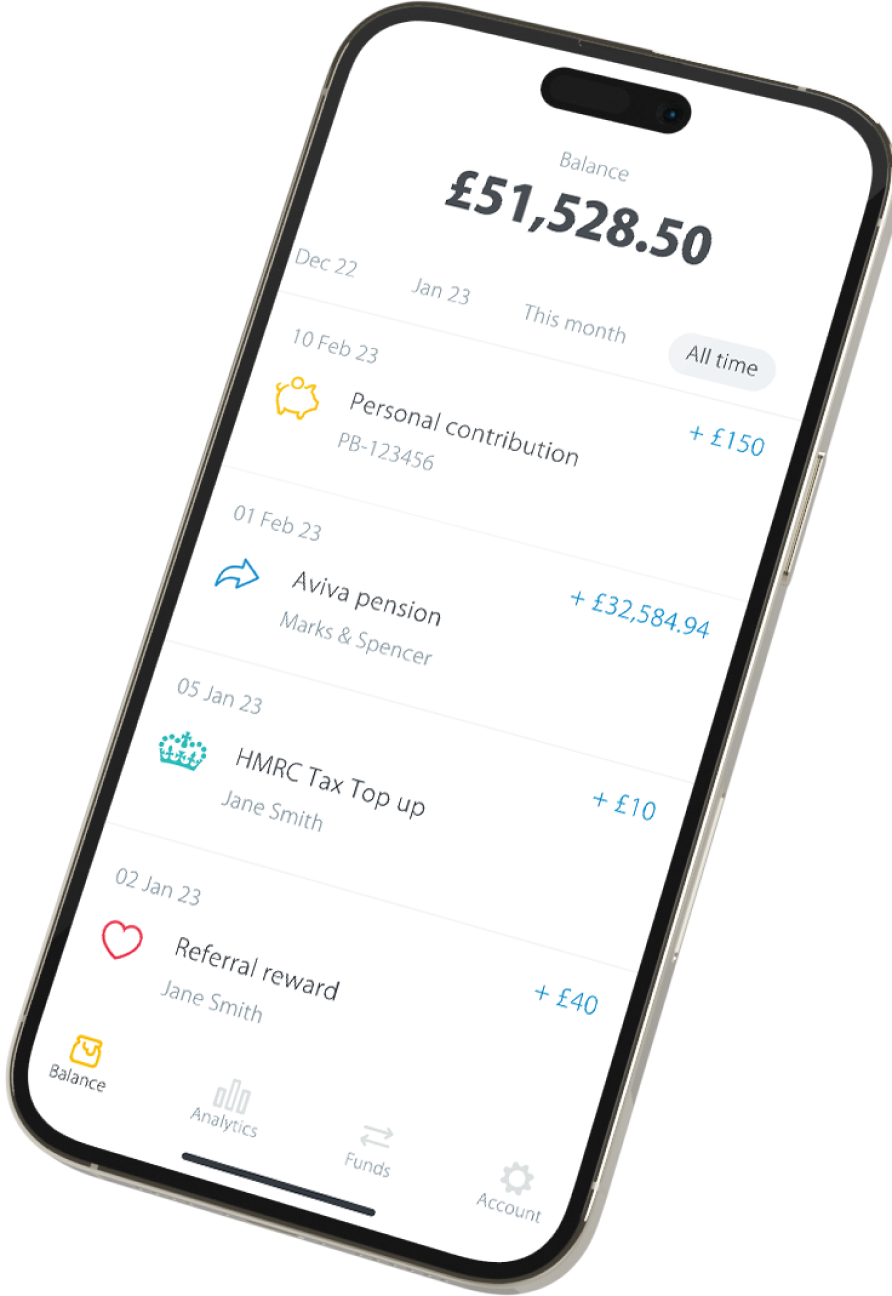
We’re always working hard to bring a leading pension product and ensuring parity between our website and app is a key part of this. Last month, we introduced a support function to the app, so you can easily find all the details you need should you want to contact us.

Next time you log in, look out for a question mark icon in various parts of the BeeHive. When clicked you’ll see email and phone contact details, plus some handy FAQs to help you find the information you’re looking for faster.

We’re campaigning for more transparency in pensions

Transparent pensions

We’re passionate about increasing transparency in pensions, so savers can better plan for their retirement. Whether that’s by campaigning for a ban on exit fees or advocating for the inclusion of charges in mandatory simpler annual statements, we want the pensions industry to work together to help put savers back in control of their money.

In October, we co-authored a report with the UK fintech industry body Innovate Finance and Open Banking data network Plaid. Together we’re advocating for Open Banking technology to be used more widely in pensions so savers can see a complete picture of their financial health and access digital tools that will help them make smarter financial choices.

In 2018 PensionBee became the first pension provider to utilise the Open Banking APIs for pensions, enabling our customers to see their live pension balance displayed alongside their live current account balance in some of the UK’s most popular money management apps including Starling, Money Dashboard, Yolt, Emma and Moneyhub. To this day we’re still one of only a handful of pension providers that allows customers to share their data with other FCA regulated companies. To find out more and read the full report visit the Innovate Finance website.

We’re officially the UK’s best pension provider

Last month, we were delighted to be crowned ‘DC Pension Provider of the Year’ at the industry’s most prestigious awards, the UK Pensions Awards. Recognised for our high level of innovation, performance and customer service, we saw off competition from some of the biggest names in pensions including Aviva, Scottish Widows and Legal & General.

To further cement our position as the a leading online pension provider, we also collected the award for ‘Pension Provider of the Year’ at the Workplace Savings and Benefits Awards, following a high commendation in the same category last year.

We’re aiming to end the year on a high and this month, we hope to be named as Spectator Magazine’s ‘Economic Innovator of the Year’, with the European Pensions Awards following close behind in early December, where we’re shortlisted in two categories: ‘Diversity’ and ‘European Pensions Innovation’. We’ll be sure to let you know how we get on via social media and our blog.

Keep an eye out for our next update on our blog. We’re always working on new features to make our customers happy, so if you have any ideas or suggestions, please let us know in the comments section or over on social media, and we’ll feed it back to the team.

What happened at PensionBee in November 2020
Last month, we were busy bees planning ahead for what looks set to be a fantastic 2021 and beyond. Read on to find out what we got up to in November.

Last month, we were busy bees planning ahead for what looks set to be a fantastic 2021 and beyond, with lots of new initiatives and product innovations on our roadmap. Read on to find out more about some of the exciting things you can look forward to, as well as our highlights from November.

We’re taking steps to become a public company

Public company

Last month, we were delighted to share the exciting news that PensionBee is exploring a listing on the London Stock Exchange. We believe this is the natural next step in our development, and will allow us to vigorously keep pursuing our vision: to live in a world where everyone can look forward to a happy retirement.

We’re currently in the preparatory phase of planning and once this phase is finalised, it’s likely that the listing will be completed in the next 12-18 months, market conditions permitting.

It’s our ambition to make PensionBee a company that’s not only built for our customers, but owned by our customers too, which is why we’ll be exploring opportunities for you to participate in the listing itself. We’ll share more information on this process in due course, but in the meantime it’s business as usual at PensionBee!

We need your help to make fossil fuel free pension saving a reality

FFF

Earlier this year we surveyed customers in our Future World Plan, who told us they were concerned about climate change, and wanted the option to exclude fossil fuel producers from their pensions. In response to this customer feedback we’ve been working hard to create a brand new Fossil Fuel Free pension, and we’re almost ready to launch.

The new PensionBee Fossil Fuel Free Plan will exclude over 200 companies with reserves of oil, gas and coal, as well as tobacco producers and manufacturers of controversial weapons.

The new plan is managed by Legal & General and will have one simple annual fee of 0.75%, with 50% off for the portion of your pension over £100,000. In order to launch the plan at this price point, we need £100 million in commitments from customers seeking to go fossil fuel free. We’re a third of the way there with over £35 million already committed, but we need your help to reach our target before the end of the year.

If you’d like to drive positive environmental change while saving for your retirement, simply click here to log in and commit to switch your plan. We’ve recently introduced the ability to switch plans natively in the app, as part of our broader vision of aligning the app and web experience. So if you’re logging in via the app, simply click on the ‘Account’ tab in your BeeHive and select ‘Switch Plans’.

Please note, your money will stay invested where it is until the Fossil Fuel Free Plan is launched. With investments, your capital is at risk. Pensions can go down in value as well as up, so you could get back less than you invest.

Introducing The Buzz – named by you, for you

The Buzz

In October, we used our social media channels to ask for your help in renaming our blog. After dozens of brilliant Bee-inspired suggestions, and a team vote, the decision was unanimous, with The Buzz coming out on top!

We needed a new name as we’ve been working hard behind the scenes to revamp the blog to make it even easier for you to find the content you’re looking for, so you can better plan for a happy retirement. We kept only the very best articles from the past five years and have reduced the number of categories down to five for simpler navigation.

The next time you visit The Buzz you’ll notice a fresh new design, which showcases featured articles and highlights from our press page, as well as the most recent blogs. There are more improvements still to come, from the introduction of author pages showcasing a diverse range of experts to new-look articles.

As always, we’d love to hear your feedback and involve you in the process. You can get in touch by emailing engagement@pensionbee.com or via Twitter.

Keep an eye out for our next update on our blog. We’re always working on new features to make our customers happy, so if you have any ideas or suggestions, please let us know in the comments section or over on social media, and we’ll feed it back to the team.

What happened at PensionBee in December 2020
We wrapped up last year with a reflection on our achievements and some award wins. Read on to find out what we were up to in December.

Last month, things at PensionBee HQ wound down for the festive season, and we spent some time reflecting on what a memorable year 2020 was for all of us. From administering more than a billion pounds of pension savings on your behalf and winning some of the pensions industry’s most coveted awards, to the success of our fossil fuel free campaign and the launch of online game Scam Man & Robbin’, we took some time to celebrate our achievements and our team had a well-deserved break over the holidays.

Despite the challenges we’ve all faced as a result of coronavirus, we managed to reach many significant milestones due to the hard work and dedication of our team and thanks to you, our lovely customers, who signed up in your thousands last year. We’re back to work now and looking forward to building on our successes in 2021, and helping many more savers in the UK plan for a happy retirement.

We ended 2020 on a high

Last month, PensionBee picked up its first European Pensions Award, winning in the ‘European Pensions Innovation’ category. We’re thrilled to be recognised for displaying ‘true innovation by filling a gap in the market to meet customer needs, achieving impressive results along the way’.

We were also named ‘Fintech Of The Year’ at the AltFi Awards, which recognise outstanding achievement in the Alternative Finance and Fintech industries. PensionBee was praised for ‘driving innovation, moving the industry forward, and growing significantly in the past 12 months’.

Our CEO, Romi, discussed the importance of diversity and inclusion in financial services

Diversity and inclusion in financial services

Read our CEO, Romi Savova’s, thoughts on why PensionBee’s desire for inclusion is linked to our vision to live in a world where everyone can look forward to a happy retirement, and learn why she believes it’s the role of financial services to help people lead better lives in FT Adviser.

Keep an eye out for our next update on our blog. We’re always working on new features to make our customers happy, so if you have any ideas or suggestions, please let us know by emailing feedback@pensionbee.com.

What happened at PensionBee in January 2021
We’ve started the year with a bang by launching lots of exciting new product features and improvements. Read on to find out what we’ve been up to in January.

We hit the ground running last month, experiencing our busiest January yet! We’re looking forward to building on this momentum throughout 2021, and helping many more savers in the UK plan for a happy retirement.

Read on to find out what we were up to in January, from the exciting launch of our new flexible pension for the self-employed and our new Fossil Fuel Free Plan, to improving how we update you on your plan’s performance.

We launched the PensionBee Fossil Fuel Free Plan

Just before Christmas last year, we were delighted to announce the arrival of our new Fossil Fuel Free Plan. It’s thanks to you that we were able to make this a reality in December, showing the pensions industry that there’s strong demand for a product that completely excludes companies with oil, gas and coal reserves.

Our newest plan excludes over 200 companies with proven or probable reserves of oil, gas and coal, as well as tobacco companies, manufacturers of controversial weapons and persistent violators of the UN Global Compact. It’s managed by Legal & General and has an annual management fee of 0.75%, with 5_personal_allowance_rate off for the portion of your pension over _high_income_child_benefit.

If you’d like to invest in line with your values and drive positive environmental change with your pension, simply log in and switch your plan free of charge.

With investments, your capital is at risk.

We launched our flexible pension for the self-employed

PensionBee Self Employed Pension

Last month, we were excited to launch our flexible pension for the self-employed, and offer our award-winning product to a growing proportion of the UK workforce who have long been underserved by the pensions industry. Without the benefits of Auto-Enrolment, the self-employed are at a significant disadvantage, with data from workplace pension scheme Nest suggesting that just 24% of self-employed people are saving into a pension.

Our new self-employed pension was designed with sole traders and directors of limited companies in mind to help make saving as easy as possible. That’s why savers can now start a new pension from scratch by setting up a contribution of any size, if they’ve never saved towards their retirement before. It’s available via the PensionBee website, and Starling customers can find it in the Starling Business Marketplace. As always, there are no minimum contribution amounts, so self-employed savers can contribute to their pension flexibly, whenever their income allows.

We’ve changed the way we update you on your plan’s performance

Plan performance

Last month, we simplified how we communicate the performance of your pension, so instead of receiving a detailed plan update from your money manager every three months, we’ve published a brief quarterly update written by the PensionBee team. We hope this change makes it even easier for you to understand how your plan’s performed, in comparison to our other plans and the wider markets.

Our latest update is available to read on the PensionBee blog and discusses the performance of the PensionBee plans in 2020, when compared to the UK and US stock markets. Last year the UK stock market performed at -12%, whilst the US stock market returned 18%. Against this backdrop, all of our plans performed well, substantially outperforming the UK stock market thanks to the benefits of diversification. You can see how your plan performed here.

Your updated fact sheet will soon be available to download in the BeeHive and, as always, we’d love to hear your feedback. You can get in touch with PensionBee by emailing engagement@pensionbee.com.

As with all investments, past performance is not indicative of future performance and you may get back less than you start with.

We ended 2020 on a high

Back in December, PensionBee picked up its first European Pensions Award, winning in the ‘European Pensions Innovation’ category. We’re thrilled to be recognised for displaying ‘true innovation by filling a gap in the market to meet customer needs, achieving impressive results along the way’.

We were also named ‘Fintech Of The Year’ at the AltFi Awards, which recognise outstanding achievement in the Alternative Finance and Fintech industries. PensionBee was praised for ‘driving innovation, moving the industry forward, and growing significantly in the past 12 months’.

Keep an eye out for our next update on our blog. We’re always working on new features to make our customers happy, so if you have any ideas or suggestions, please let us know by emailing feedback@pensionbee.com.

What happened at PensionBee in February 2021
February may be the shortest month of the year but our team got a lot done last month! Read on to find out what we were up to in February.

While February may be the shortest month of the year, our team were busy bees last month! From simplifying the design of our emails to winning five Boring Money Best Buys Awards, read on to find out what we were working on in February.

We redesigned our transactional emails

Transactional emails

In response to your feedback we updated the design of our transactional emails, such as those you receive from your BeeKeeper about pension transfers, contributions and withdrawals.

The new design is much easier to read and follows the same format as our monthly newsletters, enabling you to find the information you need and effortlessly navigate to your account.

As always we’d love to hear your thoughts: you can get in touch by emailing feedback@pensionbee.com or via Twitter.

Don’t miss out on your unused tax relief

Tax deadline

It’s almost the end of the current tax year which means you only have a few weeks left to use up your allowance for the 2020/2021 tax year (up to 100% of your earnings, to a limit of £40,000 for most people).

You can also carry forward unused allowances from the previous three years. Most basic rate taxpayers will automatically get a 25% tax top up on their personal pension contributions, while higher rate taxpayers can claim a further 25% through their Self-Assessment tax returns, and top rate taxpayers can claim an additional 31%.

If you’d like to pay a lump sum into your pension, make sure you allow enough time for it to reach us by 5 April. Direct Debits, for example, can take up to 12 working days to be received and invested so don’t leave it until the last minute. You can make contributions into your pension via your BeeHive.

We won five Boring Money Best Buys Awards and we were nominated for a Good Money Guide Award

In February, we scooped five Boring Money awards:

  • Best Buy Pension
  • Best Buy Beginners Pension
  • Best Buy Sustainable Pension
  • Best Buy Digital Pension
  • Best Buy Customer Service

We’re especially thrilled to be recognised for our customer service in a newly created award for 2021 which acknowledges the additional pressures faced by financial services companies as a result of the pandemic. Winners were chosen based on customer review scores, as well as Boring Money’s own testing and evaluation of call response times.

Last month, we were also delighted to take the top spot in TechRound’s ‘Fintech50 for 2021’ list which ranks 50 of the most innovative fintech companies in the world.

We were also nominated for a Good Money Guide Award, in the ‘Investing Accounts’ category. The Good Money Guide Awards aim to champion financial services companies that excel in innovation, product, and customer service. The winners will be decided by a public vote, so we need your help! To vote for PensionBee, simply leave a review of our product and customer service on the Good Money Guide website.

Keep an eye out for our next update on our blog. We’re always working on new features to make our customers happy, so if you have any ideas or suggestions, please let us know by emailing feedback@pensionbee.com.

What happened at PensionBee in March 2021
March has been a busy month at PensionBee HQ, with some big announcements as the tax year comes to an end. Read on to find out what we've been up to.

March has been a busy month at PensionBee HQ, as we come to the end of the tax year. From confirming our Intention To Float on the London Stock Exchange to voluntarily publishing our gender pay gap, read on to find out what else we’ve been up to in March.

We confirmed our Intention To Float

Confirmed Intention to Float

Yesterday we were excited to confirm our Intention To Float on the London Stock Exchange. This brings us one step closer to realising our ambition of becoming a public company and helping many more consumers plan for a happy retirement.

We’re working on some important product improvements

Product improvements

We’re always looking for ways to enhance our product and have several exciting projects underway to make it even easier for you to manage your pension. We’re currently working to update the amount of information you can see in your BeeHive when you’ve added a pension to transfer. In the future you’ll be able to see a more detailed indication of the progress being made, and the next steps you can expect before your transfer is completed.

We’ll soon be introducing the ability for you to opt-in to two-factor authentication. This will make your account even more secure and give you greater peace of mind. As always, we’d love to hear your thoughts on the future product improvements you’d like to see. You can get in touch by emailing feedback@pensionbee.com.

We’re strides ahead of the industry when it comes to diversity

This March, we celebrated International Women’s Day and the level of gender diversity we’ve achieved at PensionBee. As a member of the Women in Finance Charter, we regularly report publicly on female representation, and have achieved gender parity at all levels of the company.

March also saw us voluntarily publish our gender pay gap for the first time. We were proud to disclose a median hourly pay gap of just 4%, and a median bonus pay gap of 0% among our team, as at December 2020. The gap is in line with our target of 0%, with a variance of +/- 5% owing to the overall size of our employee base, which is currently below the 250 employee reporting threshold.

We know that where a pay gap exists for women, a pension gap will follow, so we’re passionate about campaigning for wage equality and tracking these metrics as early as possible.

In fact, we’re currently conducting research on the gender pay and pension gaps, and are particularly interested in speaking to customers who believe they have been impacted by this. If you’d like to share your story with us, and would be happy for your name and photograph to be printed in a national newspaper (such as The Telegraph or The Express), or used in our marketing materials, please get in touch by emailing engagement@pensionbee.com. We’re passionate about transforming the pensions industry to better serve consumer needs, and would love to hear about your experiences.

We’ve had plenty of reasons to celebrate

In March, our Chief Engagement Officer, Clare Reilly, was named in the Women in FinTech Powerlist 2020, which shines a spotlight on the women leading innovation in financial services. Clare was recognised in the ‘Senior Leaders’ category for her work driving forward change in the pensions industry, and for her pivotal role in launching one of the UK’s first mainstream fossil fuel free pensions.

We were also delighted to receive our 4,000th Trustpilot review earlier this month. Almost 3,500 of these are five-star reviews, which highlight our unique combination of smart technology and dedicated customer service.

Keep an eye out for our next update on our blog. We’re always working on new features to make our customers happy, so if you have any ideas or suggestions, please let us know by emailing feedback@pensionbee.com.

What happened at PensionBee in April 2021?
April was a month of huge significance as we achieved our goal of becoming a publicly listed company. Read on to find out what else we got up to in April.

April was a month of huge significance as we achieved our goal of becoming a publicly listed company. We’re extremely proud to have reached this special milestone and look forward to continuing to make positive changes in the pensions industry – whether that’s campaigning for the rights of consumers or bringing you the pension innovations you want to see.

Read on to find out what else we got up to in April.

We became a publicly listed company

Publicly listed company

Last month, we were delighted to be admitted to the High Growth Segment of the Main Market of the London Stock Exchange (PBEE). Our IPO marks the culmination of seven years of hard work, and we’d like to thank our dedicated and talented colleagues for making this happen, as well as our wonderful customers who are at the heart of all we do.

While it’s very much “business as usual” at PensionBee, our IPO will allow us to continue to grow rapidly and innovate. A portion of the money we’ve raised will be invested in our technology platform capabilities and used to accelerate product innovation. We have lots of new features and product enhancements planned to make it even easier for you to plan for retirement, and we’re excited to share them with you in due course.

We introduced some new product features

New product features

We’re in the process of rolling out two-factor authentication to make your account more secure. With two-factor authentication, you use your usual log in details with an extra form of identification, in this case an SMS message with a verification code. You can now enable two-factor authentication in our mobile app, and if you usually access your account via our website, you can expect to see two-factor authentication arriving later this month.

You told us you wanted more clarity about the progress of your pension transfers so last month, we introduced functionality for you to see more information in your online account. If there are any outstanding steps required from your side, you’ll be able to action these straight away through the BeeHive. This feature is currently available in our web app and we’ll soon be introducing it in our mobile app.

As always we’d love to hear your feedback! You can get in touch with PensionBee by emailing feedback@pensionbee.com.

We collated your views on how your pension’s invested

Your feedback on investment

Back in March, we ran our annual survey of customers in the Tailored Plan, our default plan, to learn more about the kinds of companies that our customers expect their money to be invested in, and what kind of action you want us to take on companies and industries with controversial business practices.

Here’s what you told us:

  • Companies should treat their employees fairly, and work harder to respect the environment
  • The fast fashion industry isn’t trustworthy
  • The pandemic motivated you to save more

These insights will help us to tailor your pension to your future needs, and we intend to share the findings with your money managers to inform their thinking on stewardship and exclusions. We also plan to amplify your voices in the national media in order to campaign for change. You can read a detailed summary of the survey findings on our website.

If you’d like to share your story with us, and would be happy for your name and photograph to be printed in a national newspaper (such as The Sun or The Guardian), or used in our marketing materials, please get in touch by emailing engagement@pensionbee.com. We’ll arrange a short phone call with you and will pay between £75 and £250, depending on how your case study is used.

We’re especially keen to hear from anyone who’s drawn down via a previous pension provider and experienced difficulty taking money out of their pension.

How did your pension perform in Q1?

Performance updates

Our latest quarterly update is available to read on the PensionBee blog, and discusses the performance of the PensionBee plans, when compared to the main UK index, the FTSE 100, and the American S&P 500. The start of the year has brought hope that the end of the pandemic is in sight, following a successful start to the vaccine rollout and the recent reopening of shops, restaurants, pubs and other parts of the economy. As a result, we’ve seen UK stock markets steadily recovering towards pre-pandemic levels, whilst US stock markets are continuing to reach new highs.

Check your 2020/21 Annual Statement in the BeeHive to see an overview of how much you’ve saved and how much it could be worth by the time you retire, as well as a breakdown of our annual management fee in pounds and pence. If you’d like to see how your plan’s performing in Q2, don’t forget you can log in to your BeeHive 24/7 and see your real-time balance. You’ll also find our retirement planner which can help you calculate how much you need to save for a happy retirement.

As with all investments, past performance is not indicative of future performance and you may get back less than you start with.

Keep an eye out for our next update on our blog. We’re always working on new features to make our customers happy, so if you have any ideas or suggestions, please let us know by emailing feedback@pensionbee.com.

What happened at PensionBee in May 2021
Last month, we celebrated reaching 500,000 Registered Customers by adopting 500 worker bees on World Bee Day. Read on to find out what else we were up to in May.

Last month, we made a buzz on social media as we celebrated reaching 500,000 Registered Customers by adopting 500 worker bees on World Bee Day. Exceeding half a million customers is an exciting milestone and we look forward to helping many more savers plan for a happy retirement.

Read on to find out what else we were up to in May.

We worked on some important product improvements

Product improvements

You now have the ability to set up two-factor authentication via our website. Once enabled, every time you log in with your email address and password, we’ll send a six-digit security code to your phone to make your account even more secure. Don’t forget that you can also set this up via our mobile app by heading to the ‘Account’ tab once logged in to the BeeHive.

This month we’ll be focussing our efforts on improving the way we process pension withdrawals, so it’ll be even easier for customers aged 55 and over to access their savings. As ever, we’d love to hear your feedback and ideas! You can get in touch with PensionBee by emailing feedback@pensionbee.com.

Watch our new documentary, PensionBee explained

PensionBee explained

We were busy bees last month, working on a short film that explains everything from who PensionBee is to how our product works. Head over to our YouTube channel to hear from several of our lovely customers, learn about our long-term vision and find out why we’re committed to achieving wider representation and equality in the pensions industry.

Become a HoneyMaker

HoneyMaker

We’re always trying to improve your experience and ensure our product’s easy-to-use and accessible to all. Sign up to become a HoneyMaker and you’ll be able to have your say on the features that are most important to you and your pension. Help us shape the future of PensionBee!

We’ve been shortlisted for 5 UK Pensions Awards

We’ve been shortlisted in five categories at this year’s UK Pensions Awards including ‘DC Pension Provider of the Year’, ‘Technology Innovation of the Year’, and ‘Diversity and Inclusion’. We’ve also been shortlisted for three Investment Marketing and Innovation Awards, including ‘Best Use of Market Research’, ‘Campaign Innovation’, and ‘Marketing Campaign of the Year’.

We’re also proud to announce that we won ‘Best Personal Pension’ at this year’s Good Money Guide Awards, based on feedback and reviews from our wonderful customers. Thank you for helping us win!

Keep an eye out for our next update on our blog. We’re always working on new features to make our customers happy, so if you have any ideas or suggestions, please let us know over on social media, and we’ll feed it back to the team.

What happened at PensionBee in June 2021
June was another busy month at PensionBee HQ as we made some important product improvements. Read on to find out what else we were up to last month.

June was another busy month at PensionBee HQ as we focussed our efforts on making some important product improvements so it’s even easier for you to save for a happy retirement. Read on to find out what else we were up to last month.

We enhanced how we communicate via the app

Product improvements

In June, we introduced Push notifications as an additional way to communicate with customers via our app. If you’ve enabled Push notifications on your mobile, we’re able to keep you updated about the changes you’ve requested on your account, such as a plan switch. In future we’ll use this technology to notify you if we need you to complete an action, for example providing more information to progress a pension transfer. You can enable Push notifications via your mobile’s settings menu, under ‘notifications’.

Our next big project is improving the way we process pension withdrawals, making it simpler for customers aged 55 and over to access their savings. At the moment we charge an Emergency Tax Rate on all withdrawals, which means you need to claim back any overpaid tax from HMRC. We’re working on ways to reduce the amount of Emergency Tax you pay so you can access your money hassle-free and better plan your withdrawals.

As always, we’d love to hear your thoughts on the future product improvements you’d like to see. You can get in touch with the team by emailing feedback@pensionbee.com or sending us a message via Twitter.

Feels so good to take control of your retirement savings

Feels so good

Last month, we launched our new ‘Feels so good’ campaign, featuring six of our lovely customers: Emma (pictured), Ravinder, Amanda, James, Amina and Andrew. The campaign is designed to show that feeling of complete peace of mind and pension confidence savers have after taking control of their pensions. Keep an eye out for our new ads at bus shelters and rail stations across the UK, as well as on the radio.

PensionBee joined the Social Mobility Pledge

Social Mobility Pledge

In June, we signed the Social Mobility Pledge, a business campaign aimed to increase career opportunities for people that have experienced disadvantages. The three-point pledge includes commitments to work with schools, offer work experience, and to use inclusive recruitment practices.

As part of the initiative, PensionBee is developing its own work experience programme, in addition to extending its partnership with several London schools, to provide careers support and financial literacy education. It hopes to address the lack of diversity in the pensions and wider financial services industry by increasing familiarity around this sector, particularly among students who may not be considering this career route.

PensionBee advocates challenging the perceptions of what people in pensions should be, breaking down some of the barriers people face. That’s why applicants wishing to join entry-level roles need no set experience, with these roles specifically advertised on sites aimed at those starting their careers without attending university. PensionBee provides all of the learning tools required and heavily invests in training so that all team members start with the same understanding of the industry.

We’re finalists at the Diversity in Finance Awards

Following a win in 2020, we’re thrilled that we’ve been shortlisted in two categories at this year’s FT Adviser Diversity in Finance Awards: ‘Employer of the Year’ and ‘Trailblazing Company of the Year’. We’re proud of our team’s diversity, with _higher_rate of our employees self-identifying their racial or ethnic background as Asian / Asian British; Black, African, Caribbean, or Black British; Mixed, multiple or other ethnic groups. This is on a par with the _higher_rate representation found in London, where we’re based.

Last month also saw PensionBee CEO, Romi Savova, named in the 2021 LGBT Great ‘Global Top 100 Executive Allies’ for demonstrating support to others.

Risk warning: As always with investments, your capital is at risk. The value of your investment can go down as well as up, and you may get back less than you invest. This information should not be regarded as financial advice.

Keep an eye out for our next update on our blog. We’re always working on new features to make our customers happy so if you have any ideas or suggestions, please email feedback@pensionbee.com or let us know on social media.

What happened at PensionBee in July 2021?
In July, we achieved another milestone as we reached £2 billion of pension savings administered on behalf of our customers. Read on to find out what else we were up to last month.

Last month, we worked on further improvements to our app and we were delighted to announce that we now administer £2 billion of pension savings on behalf of you, our customers. Here’s what we got up to in July.

We improved our two-factor authentication

Two-factor authentication

Last month, we introduced a ‘Trust this browser’ feature for two-factor authentication. If you’ve opted into two-factor authentication, you can now choose to skip authentication for 30 days when logging in to our website from your own device. If you’re sure no one else has access to your device, you can activate this by ticking a checkbox the next time you log in. You can enable it by heading to the ‘Account’ tab once logged in to the BeeHive.

How did your pension perform in Q2?

Q2 Report

With two-thirds of adults double-jabbed and the economy now fully reopened, UK stock markets are approaching pre-pandemic levels. And in the US, stock markets continue to reach new highs. During the first half of 2021, the UK and US markets grew 11% and _ni_rate, respectively (much better than the same period in 2020, when they were down -17% and -3%, respectively).

Against this backdrop, PensionBee plans have performed well. Plans designed for savers under 50 have all benefited from economic recovery and have grown between 7% and 12% over the last six months. Most plans for those aged 50 and over have also recorded growth and continue to preserve savings for those who are close to retirement.

For more details about how your plan performed relative to wider market activity, read our full Q2 report.

Remember that your pension is a long-term investment when considering short-term performance. Past performance is not a guide to future performance. As with all investments, capital is at risk.

We won Pension Provider of the Year

We were excited to announce that PensionBee was named ‘Pension Provider of the Year’ at the 2021 PensionsAge Awards! We were also shortlisted for seven MoneyAge Awards, including ‘Consumer Champion of the Year’ and ‘Pension Provider of the Year’, and we were shortlisted for two Business Green Awards 2021: ‘Marketing Campaign of the Year’ and ‘ESG Investor of the Year’.

We want to hear from you

Campaign for change

We want to learn about your experiences of the pensions industry so we can amplify them in the UK press and campaign for change. We’re particularly interested in hearing from customers who either have, or are considering, helping their grandchildren financially. Get in touch by emailing engagement@pensionbee.com if you’d like to share your story with us, receive between £75 and £250 for your time, and would be happy for your name and photograph to be printed in a national newspaper.

Keep an eye out for our next update on our blog. We’re always working on new features to make our customers happy so if you have any ideas or suggestions, please email feedback@pensionbee.com or let us know on social media.

What happened at PensionBee in August 2021
Last month, we received our 5,000th Trustpilot review and we continued to improve your pension experience. Read on to learn what we got up to in August.

We might be nearing the end of summer, but the future remains bright for those who take an interest in their pension. Read on to find out what PensionBee was up to in August.

We worked on making your pension experience even easier

Process updates

Last month, we implemented a feature that allows you to upload the documentation that we sometimes need from your existing pension providers to enable a transfer. This further simplifies our pension transfer process so you can spend less time with paperwork and more time building your pension pot. You’ll find this new feature by heading to the ‘Transfers’ tab once logged in to the BeeHive via our website. The update is coming soon to our mobile app.

We’ve also been working on building a new way for you to contribute to your pension. It leverages industry-leading Open Banking technology that’ll enable you to make Easy Bank Transfers into your pension so it’s even simpler to save for a happy retirement. Stay tuned for further details next month.

We received our 5,000th Trustpilot review

Last month, we received our 5,000th review on Trustpilot, where we have an overall Excellent rating of 4.7 out of 5. Customer feedback helps us continue to improve and we love hearing about our customers’ thoughts and experiences. Thank you to all of our customers who take the time to leave a review on Trustpilot or who get in touch on social media!

We were shortlisted for several awards

We’re excited to announce that we’ve been shortlisted in several of the pensions industry’s most prestigious awards. We’ve been shortlisted for ‘Pension Provider of the Year’ and ‘Diversity and Inclusion Excellence’ at the Workplace Savings & Benefits Awards, ‘Industry Game Changer’ and ‘ESG Champion of the Year’ at the Growth Investor Awards 2021, and four awards including ‘Pensions Technology Provider of the Year’ at the European Pensions Awards. Huge congratulations to all of this year’s finalists!

Keep an eye out for our next update on our blog. We’re always working on new features to make our customers happy so if you have any ideas or suggestions, please email feedback@pensionbee.com or let us know on social media.

What happened at PensionBee in September 2021
Last month, we rolled out more new features to enhance your pensions experience and we won several awards. Read on to learn what we were up to in September.

The regular rhythm of life seemed to return for many of us during September, as record numbers of people indicated they’re considering changing jobs and wages grew at their fastest rate for over 20 years. If you’re in the process of changing jobs at the moment, don’t forget to bring your old workplace pension with you! And if you’re going self-employed, good luck and remember to set up a regular pension contribution so you continue to save for retirement. Simply log in to your BeeHive to get started.

Over-55s can now make withdrawals using their personalised tax code in some circumstances

Withdrawals tax codes

We’ve rolled out a feature that allows over-55s to make withdrawals using their personalised tax code, rather than their emergency tax code, in some circumstances. When you begin to take your pension, you’re allowed to withdraw _corporation_tax of your pension tax-free. Income tax is due on the remaining 75% and you’ll be charged at your marginal rate.

However, if you’re making a withdrawal over the initial tax-free amount for the first time, your pension provider is likely to place you on an emergency tax code. Pension providers are required to do this if they don’t have an up-to-date tax code which takes into account your total earnings for the year. This can sometimes be avoided by asking HMRC to send your provider an up-to-date tax code. Emergency tax can be claimed back from HMRC.

For more information head to the ‘about withdrawals’ section on our FAQ page.

We’re now showing our Tailored Plan customers more information about their investments

Tailored Plan app update

Customers invested in our Tailored Plan - which automatically adjusts the mix of assets it invests in over time - can now access more information about those investments. Tailored Plan customers can head to the ‘Account’ tab in their BeeHive, and select ‘My Plan’ (if using the website) or ‘Plan information’ (if using the mobile app) to learn more.

We were named ‘Employer of the Year’ at the Diversity in Finance Awards

September was another month of celebration as we were named ‘Employer of the Year’ for the second year in a row at FTAdviser’s Diversity in Finance Awards. We were also highly commended in the ‘Trailblazing Company of the Year’ category for our workplace diversity initiatives and inclusive advertising campaigns. We’re also pleased to announce that we won the award for ‘DC Innovation of the Year’ at the UK Pensions Awards in recognition of the services and product offerings we launched in the past 12 months, including the Fossil Fuel Free Plan.

We’ve also been shortlisted for several Computing Technology Product Awards 2021, including ‘Technology Innovator of the Year’, and ‘Technology Hero of the Year’ for our CTO Jonathan Lister Parsons!

Keep an eye out for our next update on our blog. We’re always working on new features to make our customers happy so if you have any ideas or suggestions, please email feedback@pensionbee.com or let us know on social media.

What happened at PensionBee in October 2021
Last month, we announced some important changes to our plan range and released your Q3 plan performance update. Read on to learn what we were up to in October.

At the end of October, world leaders gathered in Glasgow for COP26 to tackle climate change. But while we’ll have to wait and see if their words translate into action (to paraphrase Her Majesty), thousands of PensionBee customers have already aligned their financial goals with the planet by investing in our Fossil Fuel Free Plan.

Here at PensionBee, last month saw some important changes to our plan range and a performance update for Q3. We’re also currently running a competition to win VIP tickets to see the Brentford Bees face Watford FC in December. So read on to find out more!

How did your pension perform in Q3?

Q3 update

The general outlook feels positive as almost 8_personal_allowance_rate of the British population have now had both doses of a Covid vaccine, and UK stock markets have quickly recovered to pre-pandemic levels. Globally, more than 6.91 billion shots have been administered, and US stock markets continue to reach new highs. Nevertheless, economic fallout from the coronavirus pandemic may persist for some time, and investors could continue to experience some degree of market volatility, no matter where their pension savings are invested.

Between July and September 2021, UK and US stock markets grew 13% and 16% respectively. That’s much better than the same period last year when the UK stock markets were down by _basic_rate and US stock markets were up 6%.

Against this backdrop, PensionBee plans have performed well. Plans designed for savers under 50 have a higher level of investment in company shares compared to plans for older savers. These plans have all benefited from economic recovery and have grown between 9% and 14% during the first three-quarters of the year. Our two responsible funds, the Fossil Fuel Free and Shariah plans have performed the best, and, each having grown by 14%, have outperformed the UK stock market. Most plans for those aged 50 and over have also recorded growth and continue to preserve savings for those who are close to retirement through relatively low exposure to company shares, or none at all.

For more details about how your plan performed between July and September, relative to wider market activity, read our full Q3 report.

Remember that your pension is a long-term investment when considering short-term performance. Past performance is not a guide to future performance. As with all investments, capital is at risk.

We announced our intention to simplify our product range

Product range

Last month, we announced that we’ll be closing the Match and Future World plans, in order to simplify our product range. Savers in the Match Plan will transition to our Tailored Plan, also managed by BlackRock. And savers in the Future World Plan will transition to our Fossil Fuel Free Plan, also managed by Legal & General. Plan switches will happen automatically by 31st December 2021 and you don’t need to take any action, unless you’d like to opt for a different plan, which you can do from your BeeHive.

Enter for your chance to win VIP tickets to see Brentford FC play Watford

Brentford comp

As official sponsors of the mighty Brentford Bees (AKA Brentford FC), we’re offering two Premier League lounge tickets to see them kick off at home against Watford on Fri 10th December. For a chance to win, simply tell us how PensionBee made you more pension confident. See Twitter for details. Best of luck!

We won at the MoneyAge Awards 2021

We’re delighted to announce that we added several new awards to our collection last month, including Money Age’s Consumer Champion of the Year (Company) and SIPP Provider of the Year and Finder’s Pensions Innovation award.

Keep an eye out for our next update on our blog. We’re always working on new features to make our customers happy so if you have any ideas or suggestions, please email feedback@pensionbee.com or let us know on social media.

What happened at PensionBee in November 2021
Last month, we launched our brand new podcast and reached several milestones. Read on to learn what we were up to in November.

We might be approaching the end of the year, but things haven’t slowed down at PensionBee HQ! Last month, we were particularly pleased to launch The Pension Confident Podcast to help you get the most out of your pension. And we were also busy helping lots of you switch to our Fossil Fuel Free Plan, following a spike of interest in helping the planet transition to a low carbon economy after COP26. Read on to find out what else we were up to in November.

We launched The Pension Confident Podcast

Pension Confident podcast

Last month, we were excited to launch the first episode of The Pension Confident Podcast, a brand new podcast from PensionBee and Peter Komolafe that aims to help you get the best out of your pension. In the first episode, Peter chats with Clare Reilly about making a positive impact with your pension and Money To The Masses’s Damien Fahy discusses building a £30,000 annual retirement from just £55 a month!

Subscribe to the podcast and download our first episode on Apple Podcasts or your favourite podcast app, and tell us your thoughts on social media or by leaving a review!

We passed several review milestones

Review milestones

You helped us pass a few milestones in November - 6,000 Trustpilot reviews (4.7/5 rating), 3,000 App Store reviews (4.8/5), and 2,000 Google Play reviews (4.6/5). We are, of course, thrilled! If you haven’t rated your PensionBee experience yet, please do. We’d love to hear your thoughts so that we can help more people become pension confident.

We won at the Financial Times & Investors Chronicle Celebration of Investment Awards

Last month, PensionBee won the Financial Times & Investors Chronicle Celebration of Investment Award in the ‘Focus on ESG: Innovation’ category. Congratulations to all of the other winners!

We were also awarded the Plain English Campaign’s Crystal Mark and App Mark of approval - the only internationally recognised marks that approve the clarity and accessibility of a website and mobile app, respectively.

Keep an eye out for our next update on our blog. We’re always working on new features to make our customers happy so if you have any ideas or suggestions, please email feedback@pensionbee.com or let us know on social media.

What happened at PensionBee in January 2022
This month, we released the latest episode of The Pension Confident Podcast, all about self-employed pensions. Read on to learn what we’ve been up to this January.

As economists reflect on the ups and downs of 2021, at PensionBee we’re looking ahead at 2022 with anticipation. And we’re starting with our new year’s goal of giving back to our customers. We’ve released a new episode of The Pension Confident Podcast, hosted by Peter Komolafe, and we’re helping thousands of customers align their financial goals with the planet by switching to our Fossil Fuel Free Plan.

Read on to learn how else we’ve been kicking off the new year.

We released the second episode of The Pension Confident Podcast

Pension Confident episode two

Are you self-employed, or toying with making the switch? In the second episode of The Pension Confident Podcast, we explore the things you need to know when it comes to your self-employed pension, with Emma Jones CBE, founder of Enterprise Nation and our Head of Product, Martin Parzonka.

In this episode, you’ll hear us chat about Auto-Enrolment for small businesses, and what you need to consider when it comes to keeping your self-employed pension topped up and your retirement savings on track. Subscribe to the podcast and download our latest episode on Apple Podcasts or your favourite podcast app. You can share your thoughts on social media or by leaving a review!

Sign up to become a HoneyMaker

HoneyMakers

We’re looking for volunteers to help provide feedback on everything from exciting new products to existing features. If you’d like to participate in surveys, focus groups, prototype testing and more, sign up to become a HoneyMaker.

Keep an eye out for our next update on our blog. We’re always working on new features to make our customers happy so if you have any ideas or suggestions, please email feedback@pensionbee.com or let us know on social media.

What happened at PensionBee in February 2022
Last month, we launched a new feature to improve pension withdrawals. Read on to learn what else we were up to in February.

Not many people expected the year to get off to such a rocky start. Interest rates are up, stock markets are down, the cost of living is up - it’s no party for most of us. But while it’s natural to feel uneasy during times of uncertainty, you can at least rest assured that your pension is designed to weather such economic storms.

Read on to find out what we were up to in February.

You can now make withdrawals using the PensionBee app

App withdrawals

It’s been a busy start to the year at PensionBee HQ! Last month, we worked hard to release a new feature that allows you to withdraw from your pension using the PensionBee app, once you reach retirement. Previously, you could only make pension withdrawals from our website.

If you’re a PensionBee customer who’s aged 55+ (57 from 2028) and have a live balance in your PensionBee account, you’ll be able to find the withdrawal feature on your mobile app under the ‘Funds’ section, where it’s titled ‘Withdraw from your pension’. You may have to update your app to see this new functionality.

We’re excited to continue improving our app and our processes so that withdrawing from your pension is as simple as possible. You can learn more about this new feature and our withdrawals process on our blog. Please send any feedback or suggestions that you may have by dropping us an email at feedback@pensionbee.com.

You can now enrol in PensionBee’s Pension Academy, with Patricia Bright

Patricia Bright

We’re excited to announce that our new Pension Academy video series hosted by Patricia Bright, lifestyle and finance influencer, is now live. A passionate advocate of financial empowerment, Patricia’s a pro at explaining complex information in a way that everyone can understand. And as an existing PensionBee customer, she gets it!

This series has been designed to empower you with the knowledge you need to take control of your pension. Each video is clear and simple (and just a few minutes long) to take you from A to Z and help you become pension confident. You can watch the series on our website, or you can sign up to receive a daily video straight to your inbox.

You can now listen to our latest episode of The Pension Confident Podcast

Pension Confident episode three

Our research tells us that women face real obstacles when it comes to creating a comfortable retirement. In fact, the average disparity between men and women’s pensions is 38% and has grown to almost 6_personal_allowance_rate in some parts of the UK. On the latest episode of The Pension Confident Podcast, PensionBee CEO Romi Savova joins Sam Brodbeck, Personal Finance Editor at The Telegraph, and Emilie Bellet, founder of the financial education company Vestpod, to discuss how we got here and what we can do about this issue.

Subscribe to the podcast and download our latest episode on Apple Podcasts, Spotify or your favourite podcast app. You can share your thoughts on social media or by leaving a review!

We won five Boring Money Best Buys Awards 2022

February award wins

Last month, we won five Boring Money Best Buys Awards 2022, including the ‘Best Buy Pensions’ and ‘Best for Customer Service’ awards! These awards are based on real customer reviews as well as customer service, so a big thank you to our wonderful customers and the honest feedback you provide on Trustpilot. And huge congratulations to our lovely BeeKeepers!

We were also shortlisted for ‘Digital PR Campaign of the Year - Finance’ at the UK Digital PR Awards 2022. Well done to all the other finalists!

Keep an eye out for our next update on our blog. We’re always working on new features to make our customers happy so if you have any ideas or suggestions, please email feedback@pensionbee.com or let us know on social media.

What happened at PensionBee in March 2022
Last month, we released the fourth episode of The Pension Confident Podcast and we won at the FStech Awards 2022. Read on to learn what we were up to in March.

After a rocky start to the year, stock markets stabilised and even grew in some regions during March. So it’s likely that your pension experienced some growth last month as a result. Read on to learn more about market performance in March as well as what else we’ve been up to.

How did financial markets perform in March?

March market performance

Right now, several things are causing challenges to the world’s economy. Firstly, there’s Russia’s ongoing invasion in Ukraine. This has caused all sorts of problems, from the rising price of food staples like wheat, to the price of energy spiking as Europe attempts to wean itself off Russia’s oil and gas. Unless a peace deal is struck soon, it’s uncertain when these costs may fall again, as the world’s supply chains adjust to make up for the shortfall.

Then there’s inflation - or the rising cost of goods and services - which was increasing even before the invasion in Ukraine. In effect, it means that the cost of doing business goes up and the money people have to spend on non-essentials goes down. Stock markets don’t like this, because it means that many businesses are likely to make less money. The world is also still dealing with the effects of the pandemic. And some countries aren’t necessarily over the worst of it. The Chinese government put its largest city, Shanghai, on lockdown in March, causing economic disruption to millions of people and factories.

As a PensionBee customer, you can rest assured that your pension plan is being managed by one of the world’s leading money managers: BlackRock, HSBC, Legal & General, or State Street Global Advisors. They’re all experts at navigating challenges such as these, and design and adjust your investments based on your pension plan’s goals.

You can read our full pensions performance update on our blog.

Remember that your pension is a long-term investment when considering short-term performance. Past performance is not a guide to future performance. As with all investments, capital is at risk.

You can now listen to Episode 4 of The Pension Confident Podcast

Pension Confident episode four

Data from the Office for National Statistics suggests that one in four people think of their property as a way of funding their retirement, and it’s easy to see why; the property market has seen huge growth over the decades, far outstripping inflation. But does investing in property at the expense of your pension really make more sense financially?

In Episode 4 of The Pension Confident Podcast, Abba Newbery, Chief Marketing Officer at online mortgage broker, Habito, joins Ken Okoroafor, founder of the Financial Joy Academy and The Humble Penny, and Rachael Oku, VP Brand and Communications at PensionBee to discuss this.

Subscribe to the podcast and download our latest episode on Spotify, Apple Podcasts or your favourite podcast app. You can find a transcript of this episode on our blog and don’t forget to share your thoughts on social media or by leaving a review!

We won at the FStech Awards

March award wins

We’re pleased to announce that we won the ‘Financial Inclusion’ Award at the FStech Awards 2022. A big congratulations to everyone who was shortlisted!

We were also shortlisted for ‘Pensions Tech of the Year’, ‘Fintech of the Year’, ‘Best Employer Award’, and ‘Diversity & Inclusion Award’ at the UK Fintech Awards 2022, and for ‘DC Provider of the Year’ and ‘DC Innovation of the Year’ at the UK Pensions Awards 2022.

Keep an eye out for our next update on our blog. We’re always working on new features to make our customers happy so if you have any ideas or suggestions, please email feedback@pensionbee.com or let us know on social media.

What happened at PensionBee in April 2022
Last month, we tackled the cost of living on the latest episode of The Pension Confident Podcast and we won at the UK Fintech Awards 2022. Read on to learn what we were up to in April.

This month began with interest rates rising to 1% in the UK, the highest level in 13 years. The Office for Budget Responsibility anticipates that inflation will decrease during 2023. While it doesn’t stop us feeling the pinch right now, it also doesn’t stop us from planning for the future - including your pension savings.

Keep reading to find out how financial markets performed last month and what we got up to at PensionBee HQ.

How did financial markets perform in April?

April market performance

April experienced some extreme market volatility as both the UK and US stock markets fell last month. An ongoing large scale problem currently facing global economies and stock markets are supply chain issues, caused by various geopolitical factors.

In retaliation to sanctions, Russia has threatened to stop supplying gas to Europe, which has further increased fuel prices. Together, Russia and Ukraine are global suppliers of _corporation_tax of wheat, 3_personal_allowance_rate of barley, and 6_personal_allowance_rate of sunflower oil. Between sanctions impacting trade and the war affecting agricultural production, across Europe, people have felt the impact of high levels of inflation.

Then there’s China’s latest shutdown as a result of rising coronavirus cases. China accounts for nearly 3_personal_allowance_rate of all global manufacturing - producing everything from iPhones to Tesla cars. The cost of production and therefore products has risen. With income levels remaining the same, but everyday costs rising, essentials have become less affordable leading to a cost of living crisis. Less spending affects company profits, meaning investments dip in value. All pensions across the UK are likely to have experienced the impact of this macroeconomic uncertainty.

Fortunately, there’s a precedent of recovery following market falls and pensions are long-term investments. If the global economy grows over time (which historically it has), then your pension should also recover over time.

You can read our full update on our blog.

Remember that your pension is a long-term investment when considering short-term performance. Past performance is not a guide to future performance. As with all investments, capital is at risk.

You can now listen to Episode Five of The Pension Confident Podcast

Pension Confident episode five

Our latest episode of the Pension Confident Podcast discusses the current cost of living crisis. We were joined this month by Lynn Beattie, personal finance expert and author known as Mrs Mummypenny, Scott Mowbray, Co-Founder and Chief Communications Officer at Snoop, and Clare Reilly, Chief Engagement Officer at PensionBee.

Subscribe to the podcast and download our latest episode on Spotify or your favourite podcast app. You can find a transcript of this episode on our blog and don’t forget to share your thoughts on social media or by leaving a review!

We won at the UK Fintech Awards 2022

April award wins

We’re delighted to have recently won three UK Fintech Awards for ‘Diversity and Inclusion’, ‘Fintech of the Year’, and ‘Pensions Tech of the Year’. Congratulations to all the other winners!

We’re also pleased to announce that we’ve been shortlisted for three European Pensions Awards 2022, in the the ‘Diversity Award’, ‘European Pensions Innovation Award’, and ‘Pensions Technology Provider of the Year’ categories.

We’ve also been shortlisted for ‘Employer of the Year’ and ‘Trailblazing Company of the Year’ at the FTAdviser Diversity in Finance Awards 2022!

Keep an eye out for our next update on our blog. We’re always working on new features to make our customers happy so if you have any ideas or suggestions, please email feedback@pensionbee.com or let us know on social media.

What happens to my pension if my employer or pension provider goes bust?
We investigate what would happen to your pension should your employer or pension provider go bust.

The thought of losing your pension when circumstances are out of your control can be scary. However, the government has a number of procedures and regulations in place to ensure that, in the worst case scenario, your pension is protected. Read on to find out what your options are, and how much of your retirement savings you could get back, depending on the type of pension you have.

What happens if the company I work for goes bust?

This will vary depending on the type of pension you were enrolled in; a defined contribution or defined benefit pension.

A defined contribution pension is the most common type of pension, where your retirement income is dependent on how much money you contribute to it, and the performance of those investments. Most modern workplace and personal pensions are defined contribution pensions.

A defined benefit pension (also known as a “final salary” pension) is a type of workplace pension that pays you an income based on your salary and the number of years you work for that employer.

So, what if I have a defined contribution pension...?

Defined contribution pensions are managed by a pension provider (not your employer), so your pension should be fine if your employer goes bust. You will, however, lose out on any future contributions that your employer would have made. In this situation, you should contact your pension provider directly to see what your options are.

So, what if I have a defined benefit pension...?

With a defined benefit pension, it’s your employer’s responsibility to make sure there’s enough money in the scheme to pay your pension when you reach retirement. If a company you work for experiences financial trouble, your money will usually remain untouched, as a company’s workplace pension scheme is usually kept separate to the rest of its assets. If your employer doesn’t have the funds to pay your pension, you should have protection from the Pension Protection Fund (PPF), which was set up by the government for exactly this reason.

The PPF will compensate you for 10_personal_allowance_rate of your pension if you’ve already reached the scheme’s retirement age at the time your employer goes bust. If you haven’t yet reached the scheme’s retirement age, you’ll only be entitled to 9_personal_allowance_rate compensation, to a set limit. For 2019/20 the limit is £40,020 for a 65-year-old. The compensation cap is reviewed annually from 1 April, to ensure it aligns with the increase in average earnings in the UK in the last tax year.

You may also be able to claim separate compensation from the Fraud Compensation Fund (which is part of the PPF), if there are signs of negligence in your employer’s management of the pension.

{{main-cta}}

What happens if my pension provider or money manager goes bust?

If your pension provider goes bust, the compensation you’re entitled to will be determined by the type of pension you have, and whether your provider’s regulated by the Financial Conduct Authority (FCA).

For a defined contribution pension, it will depend on where your pension’s saved. If your pension qualifies as a ‘contract of long-term insurance’ it will benefit from the 10_personal_allowance_rate coverage offeredcovered by the Financial Services Compensation Scheme (FSCS) for accepted claims against the money manager. You’ll also be eligible for the same level of cover for annuities purchased from pension providers regulated by the FCA.

If your SIPP provider goes bust, you’ll only be eligible for compensation up to £85,000 for claims against them. For other pensions, it will vary depending on the underlying investment. You can see the full list of the protection you’re entitled to from the FSCS here, and if you have any questions about your pension you should contact your provider.

All PensionBee pensions are structured as long-term insurance contracts and therefore benefit from 10_personal_allowance_rate protection should the money manager become insolvent. This means that if something happens to one of our money managers, who are BlackRock, State Street Global Advisors, Legal & General and HSBC, your pension will be protected by the FSCS up to 10_personal_allowance_rate. We’ll also pursue any compensation on behalf of our customers. For more information on the applicable FSCS protection, read our dedicated Pensions Explained Centre article on the topic.

What happens if I don’t know who my pension provider is?

If you don’t remember who your pension provider is, don’t worry, we hear this all the time. Figures vary, but the general estimate is that there are over 1.6 million “lost” pension pots, worth over £19 billion. This is equivalent to £13,000 per pot!

Figures vary, but the general estimate is that there is over 1.6 million “lost” pension pots

The government has a free pension tracing service, which is designed to help you look up any old pensions you have some record of. While this won’t reclaim your money for you, or give you specific information about your policy, it can help guide you in the right direction so you know who to contact.

The more information you can provide about your employer or pension provider the better. Some of the information that can be beneficial is:

  • Any current or previous employer names
  • A current or previous address for your employer
  • The dates that you were employed
  • Any old payslips you may have

Although the process of reclaiming money may be a slow one and require some admin work, it’s possible to get your retirement savings back on track should your employer or pension provider go bust.

16 pension myths that could be costing you
Have you fallen for any of these? We put to bed some of the most common pension myths.

This article was last updated on 01/10/2024

A recent report found that over half (57%) of people lack confidence in their retirement planning. It also found that confidence decreases as people get older. 44% of 18-39 reported being confident in their retirement planning falling to just 31% for those over 45.

While we’re doing our best to explain things at PensionBee, we appreciate there’s a lot of ambiguity that still exists. So, with that in mind, we’re addressing some of the most common pension myths that we’ve come across.

Read on to get the realities and put those popular pension myths to bed.

Myth 1: Transferring pensions into one plan is unsafe

At PensionBee we’re often asked if it’s safe for savers to ‘put all of their eggs in one basket’, and while consolidating your pensions will bring them into just one plan, it’s likely your money will be invested in a professionally managed portfolio - in a combination of shares, property, bonds and cash. As a result of this diversification, your portfolio should be able to counterbalance any dips in one particular investment in the fund.

In effect then, your money will be invested in a variety of baskets.

Elsewhere, some providers still charge unreasonable fees. These could be transactional fees when you contribute and drawdown, or charges designed to penalise you for having a frozen pension. Transferring your pensions into one pot with lower or less fees, can instantly save you money and allow you to easily manage your pension - with peace of mind too.

Myth 2: Pension transfer charges will eat into my pension

It’s a common misconception that moving your pension will come with high charges. Whilst every pension is likely to come with some sort of management fee, high exit fees and penalties are nowhere near as common as they used to be. This is thanks to changes in pension legislation.

High exit fees and penalties are nowhere near as common as they used to be.

And even if your old provider does charge an exit fee to transfer away from them, it can still be beneficial to move your pension. After all, they only need to be paid once and the money you spend could potentially be recouped on lower fees and a better rate of return. When you transfer to PensionBee, we always check for exit fees and whether you stand to lose any guaranteed benefits with your current provider. If we do find an exit fee over £10, we’ll tell you and ask whether you still want to go ahead with the transfer.

Please be aware that we’re reliant on clear information from pension providers, so we won’t always be able to tell whether such features exist though. We also don’t check certain policies which are considered very low-risk, including where you ask us to waive our usual checking processes too.

Myth 3: I need a financial adviser to transfer my pension

Unless you have a final salary or defined benefit pension with safe-guarded benefits worth more than £30,000, there is no obligation to seek financial advice before you transfer a pension.

All in all the process should be relatively straightforward, and if you’ve read up on the process online and are aware of the benefits and considerations, it’s unlikely you’ll need independent advice.

Myth 4: The State Pension alone will be enough to support you

Even if you receive the maximum State Pension, you’ll only receive an annual income of just over £11,502.40, or £221.20 per week (2024/25).

Although your day-to-day costs are likely to be lower in your retirement, it’s unlikely that this amount of money will be enough to support you on its own. In addition, you’ll only be able to start claiming your State Pension when you turn 65 (with this set to increase to _pension_age_from_2028 by 2028) so if you plan to retire before this age you’ll need to have even more provisions in place to support you.

Myth 5: A pension is unaffordable

Making a few minor changes to your day-to-day life can help to really boost your pension savings. Consider cutting back on certain spending habits - expensive dinners, luscious lunches, your coffee addiction - and you will start to really notice a difference in your pension savings. Putting into a pension shouldn’t leave you penniless and you need to make sure you’re enjoying a few luxuries during your working life, but be willing to make some sacrifices and you might be surprised at what you can afford.

For instance, if you can save an extra £100 into your pension per month from the age of 30, this will mean an additional £36,000 in your pension by the time you reach 60. Add the additional £9,000 you would receive in tax relief and your employer’s contributions, and suddenly building a decent pension pot doesn’t seem so unachievable, does it?

Myth 6: Property is a better bet than a pension

There’s no doubt that bricks and mortar is a good investment. Property is a tangible asset that tends to appreciate over time, but when you’re investing in property to fund your retirement there are some important things to bear in mind.

Property investments leave you liable to a number of taxes. There’s inheritance tax, capital gains tax and income tax to consider, which, when combined, can have a significant impact on your returns. In contrast, money invested into a pension attracts tax relief, and any gains made won’t be taxed. Plus, you can take up to _corporation_tax of your pension tax-free when you reach 55 (rising to 57 in 2028).

Property investments leave you liable to a number of taxes.

Another factor to consider is the diversification of your pension savings. Most pension plans will be diversified, so the money you put into your pension will be spread across a range of assets (like equity, cash and bonds), but also across regions. So any drop in value in one of these carries less risk in comparison to a drop in property values, which could have a significant impact on your property investments.

Learn about property and your pension in our video series.

Myth 7: Pensions are a scam and they’ll never pay out

Scams in any shape or form are always a concern and something to be vigilant about. However, pensions are tightly regulated, and the Financial Conduct Authority (FCA) is doing it’s best to weed out scams, so while it’s wise to be cautious, don’t panic.

Scammers can be very clever with their wording, and if there is ever anything you’re not sure about, you should always contact your provider directly for confirmation from them. You can also contact the FCA about anything suspicious, either by calling their helpline or reporting a scam via the FCA website.

Here are a few scam warning signs to look out for:

  • being contacted about accessing your pension early;
  • being asked to provide details about your pension over the phone; and
  • being asked to transfer your pension to a new scheme.

If something along these lines sounds too good to be true... it probably is!

Myth 8: You can’t join your company pension until you’re 22

Due to the ‘Auto-Enrolment’ initiative your employer will have to contribute to your workplace pension, as long as you’re classed as a UK worker, older than 22 and have a minimum salary of _money_purchase_annual_allowance.

If you’re 21 or under and earn _lower_earnings or more in a tax year, you have the right to opt into your workplace pension scheme. If you choose to opt in, you’ll be entitled to the minimum level of employer contributions. If you earn less than _lower_earnings you can still ask your employer to give you access to a pension to save into. They have to do this, they just don’t have to make any employer contributions.

You can choose to ‘opt in’ to your workplace pension scheme from the age of 18

Starting contributions to your pension earlier will make a considerable difference to your retirement, without impacting on your current lifestyle too much. Your contributions will benefit from something known as ‘compound interest‘, which is the reinvestment of the interest earnt on your contributions.

The earlier you can start your contributions, the greater the returns will be.

Myth 9: You can be too old to start a pension

It’s never too late to open a pension or start contributing to it. The earlier in your career you start your contributions, the longer your investments will have to grow. However, anything you can afford to put towards your retirement at any age is better than nothing at all, and can go a long way to securing yourself a more comfortable retirement.

Worryingly, the highest proportion of people ‘opting out’ of their pension scheme is found amongst people above the age of 50. Not saving into a pension means you’re losing out on ‘free money’ from the government in the form of tax-relief, and also means you’re not increasing the _corporation_tax you can take tax-free when you reach 55!

To work out how much you should be saving into your pension, you can use our calculator.

{{main-cta}}

Myth 10: If an employer goes bust I’ll lose my pension

The government has a number of procedures and regulations in place aimed at protecting your pension should your employer go bust. If you were enrolled into a defined contribution scheme, your pension will be managed by a pension provider, not your employer. So, should your employer go into administration, your money should be fine. You will however lose out on any future contributions that were due to be made. It’s worth contacting your pension provider directly to discuss your options moving forward.

If you have a defined benefit pension, it’s likely your pension will still be safe if your employer was to go bust. This is because companies running these schemes are required to keep employees’ pensions separate to the rest of their assets. However, if your employer can’t pay the value of your pension, you will still have protection from the Pension Protection Fund (PPF). You will be compensated for 10_personal_allowance_rate of your pension, or 9_personal_allowance_rate if you have reached the scheme’s retirement age.

You can find out more about your options if your employer was to go bust.

Myth 11: Paying extra contributions is the only way to save more

Your pension at retirement is largely dependent on how much you have contributed to it through your working life. So the main way to give yourself a more comfortable retirement is to save more into it. However, sometimes this isn’t possible given your circumstances.

Find a pension plan that has a good balance of risk, reward and charge.

Whatever the size of your pension pot, the performance of the fund and the fees you pay will have a significant impact on your pension upon retirement. It is important that you find a pension plan that has a good balance of risk, reward and charges. You may choose a higher risk plan earlier in your pension journey, and then as you get closer to retirement, switch to a lower risk option to steady the value of your pension pot.

Providers will supply information which indicates where your pension will be invested. Plans will also usually have factsheets, which allow you to find out more about the past performance of the funds, too. But it’s important to remember that past performance isn’t an indicator of future performance, and as with any investment, you may get less back than you started with.

Find more information on the PensionBee plans.

Myth 12: A pension is lost if you die before taking it

Typically pensions sit outside of your estate. This means that your beneficiaries can access your pension, without having to pay inheritance tax on it - although the rules will vary depending on the type of pension and age you pass away. Here’s how.

Defined contribution

If you have a defined contribution pension and die before your 75th birthday, there will be a few options. If you haven’t started drawing down from your pension, it can be passed onto your beneficiaries tax-free - as long as it’s claimed within two years - otherwise there will be some tax charges.

If you pass away before your 75th birthday but have started drawing down from the pension, the options will vary depending on how you accessed your pension. If you’ve withdrawn the full amount and have the cash in your bank account rather than your pension, this will be counted as part of your estate. If you still have funds in your pension though, your beneficiaries will be able to access them entirely tax-free.

Should you pass away after your 75th birthday, your beneficiaries will be liable to pay income tax on the pensions you have left behind. This will be charged at their marginal rate of tax, but if taken as a lump sum, it is worth remembering that this could impact which tax bracket they are classed in.

With annuities, it’s slightly more complicated. If you have already started receiving the income from this, usually your beneficiaries won’t be able to access it. However, there are certain types of annuities that will be eligible for pension transfer, you can find out about these here.

Defined benefit

As defined benefit pensions are linked to your salary and the years you have worked for that employer, the pension rules after death are slightly different. The main factor with a defined benefit pension and your beneficiaries, is whether you retired before you died.

If you die before retiring, the pension may pay out a lump sum worth two-four times your salary. Again, if you’re younger than 75 when you die, this will be completely tax-free for your beneficiaries.

If you have already retired when you pass away though, your spouse, partner or dependent may receive a reduced regular payment. The rules from the provider will be stricter on who will be eligible to receive your death benefits.

Myth 13: Buying an annuity is the only option at retirement

Upon reaching retirement, some people prefer to have a guaranteed income, whilst others would rather be in control of how and when they access their savings. For those wanting a guaranteed income, you can convert your pension savings into an annuity. This will pay out a regular, guaranteed income for a set period of time, or until death.

However, purchasing an annuity isn’t compulsory. Drawing down from your pension keeps your pension invested, and then gives you the flexibility to access your pension as and when required. Whilst both have their pros and cons, everyone will have their own preferences and it’s important to consider your options.

Myth 14: Knowing how much to contribute is too difficult

It’s important to strike a balance when contributing to your retirement. You want to make sure you’re planning ahead and thinking of your future self, but you still need to allow yourself some luxuries and not stretch your finances too much.

You should try to contribute _ni_rate of your salary into your pension

Many people are unsure how much to save for retirement. The uncertainty when it comes to contributing isn’t that people don’t want to save, but more that they don’t know how much they should be putting away. Fortunately, there are helpful guidelines to help you work out how much you may need.

One common suggestion is to try to contribute _ni_rate of your salary to your pension. Although this can sound like quite a lot, when you include your employers contributions, this amount can seem more realistic. This of course isn’t always possible, but factor in one-off payments too, and you can really make a big difference to your pension.

To help plan for your retirement and easily work out how much you should be contributing, you can use our free pension calculator.

Myth 15: Higher rate tax relief is given automatically

Putting money into a pension is a very tax-efficient way of saving. Most UK taxpayers get tax relief on their personal pension contributions, which means that the government effectively adds money to your pension pot. Basic rate taxpayers usually get a _corporation_tax tax top up; HMRC adds £25 for every £100 you pay into your pension.

If you’re a higher rate or an additional rate taxpayer, then you can claim an additional _corporation_tax and 31% tax top up via your Self-Assessment respectively. You will only be able to claim this tax-relief from the last four years though, so if you haven’t claimed this additional tax relief before, you will still have an opportunity to receive it. Our previous research has found the UK’s highest earners have left more than £1.3 billion between 2016/17 and 2020/21.

Myth 16: You have to keep your pension where it is when you change job or retire

With the average worker nowadays having 11 different jobs throughout their career, you can end up with a lot of pensions to keep track of. Every time you change jobs, it’s likely that you will be enrolled into a new workplace pension scheme, and when you leave that job, that pension pot is likely to stay there too. This will mean you could end up with a lot of frozen pensions, that can be easily managed by consolidating them into one pension pot.

Having your pensions transferred to one provider can make them a lot easier to manage. Choosing to combine your pensions with PensionBee means you’ll be able to manage all of your money through an online dashboard in just a few clicks. Once signed up, you will then be assigned your very own BeeKeeper who’ll be on hand to support you with any questions or concerns you may have, and keep you up to date throughout your journey with PensionBee.

These are some of the common myths that we’ve come across, and I hope we’ve been able to put them to bed for you. To get started with PensionBee today and become pension confident, sign up here.

Risk warning: As always with investments, your capital is at risk. The value of your investment can go down as well as up, and you may get back less than you invest. This information should not be regarded as financial advice.

Thank you! Your submission has been received!
Oops! Something went wrong while submitting the form.

E42: Should you pay for your kids to go to university? With Tom Allingham, Kia Commodore, and Stewart Twynham

29
Sep 2025

The following is a transcript of our monthly podcast, The Pension Confident Podcast. Listen to episode 42, watch on YouTube or scroll on to read the conversation.

Takeaways from this episode

PHILIPPA: Today, we’re tackling a topic that resonates with many families. Should parents pay for their children to go to university? It’s not an easy question to answer because university has never been more expensive. A new report from the Higher Education Policy Institute found that students need £61,000 to have a minimum socially acceptable standard of living over a three-year degree. But even the maximum annual Maintenance Loan available to students from the lowest income households, that would only cover half of that. So who’s expected to plug the gap? Students or their parents?

I’m Philippa Lamb. And just before we begin, if you haven’t subscribed to the Pension Confident podcast yet, why not click right now so you never miss an episode?

We’re talking about the financial realities of supporting your children through university. And here with me, I have Tom Allingham, he’s the Communications Director at the student money website, Save the Student. Kia Commodore is the Founder of financial literacy platform, Pennies to Pounds. And from PensionBee, Engineering Manager, Stewart Twynham. He’s a father of four. Not only has he financially supported his daughter through university, he packed up and moved his entire family to be closer to her while she studied.

PHILIPPA: Hello, everyone.

ALL: Hello.

PHILIPPA: Here’s the usual disclaimer before we start. Please remember, anything discussed on the podcast shouldn’t be regarded as financial advice or legal advice. When investing, your capital is at risk.

PHILIPPA: Stewart, impressive.

STEWART: That’s what you do, isn’t it?

PHILIPPA: That’s a high bar for the rest of us, I’ve got to say. This is personal, this subject for me, too. My son’s been through uni, he’s just about to start an MA. It’s all very, very expensive. Did you, you all went to university?

ALL: Yes.

PHILIPPA: Did you leave with a lot of debt?

TOM: Yes. And it’s grown since as well.

PHILIPPA: Do you want to put a number on it?

TOM: Yeah, I can. Yes, I think when I graduated, it was around, I think £55,000, and that was in 2015. And the last time I checked, which was within the last couple of months, it was now over £70,000.

PHILIPPA: Wow. It’s a lot. How do you feel about that? Does it really bear on you?

TOM: It doesn’t really because I’m - and maybe it’s because of the job I do as well - I’m aware that it’s not a debt in the traditional sense, as you always hear people say. And yes, it’s a chunk out of my income every month, but it’s not affecting my credit score. I know that it’s going to be wiped after a period of time. There’s no obligation for me to repay it in full.

And I know as well that in reality, I probably wouldn’t have got this job had I not been to university. I wouldn’t have got the job I got when I got out of university had I not gone. So yes, it’s a lot of debt, and yes, it’s a chunk out of my salary each month, but it probably was worth it for me, at least.

PHILIPPA: Do you feel the same way?

KIA: Good question. I graduated in 2021, but it was delayed a year because of COVID-19. For me, I think it’s a big decision to ask an 18 year old what you want to do the rest of your life.

PHILIPPA: Yeah.

KIA: I had no idea. I was also the first in my family to go to university, so there was an added pressure on my back that there was no other option. I went to university, I studied French and Business - because I didn’t really know what I was going to study. It’s come in handy, thankfully, but I didn’t really know what I wanted to study. I’ve checked, again, like you, in the last couple of months, and I think I’m close to £90,000. Because I did a four-year degree and I had a lot in Maintenance Loan.

It’s a big chunk of money. I’m in two minds. I’ve always said very openly that if I had my time again with the knowledge that I have, I probably wouldn’t have gone down the degree route. I might’ve gone down to a degree apprenticeship or traditional apprenticeship route. I mean, it’s great I’ve got a degree, but I don’t think it has as much of an impact in terms of what I’m doing.

PHILIPPA: As you say, it’s so hard to know at 18, particularly if you’re first generation. Whose advice do you take? [The] job market looks like you’ve got to have one, so off you go. Stewart, how was it for you?

STEWART: Well, very different. I’m from a generation where it was usually a grant. I topped up a loan, probably just over _basic_rate_personal_savings_allowance in my final year, the first year of student loans. I remember it was a huge debate within the university at the time. We were all saying, “this is a terrible thing. This is a terrible thing”. I was one of the lucky ones, really.

What are Tuition and Maintenance Loans?

PHILIPPA: Tom, where are we now? Because there are tuition fees and there’s cost of living and Maintenance Loans. So should we get tuition fees out the way first? How much are they now?

TOM: I mean, tuition fees, they do tend to grab the headlines. Even though, as I think we’ll probably touch on a bit later, they’re not actually the main issue for most students. But as you say, let’s touch on them now. I guess, tuition fees for this upcoming year, which is _current_tax_year_yyyy_yy, have risen to £9,535. That’s for most students.

So it’s free for students who’re from Scotland and go to university in Scotland. And if you’re from Northern Ireland and you go to university in Northern Ireland, it’s around half the cap across the rest of the UK. So it’s £4,855. But as I say, for most students, it’s that figure of just over £9,500 a year.

PHILIPPA: OK. And obviously they started out much lower?

TOM: Yeah.

PHILIPPA: Most students take out loans to cover them, do they?

TOM: Yeah, I think the figure’s about 9_personal_allowance_rate of eligible students take out a loan.

PHILIPPA: But living costs, that’s a completely separate system.

TOM: Yes. Well, it is and it isn’t. You take out and apply for the loan via the same system. So when you apply for your tuition fee loan, you’ll get the option to apply for a Maintenance Loan as well. But, whereas a tuition fee loan covers the cost of tuition in full, a Maintenance Loan won’t cover, in most cases, won’t cover your living costs in full. In a lot of cases, it falls almost below the level of half your living costs.

PHILIPPA: Yeah, we’re really going to get into that because that’s the big issue, isn’t it? And of course, these are loans, aren’t they? Interest rates. How much are they charging now?

TOM: Yes. So again, annoyingly, as with quite a lot of aspects of student finance, it varies depending on where you’re from in the UK. But for students from England who are starting uni this year, so that’s Plan 5, as it’s known, it’s now set at 3.2%. So that’s the rate of RPI [the Retail Price Index] from March earlier this year. That does vary, but the change that came in with Plan 5 compared to Plan 2 is that it’s now just the rate of RPI, whereas on Plan 2 in the past, it was RPI plus up to 3%. Now with just RPI, in effect, you’re never going to repay back more than you borrowed in real terms, but it’s still obviously growing.

PHILIPPA: OK, so it’s stepping in the right direction.

TOM: Yeah, in some respects. Yeah, so one really important thing to note about Plan 5 as well, which is the new repayment plan for students in England that came in in 2023, is that aside from all the other changes, the repayment term has now been extended from 30 to 40 years. You now have to wait 40 years since you first become eligible to repay for that balance to be wiped. For a lot of people, you’re talking about pretty much the vast majority of your working life.

PHILIPPA: This is where the rubber hits the road. What’s the average living costs for students compared to the Maintenance Loans they can get?

TOM: Well, according to our research, the average student is spending just over £1,100 a month on their living costs. But the thing that I always try to say is that that’s reflective of a very poor living standard.

PHILIPPA: And this is including rent?

TOM: This is including rent.

PHILIPPA: So this isn’t London?

TOM: Yeah, in London, the average cost is maybe £200 [or] £300 a month higher than the rest of the UK. But as I say, that’s not reflective of a good living standard. Students tell us that they skip meals, cut back on going out with their friends, all these kinds of things. So that’s what you can survive on, but I wouldn’t say it’s what you should be surviving on.

How families can navigate university costs

PHILIPPA: OK, so we see the problem right there is a huge funding gap here. That brings us, of course, to the bank of Mum and Dad, doesn’t it? Do we know how many students are getting help from their parents?

TOM: Yes, 5_personal_allowance_rate of students said that their parents contribute to them, which -

PHILIPPA: Only 5_personal_allowance_rate?

TOM: Well, this is it. So half do and half don’t. Of those that do, they’re receiving an average of £171 a month, which isn’t nothing, but when you bear in mind that the shortfall between the average loan and, again, that very, very poor living standard living costs, in our survey, that’s £504 a month shortfall. Parents are only contributing £171 a month, so that’s still the best part of £300, £350 that students need to make up from other sources.

PHILIPPA: Yeah, and we’ll get on to how they’re managing that. But why don’t you tell us how it was for you and your family?

STEWART: We made the choice that, well, my eldest daughter wanted to go to university. It was easier to move house to actually be closer, so she could commute in.

PHILIPPA: Where were you?

STEWART: So we were in a remote rural part of Scotland. We moved to the borders. She was studying in Carlisle, so it was a couple of stops on a train. So [she] could be dropped off by Mum, to get to uni when she had studies. It was a much better experience, [she] could live at home.

Not an ideal situation, because that was when COVID-19 hit. So that complicated matters further. But it did make a big difference. She was able to make friends, decide who she wanted to move in with for the second and third year. But it made a huge difference to start that off.

PHILIPPA: She was happy with that? Because obviously not all students would choose to stay at home, or indeed could stay at home.

STEWART: No. She had the choice of different universities, but it just made sense, and it just made it an easier start. We also had been saving for some time as well. We saved for both our eldest, basically from when they were born, putting away a small amount of money. We were lucky, we had a Financial Adviser at the time who said, “right, you’re going to have to start thinking, get some money together”. So we were putting something like £25 a month into an ISA, the price of a takeaway pizza.

And that actually is enough to make up much of that shortfall. It’s not perfect. My daughter still had to go out to work. She had several jobs, through the second and third year, to bring that standard of living up. And you’re right, otherwise you’re into the skipping meals territory.

PHILIPPA: How was it for you at university? I mean, you’re not long out.

KIA: I’m not long out. I’m from London, from East London, but I went to university in Coventry, and I did that purposely. I mean, it’s amazing that your daughter wanted to stay at home. I wanted the opposite. I wanted to enjoy, and I wanted to experience uni to the fullest, I knew that staying at home wouldn’t have given me that. So I moved out to Coventry.

And my first year, I lived in student halls, I think most students do. That was very expensive, £6,000 to £7,000 for the year? I didn’t have enough money, obviously, to pay that. So that was very difficult in [my] first year. However, I made sure that I ate good meals. That was one thing that my dad said, “you have to make sure you eat”. Because there’s this, obviously, perception that students skip meals or you have packet noodles. That’s what I didn’t have.

PHILIPPA: Hard to learn.

KIA: I was the person, you go to supermarkets, and you find those yellow stickers.

TOM: Yeah.

KIA: My dad taught me well. That’s what I did. I made the most of all of that. But [in my] second and third year, I made the decision to find cheaper accommodation. I moved in with friends and my rent dropped down drastically to around £300 a month, which was amazing. Absolutely amazing. I was able to save money for the first time in university.

PHILIPPA: Interesting.

KIA: And again, I was able to be able to do more with my friends. I remember I started going on holidays then because I had more money, and I was working to obviously supplement the lifestyle. But I was able to do a lot more and put money into ISAs because of that drastic cut.

The impact of household income

PHILIPPA: It’s interesting hearing Stewart talk about saving from birth in that incredibly impressive way. I think we’re all impressed about that. That’s not really been a British mindset, has it? In the States, where people have paid for their education for such a long [time]. I mean, forever, really. That college fund idea, I think it’s really in the culture, isn’t it? We don’t really have that, do we? But we need to get it, don’t we?

KIA: Absolutely. I mean, my family didn’t have the extra money, so there was no bank of Mum and Dad for me, unfortunately. They saved for - my dad has two kids, myself and my brother. He saved for us, but it wasn’t necessarily for university. I think because he knew that we could get a loan, that he said, “well, you can - there’s support there, so you don’t necessarily need me to do much”.

PHILIPPA: With the best will in the world, there’s a misconception, isn’t there, about the loan system? You think, yeah, there are Maintenance Loans. It’s going to be OK. We don’t need to fund this. But talk us through how the Maintenance Loans work, because it’s not a lot. The family thresholds of income are low, aren’t they?

TOM: They are, and that’s a really interesting point. It basically works on a sliding scale across most of the UK anyway. But the minimum income threshold in England is £25,000. If you have an income of £25,000 or less, you get the maximum Maintenance Loan for students with your living situation.

PHILIPPA: How much is that? How much do you get?

TOM: It varies depending on whether you’re at home, away from home outside London, away from home in London. But just as an example, if you’re in London in this coming academic year, you’d get just shy of £14,000. Outside London, you’d get about £10,500. At home, I think it’s about £6,500 - £7,000.

As I say, £25,000 or less is when you get that maximum loan. But that figure has been set since 2008. Obviously, salaries have increased since then, inflation since then. I think were it to have increased with average earnings, that figure should be around £33,000, £34,000 now.

PHILIPPA: Wow.

TOM: So fewer and fewer students every year are eligible for the maximum loan.

PHILIPPA: That’s a huge issue, isn’t it?

TOM: Oh, massively. It’s probably the single biggest, but also least known about, issue with the student loan system.

PHILIPPA: Yes! I hadn’t realised that that number had stayed the same for so long. Through a period of high inflation. So a massive problem for the students with the biggest need.

TOM: Yeah, absolutely. I think because it’s slightly past the point of being too complicated to really explain it in a compact sound bite. And it’s not particularly glamorous in the way that tuition fees are.

PHILIPPA: Yes, they grab the headlines, don’t they? Tuition fees. We always hear about that. But we don’t hear a lot about Maintenance Loans, do we? So at the other end of the income scale, as you say, sliding scale. So if you’re earning more, where’s the point at which you can’t have any loan at all?

TOM: Fortunately, there’s no point where you get no loan, but there’s a point where you get the minimum loan. Again, it does vary depending on the living situation of the student. So again, if you’re living at home, it’s just shy of _annual_allowance. If you’re living away from home and outside London, it’s just over £62,000. If you’re living away from home in London, it’s just over £70,000 for the household income.

PHILIPPA: OK, and then you’re getting considerably less.

TOM: You are, yeah. If you’re living at home, you’re getting just shy of £4,000 a year. If you’re living inside London, you’re getting just shy of £7,000. And outside London, just shy of _starting_rates_for_savings_income. In each case, you’re getting roughly half of what the maximum amount is.

PHILIPPA: It’s interesting, this isn’t it? Because we’re talking about household income. There’s various issues there, aren’t there? Because household income, you’ve got two people working, who knows how many children you might have in the family. So even if your household income is £70,000 or more, sounds like a lot? Isn’t necessarily that much. If everyone’s working, you’ve got a bunch of kids to support.

And then, of course, there’s the question of household income has always struck me as a bit dubious, because what if they don’t want to contribute? Not everyone is able to or chooses to, do they? If there’s been a family break up, if there’s a new partner in the household who doesn’t have anything to do with you financially - their money is still counted, isn’t it?

TOM: It is, yeah. The example you bring up of new partner in the household is the one that we always have students contacting us about -

PHILIPPA: Do you?

TOM: - saying, “my Mum’s just got a new partner, but he’s only lived with us for a year. He doesn’t feel like he should be contributing to my university experience”. But in the eyes of the government, in the eyes of the student loan system, that new partner is as equally financially responsible for you as your Mum in that situation. But your other parent, who may not live with you anymore, again, in the eyes of the student loan system, they have no financial obligation to you.

PHILIPPA: That’s a very odd system, isn’t it?

TOM: It is.

Is university good value for money?

PHILIPPA: OK, so I think we’ve laid out the problem, haven’t we?

KIA: Yes, it’s a big problem.

PHILIPPA: All right, well, I guess we’re getting to the heart of it. Is university good value for money?

TOM: I mean, you said that you maybe wouldn’t have done it.

KIA: University was great. I met a lot of amazing people. I had so much growth, and I’m glad I did go to university for that element. But in terms of my degree, if there’s any consolation, I can speak fluent French now - which is great.

PHILIPPA: Always handy?

KIA: Great, but I don’t know if it was worth almost £90,000. I don’t know if it was worth that.

PHILIPPA: It feels quite pricey.

TOM: Could’ve got Duolingo for free.

KIA: I think I could’ve got a private Tutor. It’s a cheap way to do that. But I think it’s the environment that you go to. So I went to a really good sixth form. I managed to get into a really good sixth form, one of the best in the country.

And there was no other option presented to us other than university. So I didn’t even know about it. And then I had friends who went to other sixth forms and colleges who said, “I’m going to go do a degree apprenticeship”. These are all things that we never knew about.

PHILIPPA: They were never discussed with you?

KIA: Never discussed. We never heard about it.

PHILIPPA: That’s interesting, isn’t it?

KIA: Never heard about it.

TOM: I don’t know if they really were with us either, to be honest.

STEWART: No, in our case, our son decided, obviously through COVID-19, going into S5 in Scotland and then looking up options, staying on to S6 and where to go next. He took the view that, actually, “I don’t want to do this. I want to do a vocation”. So he took an apprenticeship, Light Vehicle Technician, and he’s thoroughly enjoyed that and he’s doing really well. But his Headmaster at the time was shocked, because everyone goes off to university. That’s the expectation.

PHILIPPA: So if you’re intellectually capable, you’ve got the grades, you should go?

STEWART: Yes. That’s the assumption.

PHILIPPA: It’s still the zeitgeist. But he didn’t?

STEWART: He didn’t.

PHILIPPA: And he feels that was a good choice?

STEWART: He feels that was a good choice. There’s the social aspect. I think he does feel he misses out on something there, but workwise, no. The world is still his oyster.

PHILIPPA: Yeah, you hear that with degree apprenticeships as well, the social life thing. But then talking to students now, universities are big, big and sometimes unfriendly places, aren’t there? People don’t always leave with great big friendship groups.

TOM: Yeah, and there are, not thinking we obviously want to focus on the money, but students do talk about loneliness and things like that. Also with the financial issues that they’re facing, they’re not actually able to go out and do all the stuff that maybe they would have done 20, 30 years ago as well.

KIA: Yeah, absolutely. I mean, I definitely experienced that, especially in my first year. I think it was a massive change moving anyway. I did make some friends, but I remember there was a point towards the end of my first year where I called up my dad in tears and I said to him, “I just want to come back home. I don’t think I would” -

TOM: I had a similar thing.

KIA: Yeah, “I just don’t think I want to do this”. I just said “it’s not for me”.

STEWART: I can actually remember picking my daughter up on one occasion, exactly the same story.

PHILIPPA: Do you know, I’m going to say, I don’t think I’ve spoken to anyone who’s been through university in recent years who hasn’t had that experience. So that’s something to factor into the decision, isn’t it?

KIA: Absolutely.

PHILIPPA: If you do decide you want to do it, and obviously, I haven’t talked down university. Fantastic. And I mean, it’s fair to say lots of jobs, you’ve got to have a degree, otherwise you’re not in the vicinity of even being considered.

STEWART: True.

Price of a pint across the UK

PHILIPPA: So we’re in this system. A lot of people will feel they’ve got to do it. And if you want to do something vocational like medicine, well, that’s what you’re doing, isn’t it? You’ve got to do it.

The choice of university is a big one. And obviously, your daughter, Stewart, you made choices around where she wanted to go regionally. But the cost, regional cost of universities, there’s a huge disparity, isn’t there? I’ve got a bit of research on this, actually. It was so interesting.

Does anyone want to hazard a guess of the difference between an average pint in the North East of England versus London? If we’re thinking about living costs, I don’t want to say that students are just thinking about pints!

STEWART: It’s a metric, I think.

PHILIPPA: So what do we reckon the cost differential is?

TOM: So we reckon London is what? £7, £8? I’m going to guess a Northeast pint, we’re going to look at £4, shall we say?

PHILIPPA: The number I’ve got here is £4.56. OK. Very good guess. I mean, this data says £5.59 in London, which I’m going to say seems very inexpensive to me.

KIA: That does seem really low.

TOM: I don’t remember the last time I saw that.

STEWART: No. That’s low.

PHILIPPA: So I think we can say at least a £1 difference. And I mean, we’re joking about it, but this is one drink. So extrapolate that over a week, a month, a term, a year. It’s a lot of money, isn’t it? So choosing where you go, that’s an important thing to do, isn’t it? Obviously, as you say, you didn’t go in London, you went up to Coventry.

KIA: I did.

PHILIPPA: And that must have made an enormous difference.

KIA: Oh, it really did. The cost of living was way cheaper up there. Going out was a lot cheaper. What I will say is I did the crazy thing of applying, getting in, and the first time I ever saw Coventry, or ever went into that postcode, was when I moved in.

TOM: Oh, wow!

PHILIPPA: Really? You didn’t go?

KIA: I had no idea what my accommodation was like -

STEWART: That was brave!

KIA: I had no idea what Coventry was like. I hadn’t spent the day walking around.

PHILIPPA: That was bold.

STEWART: Wow!

KIA: My dad’s like, “there’s your nearest shop. There’s this”. I had no idea. No. Two and a half hours away from my house. I said, “oh, yes”.

STEWART: What could possibly go wrong?

PHILIPPA: Because actually, you made a good point because it’s all well saying, “go to a uni. If you live in the South East, if you’re looking at London, obviously it’s going to be incredibly expensive. Look at going far afield”. But then you do have travel costs, don’t you? Significant travel costs if you want to be home more than once a year.

KIA: Which is why I didn’t really come home much. My Dad begs for me. I said, “unless you’re going to pay for my train ticket, I’ve got to stay”.

Can students supplement costs with part-time jobs?

PHILIPPA: Students, obviously, lots of them work. I think it’s 58% of them now have got a part-time job. Don’t know about you. Did you work?

KIA: Yeah.

PHILIPPA: I worked. But it’s getting jobs, isn’t it? It’s all very well saying “students should be working”, but it’s not always that easy in university towns, is it, to get work?

KIA: I think I spent my entire first year trying to find a job. Couldn’t find a job in first year. So in second year, you know you have the summer break. During that break, I was applying aggressively to jobs, and I managed to get a job in London. We already had a problem; I was in Coventry.

TOM: Yeah.

KIA: There was a dilemma. I was in Coventry. But the difference was I was working out the numbers as well, and I got paid a lot more in London. With a rail card, I managed to save, and I’d try and work Thursday to Sunday, and I’d just stay down at home and get a train back home.

TOM: I see you were commuting?

KIA: Yeah.

TOM: Oh, wow.

KIA: Even though I always had university, I’ll just finish my day on Thursday, get the last train, work Friday to Sunday, and then get the train back, and then come back. But I made a lot more money. I think I made something. I was able to supplement an extra £900 a month, or sometimes even _basic_rate_personal_savings_allowance if I had extra shifts I could pick up.

PHILIPPA: Did you?

KIA: Because I made way more money in London because on average, you get paid more.

PHILIPPA: And you could stay for free?

KIA: Yeah, stay for free. If I booked in advance, I could get a £5 train ticket back home.

TOM: Nice.

KIA: So I was meant to save money, versus the train ticket of about £30. So I’m going to save a lot of money.

PHILIPPA: So you got to be creative on the job front.

TOM: Well, this is what I was going to say, is that’s really impressive. I’m not saying you’re saying this, obviously, but that shouldn’t be the expectation. That shouldn’t be the way that you have to make it work.

Should parents pay for their kids to go to university?

PHILIPPA: This all brings us to the question of, should parents help as well? Because it’s all very well saying if they can, they should, and there’s a moral imperative and all the rest of it.

But parents do have to think about their own money as well, don’t they? And this is a time in life most parents are going to be heading [to being] middle aged, maybe even older with later families. They have to think about their own money. So, Kia, talk us through that dynamic.

KIA: In first year, my Dad and I, we had a lot of conversations around money. He wasn’t able [to], he didn’t have the extra money to support me during university. And it was - I didn’t apply to university with the expectation that he could. But there was points where, like I said, I just couldn’t afford it. I’d call him up and say, “do you have £600 that you could loan me because I need to pay my rent”. He just didn’t have that. I think in first year, obviously, I’m 18, 19, I didn’t understand it. I was very upset towards my dad that he - it felt like he wouldn’t help me.

Then as you get older, and now I’m a lot older, and I realise how much life costs and the expenses. I had my younger brother that my dad was looking after, obviously. I realised that he just physically just couldn’t afford it. We lived in London; he had a house in London. He’s got all these expenses that you need to pay. We already know if you’re in London, it’s just so expensive that there wasn’t extra cash to help me out.

I think for me, I understand that I don’t think I would have wanted my dad to contribute, but at that time when you’re in dire straits, I was like, “oh my gosh, I really need this money. How am I going to get it?” But I remember having a conversation with my dad and he said, “one day you’re going to thank me that I’m not able to help you”. I remember that didn’t end well. That conversation didn’t end well.

PHILIPPA: I’m not really -

TOM: - Not what you wanted to hear.

KIA: - Wrong time.

PHILIPPA: - I don’t quite see how that works.

KIA: No, but now I understand because it did push me -

PHILIPPA: I see what you mean.

KIA: - to really understand. Because I probably wouldn’t have found a job. I wouldn’t have gone as hard as I had to and applied as much as I had to, had my dad was able to bail me out or give me some money.

Financial health check for parents

PHILIPPA: I mean, you must have thought about this, Stewart. You’re a financially organised person. You’ve made this clear to us. Obviously, you wanted to help your daughter. But there are things that families also need to think about. Quite apart from their day-to-day living expenses, there’s the issue of saving for your retirement. Obviously, we’re a pensions podcast. It’s not a thing you can forget about. And all the other expenses that families have.

STEWART: Yes, and those don’t go away when you’re in your 50s, 40s, 50s, when your children are going off to university, that’s a huge challenge for people.

PHILIPPA: And if you’re putting several children through, that’s a long period of time, isn’t it?

STEWART: It is. Looking at the pension statistics for people and the disparity between gender as well.

PHILIPPA: Well, yeah, exactly. I’ve got those numbers in front of me, actually. That whole average pension pot for the over 50s at _state_pension_age, projected to be about -

STEWART: £88,000.

PHILIPPA: OK, which is not going to give you a huge income.

STEWART: It isn’t. Probably a gender gap of around 44%, so male [savers] you’re having possibly up to almost double.

PHILIPPA: Yeah. So for lone women with children, and I did that myself, and that’s a whole issue. Because if you’re looking at funding your children, or child, through university, and then you’re also realising you’re completely dependent on your own resources for paying all your bills and planning for your future, that’s a big deal, isn’t it? We have so many single-parent households now.

STEWART: The mortgage doesn’t go away, and the electricity bill doesn’t go away, all of those things. That’s the reality.

PHILIPPA: This is monetising the whole choice around universities, about what subject you do. You said yourself that you did a business-related degree Kia, because you’re thinking it’s going to be useful. You can see how that would be a paying proposition. But if you want to do something with a brain stretch, you wanted to read philosophy, that becomes more of a question now, doesn’t it? Whether, really, can you justify it?

TOM: I’d say the flip side of that, though, is, and you already mentioned this, in a lot of jobs, just having a degree is the baseline. It doesn’t necessarily matter what subject you studied. So just to pluck an example out of thin air - Marketing, for example. They’re not going to say you need a degree in Marketing. They’re just going to say you need a degree. In which case, if you do have an interest in History or Philosophy or Geography or whatever, and you know you’re going to need a degree to get into whatever career is you have your eye on, then maybe it’s worth studying a subject that doesn’t have a clear career at the end of it.

PHILIPPA: Yeah. But are you seeing - it seems to me now that there’s that, and then now there’s the, “yeah, but you’ll need a relevant master’s degree”.

TOM: Maybe not necessarily at entry-level, but slightly higher. I think the other thing as well is because so many people are going to university, that actually just having a degree is no longer the silver bullet on your CV that it maybe was in the past. Having a master’s, that’s now the thing that can separate you from other people.

PHILIPPA: So, Kia, if families listen to this, they’re thinking about it, and they’re weighing the cost, the pros and cons. I mean, kind of a financial health check on the whole family finances. It’s got to be a good place to start?

KIA: Absolutely.

PHILIPPA: Run us through it. Where should they start with that?

KIA: It’s understanding what your costs are currently. So if you’re a homeowner and you’ve got a mortgage, how much does that cost? If you’re renting, what are those costs looking like? You make sure you’ve obviously covered things like your bills but also understanding that you’ve covered yourself.

I mean, obviously, I think most parents want to help. My dad, as I mentioned, he wanted to, he just couldn’t afford to. But it’s making sure that you’ve covered yourself. Things like your pension, things like other savings vehicles that you may have, making sure that you’ve covered those. If you have other kids, again, another expense, make sure everything’s covered.

Once you’ve done all that and you’ve understood where you’re at financially, then you’re at a position to decide, “OK, can I afford help?” That might be yes or no. If you can, how much does that help? And then have that conversation with your child because you mentioned that stat earlier, I think it was £170-odd is how much a month, right? That’s how much parents typically give a month. That is for someone -

PHILIPPA: That’s a good chunk of cash.

KIA: That’s a good chunk of cash.

PHILIPPA: Out of tax income?

KIA: Your child will definitely benefit. I can say firsthand, any money that you can give definitely helps. So I think taking off the pressure of “how much can I give?” and just having a conversation of whatever that amount is, your child will definitely be grateful.

PHILIPPA: I’m thinking about for how long as well, because we think about three years, but not all courses are three years. If you’re reading Medicine; it’s a lot longer. Architecture, all the rest.

KIA: Absolutely.

PHILIPPA: It’s a long commitment, isn’t it?

How can student finance be improved?

PHILIPPA: Right. So we have the Autumn Budget coming up in November. It looks like it’s going to be the end of November now. We all understand how tight the public finances are. But what would we like to see happen with student finances, given that the generations we’re talking about are the future of our economy. What would you like to see?

TOM: For us, and we’ve been saying this for years and years and years now, but in particular in the past two or three years where Maintenance Loans have not kept up with inflation. In the last academic year, the maximum loan was, I think, £1,900 less than it would’ve been had loans actually kept up with inflation since 2021, I think it was.

PHILIPPA: So much money.

TOM: Yeah, which is huge. That’s for the students from the lowest income backgrounds as well. They’re the ones seeing the biggest real terms cuts. What we want to see is for loans to rise above and beyond inflation to close that shortfall. It’s worth saying as well that all we’re asking at the moment is for loans to get back to the level they were pre-COVID, which even then they weren’t enough. We’re just asking to get back to that level, and then we can address other problems further on the line. But in the short-term, it needs to get back to just that level.

PHILIPPA: Just the baseline of where it started out, which, presumably, the government thought was a reasonable place.

TOM: Well, exactly.

STEWART: I think for me, the income thresholds, that’s really, really important -

PHILIPPA: Yes!

STEWART: - because £25,000 with this starts to kick in. What’s that? It’s one parent potentially on a minimum wage, and maybe somebody else working part-time, suddenly you’re out of that. You’re starting to lose some of that money. That’s a big difference.

PHILIPPA: Yeah, there’s a real inequity there.

STEWART: That needs to be addressed.

PHILIPPA: Yeah, Kia?

KIA: I’d echo both answers, especially because I have a lot of friends who come from that lower income household. That was a decision, whether or not they could even afford to go to university because they don’t have that extra supplement. If you think about all the amazing great minds who perhaps might have missed out on that, purely because of the financial aspect, I think we’re doing everyone a disservice.

PHILIPPA: Thank you very much, indeed. Such a great conversation. I really enjoyed it.

ALL: Thank you. Thank you.

PHILIPPA: If you’re enjoying this series, give us a rating and a review. It really does help us reach more listeners like you. If you’ve missed an episode, that’s no problem. You can catch up anytime on any podcast app, YouTube, or of course, if you’re a PensionBee customer in the PensionBee app itself.

Next month, we’re tackling a fantasy for many, but a reality for only a few, as we ask: who wants to be a pension millionaire? It’s achievable and we’ll be exploring how to do it from financial strategies to mindset shift, so make a date to listen to that one.

Just a final reminder, anything discussed on the podcast shouldn’t be regarded as financial advice or legal advice, and when investing, your capital is at risk. Thanks for joining us. We’ll see you next time.

Risk warning

As always with investments, your capital is at risk. The value of your investment can go down as well as up, and you may get back less than you invest. This information should not be regarded as financial advice.

Period
Market Event
FTSE World TR GBP (%)
4Plus Plan (%)
4Plus Plan’s inception – 6 Sept 2013
QE Tapering, China Interbank Crisis and its aftermath
-5.44
-2.41
3 Oct 2014 – 15 May 2015
Oil price drop, Eurozone deflation fears & Greek election outcome
-5.87
-1.77
7 Jan 2016 – 14 Mar 2016
China’s currency policy turmoil, collapse in oil prices and weak US activity
-7.26
-1.54
15 June 2016 – 30 June 2016
BREXIT referendum
-2.05
-1.07
Period
Market Event
FTSE World TR GBP (%)
4Plus Plan (%)
4Plus Plan’s inception – 6 Sept 2013
QE Tapering, China Interbank Crisis and its aftermath
-5.44
-2.41
3 Oct 2014 – 15 May 2015
Oil price drop, Eurozone deflation fears & Greek election outcome
-5.87
-1.77
7 Jan 2016 – 14 Mar 2016
China’s currency policy turmoil, collapse in oil prices and weak US activity
-7.26
-1.54
15 June 2016 – 30 June 2016
BREXIT referendum
-2.05
-1.07
Popular

Ready to boost your retirement savings?

Ready to boost your retirement savings?

Every contribution counts towards a more comfortable retirement. When your pension is in a good place, you’re in a good place.
Combine your old pensions into one simple plan
Invest with one of the world’s largest money managers
Make paper-free online withdrawals from the age of 55
Pay just one simple annual fee
  • Sign up in minutes
  • Transfer your old pensions into one new online plan
  • Invest with one of the world’s largest money managers
  • Pay just one simple annual fee
Capital at risk
Button with Google Play logo and text 'Get it on Google Play' on a black background.
No items found.
Capital at risk

Choose a self-employed pension that puts you in the driving seat

Sign up to our flexible pension plan for the self-employed and contribute as much or as little as you like, as often as you like.
Get started
When investing, your capital is at risk