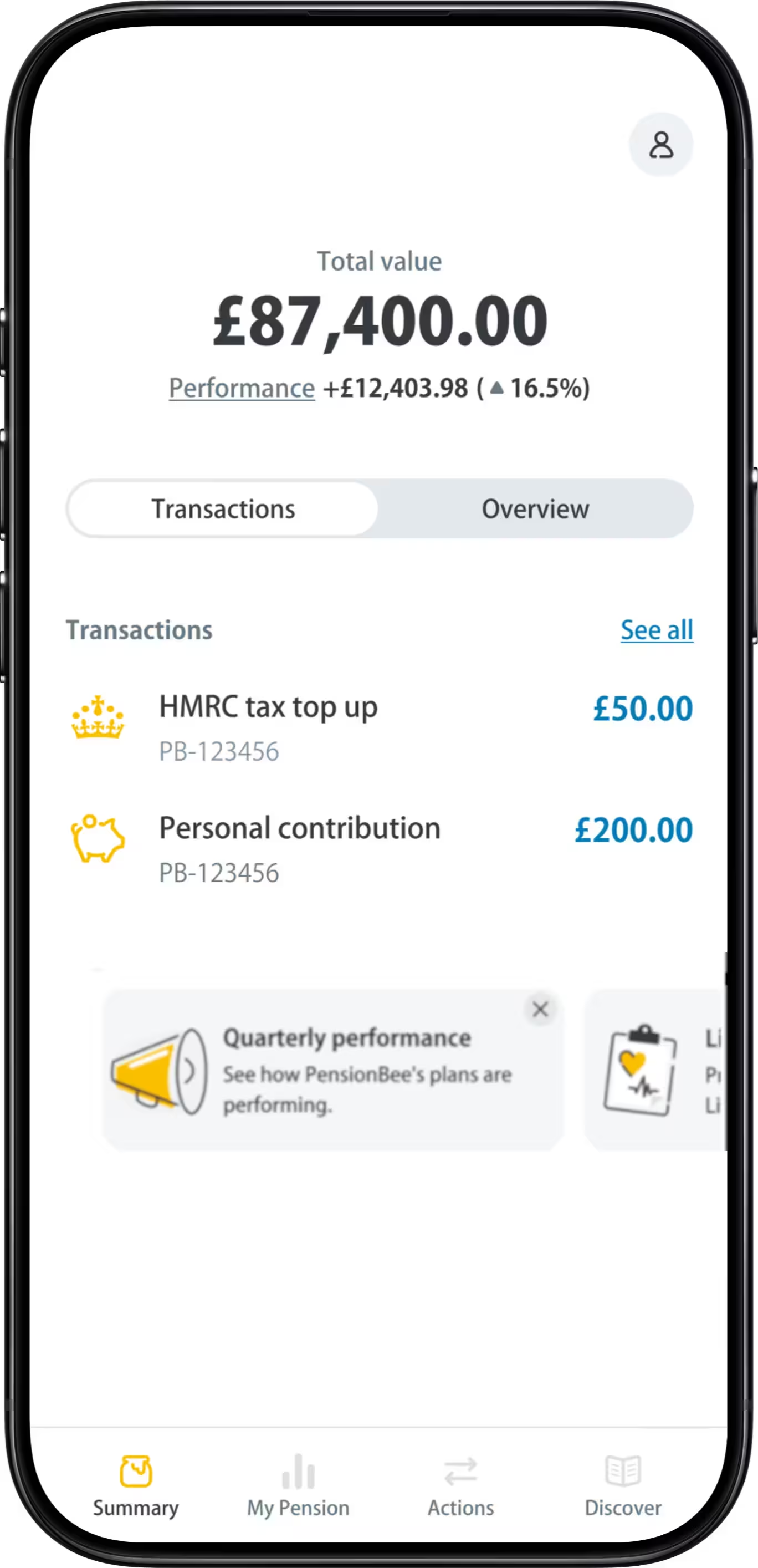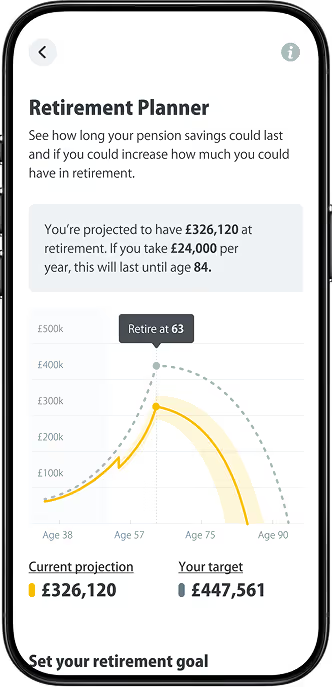




Sign up to our flexible pension plan for the self-employed and contribute as much or as little as you like, as often as you like.
When to start contributing to a self-employed pension
If you’re self-employed, you won’t have an employer adding to your pension each month. But the upside is that you have the freedom to build your savings in a way that suits you. Starting early gives your money more time to grow because of compound interest - but if you haven’t started yet, it’s never too late to make a positive difference.
Why start a pension if you’re self-employed?
When you’re self-employed, it’s easy to focus on the here and now - landing clients, paying invoices, keeping your business ticking along. But without an employer automatically paying into a pension for you, it’s vital to put a plan in place for your future income.
Starting a pension helps you:
- Future-proof your income - it provides long-term savings for when you eventually slow down or stop working.
- Avoid financial vulnerability - relying solely on the State Pension may not cover the lifestyle you want in retirement.
- Take advantage of tax relief - your contributions are boosted by government top ups, effectively giving you free money towards your future.
It’s not just about retirement, it’s about more financial freedom. Saving even a little now can mean more choice, flexibility and peace of mind down the line.
How soon can you start contributing?
Aged 18 and over
You can open a personal pension from age 18, no matter what kind of work you do. Whether you’re freelancing, running your own business or working part-time, you can start saving for the future whenever it suits you. All you need to do is make a pension contribution.
Getting into the habit of saving, even with small regular payments, can make a real difference over time. It’s a simple way to start growing your pension pot and give your future self a helping hand.
Why starting your pension early could make a difference
Time is one of the most powerful tools for growing your savings. The sooner you start, the more time your money has to grow through compound interest. This means you earn returns not only on what you pay in, but also on the returns your pension has already made.
For example, let’s say you start contributing £150 a month at age 25. Assuming 5% annual growth, you could have around £119,640 by 65. Wait until age 40 to start, and you’d end up with roughly £66,505. This shows the power of starting early.
Figures calculated using PensionBee’s Pension Calculator. For full assumptions including growth rates, fees and inflation, see our Pension Calculator FAQs.
This is the power of time. But even if you’re starting later, consistent saving and making the most of tax relief can still make a meaningful impact.
Flexible ways to pay into your pension
One of the biggest advantages of being self-employed is flexibility, and that extends to how you save for retirement. You can:
- set up a regular Direct Debit to contribute to a pension monthly, keeping things simple and automatic;
- pay in lump sums when cash flow allows, such as after a big invoice or during busy seasons; and
- top up in good months and lower or pause contributions when work slows down.
There’s no minimum commitment with a personal pension, so you’re free to adjust your payments around your income, not the other way round.
{{dark-cta}}
What are the contribution rules and limits?
For self-employed people (as with all UK pension savers), the annual allowance is the limit on the gross amount that can be saved into a pension each tax year without incurring tax charges. The current standard annual allowance is _annual_allowance or 100% of your earnings (_current_tax_year_yyyy_yy), which includes personal and employer contributions (of which you can make both if you’re a director of a limited company) and any third party contributions (such as contributions from a spouse or parent).
For most people, this limit is more than enough. But it's useful to know the rules if your income changes or you get paid at different times throughout the year.
Here's how it works:
- if you earn £30,000 a year, you can pay in up to £30,000 (including tax relief); or
- if you earn £70,000 a year, your limit stays at _annual_allowance.
If you go over your annual allowance, you may need to pay tax on the extra amount. You might also be able to use any unused allowance from the past three tax years to increase your limit through pension carry forward.
Do you get tax relief on your contributions?
Yes, tax relief applies to your personal contributions - it's one of the biggest benefits of saving into a pension.
For every £100 you pay in, the government adds £25 in basic rate tax relief, turning it into £125 in your pension pot.
If you pay a higher rate of Income Tax, you can claim back even more through your annual Self-Assessment - up to an extra 25%, or 31% for higher and additional rate taxpayers.
Tax relief means you’re getting a helping hand from the government every time you contribute. It’s one of the simplest and most effective ways to grow your retirement savings over time.
You can use our Pension Tax Relief Calculator to work out how much tax relief you'll get based on your income and contributions.
If you’re a limited company director, you can also make employer contributions directly from your business. This could reduce your Corporation Tax bill and make pension saving even more tax-efficient. However, you can’t claim tax relief on employer contributions - only on personal contributions that are paid from your net profits.
How much should I contribute to my pension?
There's no universal number. The right amount depends on your goals, age, life stage and income.
A good rule of thumb is to save a percentage of your earnings each month, such as 10-15%. But even smaller contributions can make a difference when invested over time.
Another approach is to match what an employer might pay if you were enrolled in a workplace pension, typically around 8% of your income.
For example:
- if you’re earning £2,000 per month, contributing £200 could be a good starting point; or
- if you’re having a great quarter, top up with a lump sum to keep your savings on track.
What matters most is consistency. Building the habit now, whatever the amount, can set you up for a more comfortable future.
If you’re new to pensions
If this is your first time thinking seriously about retirement, you're not alone. Of the 4.2 million people who work for themselves in the UK, fewer than one-in-five contribute to a pension. But getting started is simpler than you might think.
What to consider:
- pensions offer greater flexibility and more generous tax relief than other long-term savings options like Lifetime ISAs (LISAs);
- you don't need a large income to start as even small, regular contributions can grow over time; and
- our self-employed pension guide walks you through choosing a scheme and managing your savings online.
Balancing irregular income
One of the biggest challenges of self-employment is managing income ups and downs. The key is to stay flexible and think long term.
Here are some ways to make it work:
- set aside a small percentage of each payment you receive - even starting with 5% - so you're always contributing something;
- increase your contributions during busy periods and reduce them when work slows down; and
- use lump sum contributions after big invoices to boost your pension pot when cash flow allows.
Whether you're just starting out or decades into your career, contributing to a self-employed pension is a great way to save for your future. Start small, stay consistent and let time and tax relief do the heavy lifting.
Risk warning
As always with investments, your capital is at risk. The value of your investment can go down as well as up, and you may get back less than you invest. This information should not be regarded as financial advice.
Last edited: 08-05-2026
Choose a self-employed pension that puts you in the driving seat
When investing, your capital is at risk