
Blog
Is gold a good investment?
Learn more about how gold can be considered as part of a diversified investment portfolio of assets and other investments such as pensions.

From necklaces and coins to mobile phones and teeth - gold can be found nearly everywhere. And around $1.6 trillion is privately invested in the precious metal.

So what is it about gold that’s so attractive to investors? And with so many other options available, is gold a good investment? Let’s find out.

Why invest in gold?

Gold is usually invested in strategically, typically making up a small portion of an investment portfolio. There are several reasons why an investor might invest in gold.

To guard against inflation

Inflation occurs when the value of goods increases over time. For example, today’s £10 note isn’t able to buy as much as it did 30 years ago because bread and other items have gone up in price.

Gold, however, doesn’t have a fixed monetary value like a £10 note. Its value is determined by what people are willing to pay for it. And historically, its value has tended to increase over time.

Between 1971 and 2020 the price for an ounce of gold rose from £15 to £1,206 (80 times). Yet £15 in cash buys far less today than it did in the 70s.

That’s not to say that gold will necessarily continue to rise in price. In fact, between 1980 and 2006 it mostly fell in value. And between 2013 and 2016 it fell by around 3_personal_allowance_rate.

But, for the most part, the price of gold has outpaced inflation which makes it an attractive alternative to cash and other higher-risk investments.

To guard against economic instability

Gold has an interesting relationship with the stock market. It tends to rise in value when the stock market’s going through a bad patch, and lose value when the stock market’s doing well.

For example, the chart below shows how the price of gold changed during the 2020-21 Covid pandemic.

The price initially shot up between March and September 2020, as the economy struggled against the impact of the virus on people’s lives. But after the stock market continued to make unexpected gains (contrary to initial expectations), the price of gold fell. Then, as infections began to rise again and the economy looked more fragile, the price of gold started to increase once more.

Part of the reason for this is that investors were moving some money away from the volatile stock market and into gold, which is considered a more stable and lower-risk investment.

To benefit from value growth

As we’ve seen, the price of gold can change a lot over a short space of time. And this often happens at times when the stock market is in decline.

For example, the price of gold grew 12% between the end of January and April 2020. Meanwhile, the S&P 500 (the largest stock index) fell by 11%.

Of course, gold can fall in value too. It fell from £1,464 to £1,323 in the 12 months leading up to September 2021.

Is this a good time to invest in gold?

As we’ve seen, there’s more than one reason to invest in gold. So whether now’s a good time to invest in gold will depend on your goals and circumstances.

If you’re looking to beat inflation over a long period of time, investing in gold might be worth considering. Historically, long-term investments in gold have paid off.

If you’re looking to invest for short-term gains, the risk will be much higher. As of September 2021, the price of gold is near an all-time high. But that’s not to say it won’t increase further, and it could fall in value too.

Can you invest in gold through your pension?

Pension plans carefully balance a mix of investments to manage risk. Because gold is considered a lower-risk investment, it can make up part of a pension’s portfolio.

If your pension plan is a type of target date fund, it will change its mix of investments over time to compliment your expected retirement age. This is so that you benefit from higher-risk assets with higher growth potential while you’re young, and lower-risk assets that are more stable when you’re older. So while your plan may include little or no gold while you’re young, it could start to move some investments into gold as you get older.

You can ask your current pension provider whether gold makes up part of your portfolio. And if it doesn’t, you could look around for a more suitable pension if you’re certain you want to invest in gold.

PensionBee’s Tailored Plan invests in commodities as you approach retirement, including gold (up to 0.6% of total portfolio balance as of September 2021). You can learn more about it and our other pensions on our Plans page.

{{main-cta}}

Risk warning

As always with investments, your capital is at risk. The value of your investment can go down as well as up, and you may get back less than you invest. This information should not be regarded as financial advice.

Why your pension balance may be fluctuating more than usual
Find out why your pension balance might have gone up and down a bit more than usual lately.

Those of you who check your pension balance regularly might have noticed that it’s been a bit up-and-down in recent weeks. This usually isn’t anything to be worried about in the long term, but we wanted to explain what’s going on to relieve any concerns.

Businesses around the world are facing some challenges

Depending on your plan, your pension will invest a substantial proportion of your money into company shares via the stock market. This is an effective way to grow your money over the long term, since companies focus on improving their performance (and therefore their value) each year. But in the short term, companies have their good days and their bad days. This is influenced by all sorts of things, from the changing price of raw materials to their ability to ship their products on time. And this, in turn, affects how much investors are willing to pay for a share in that company’s future.

Your pension balance reflects the value of the companies your money is invested in. And lately, companies have been dealing with a number of challenges, including:

  • Labour shortages
  • Energy price rises
  • Covid disruption
  • HGV driver shortages and Brexit changes, particularly in the UK

We don’t know how long these challenges will continue for, and therefore how much they’ll continue to impact businesses. However, it’s possible that some of these challenges could be resolved in the near future with strong government action. And if that’s the case, the long term impact on companies (and therefore their share price) could be relatively minimal.

Investors are concerned about the wider economy

The value of a company is influenced by its performance, which in turn is impacted by the wider economy too. These days, investors are concerned about several trends in the global economy.

Rising inflation

Inflation occurs when the average price of goods increases each year. With current supply and labour shortages driving price increases in many sectors, investors are concerned that central banks around the world (including the Bank of England) will begin raising interest rates. This would make it more expensive for people and businesses to borrow money, reducing the amount of money circulating in the economy and investment in new projects. That could limit business growth and that could impact their share price.

Technology rotation

When investors are concerned about a challenging business environment, they tend to look at investing their money in more stable and traditional companies. For many years, the big tech companies like Apple and Amazon have driven a lot of stock market growth. But now they’re under the scrutiny of governments around the world who are tightening up regulation and considering ways of making them pay more tax. This has got investors concerned, and we’re seeing big tech’s share price growth slow as a result.

Exposure to Chinese debt

China’s impact on the global economy is huge, so any economic challenges there could eventually be felt around the world. Currently, several Chinese property developers are rumoured to be struggling to service their debts. If those developers were to default on their debts, it would be bad news for both Chinese and non-Chinese companies who are lenders or somehow otherwise exposed as suppliers. Investors are understandably cautious, and this is having knock-on repercussions for a number of companies’ share prices.

Should you be concerned?

Pensions are long term savings products that are expected to weather even the worst of short term economic challenges. One way pensions are resilient is through diversification. So when some shares fall, others may rise. More broadly when stocks fall, other asset classes, like bonds, may rise. Over the long term, share prices have increased. So while you might see your pension balance go up and down more than usual today, it’s likely to regain any lost growth over the long term.

If you’re approaching retirement, you may be more concerned since there will be less time left to recover any short term losses. Our older customers will have been able to take up our lower-risk plans which aim to preserve your money by investing in more stable assets like bonds. This will limit your exposure to current challenges.

When markets aren’t doing well, there are more opportunities for investors. So you may want to increase your contributions and take advantage of lower prices than before the market downturn and boost your long term savings.

If you have any questions or concerns about your pension, you can contact your BeeKeeper by live chat, email or phone. We’re always here to help.

Risk warning

As always with investments, your capital is at risk. The value of your investment can go down as well as up, and you may get back less than you invest. This information should not be regarded as financial advice.

How does working from home affect your pension?
If you work from home is your pension being affected - for better or worse?

Millions of people have been working from home since the pandemic forced many UK businesses to close their offices. But did you know that over 4.5 million people mostly worked from home before the pandemic, anyway? This trend has been increasing for more than 20 years, and it’s likely to continue.

So how could working from home affect your pension? Let’s find out.

Weighing up the costs

One of the joys of working from home is the lack of commute, which can be expensive. And cities in the UK have some of the most expensive transport in the world. In fact, London takes the top spot and is more than double the cost of other major UK cities.

City
Monthly travel pass cost
Annual cost
London
£160
£1,920
Birmingham
£65
£780
Manchester
£73
£876
Edinburgh
£56
£_pension_age_from_20282
Cardiff
£53
£636
Belfast
£60
£720

Lunch is another expense that many office-based workers have to absorb. One of the most popular lunch destinations is Pret A Manger, where a Chicken Caesar & Bacon sandwich, an apple and a latte could set you back around £8.60. But those working from home could make all of this with shop-bought ingredients for around £2 - a £6.60 saving.

Those working from home will see one cost rise, however. Work from home employees estimate they’re spending an extra £40 a month to heat their home and boil their kettles, according to one survey.

Office worker’s monthly cost
Work from home monthly cost
Travel
£160
£0
Lunch
£172
£40
Home electricity
£0
£40

So how do the numbers stack up? When the above costs are factored in, the average Londoner could save £292 each month by working from home. That’s around £3,000 a year, including a month’s holiday leave. Those in Edinburgh would save around _tax_free_childcare a year.

Investing your work-from-home savings into a pension

Whether you work from home or commute to the office, your workplace pension scheme will work the same way - you and your employer will make a contribution, and the government will top it up.

The key difference for those working from home is that they have the option of investing the money they save on commuting and lunch into their pension.

So let’s see what a Londoner’s pension could be worth if they invested their £3,000 a year work-from-home savings. For simplicity, we’ll break it down by month and won’t include employer contributions because that will likely stay the same.

  • They contribute their £250 a month savings into their pension
  • The government tops it up by _corporation_tax
  • A total of £313 goes into their pension
  • Their pension grows 4% each year for 30 years
  • Their pension could be worth an extra £210,319

And someone working from home in Edinburgh?

  • They contribute their £182 a month savings into their pension
  • The government tops it up by _corporation_tax
  • A total of £227 goes into their pension
  • Their pension grows 4% each year for 30 years
  • Their pension could be worth an extra £152,775

And one more, excluding lunch (because not every office worker eats out every day).

  • A Londoner contributes their £131 a month savings into their pension
  • The government tops it up by _corporation_tax
  • A total of £163 goes into their pension
  • Their pension grows 4% each year for 30 years
  • Their pension could be worth an extra £109,702

Now, the average person in the UK retires with a pension pot worth £61,897. So it seems that wherever you live, working from home could potentially double your pension pot at retirement. And the difference is stark.

Withdrawing £8,000 a year from the average £61,897 pension pot could sustain you for nine years. But withdrawing the same amount from a £171,599 pension pot (average + Londoner excluding lunch example) could last well past your 100th birthday.

Is it worth working from home to boost your pension?

There’s little doubt that for some people, working from home could free up enough money to significantly boost their retirement savings. But is working away from the office really worth it?

Working from home suits some people really well. Some people find it much easier to concentrate away from the distraction of the office, while some parents appreciate spending more time at home with their children. That could even help reduce childcare costs, freeing up more money to put into their pension.

But others miss the buzz of an office environment and the collaboration opportunities that are easier to come by. And less in-person social contact can negatively impact some people’s mental health.

Working from home isn’t for everyone, but there are clear financial benefits for those who do. So it’s worth considering your own needs first before exploring the possible financial gains. And if you’re unsure, you could consider working from home for just a few days a week, as a more workable middle-ground between the two.

{{main-cta}}

Risk warning: As always with investments, your capital is at risk. The value of your investment can go down as well as up, and you may get back less than you invest. This information should not be regarded as financial advice.

What happened at PensionBee in October 2022?
From how financial markets have performed to behind-the-scenes news from PensionBee HQ.

It’s been a time of great change in the UK, with the latest political events stimulating a period of uncertainty for both currency and stock markets. While the Pound is stabilising, high inflation and rising interest rates continue to challenge the UK economy. Both have made headlines in recent months, but it’s important to remember that in moderation, inflation and interest rates aren’t inherently bad.

The combination of high energy prices, rising interest rates, and soaring inflation is unfortunately the perfect recipe for a recession. In fact, some news outlets suspect we’re already in a recession. The Bank of England is attempting to limit the damage of inflation by raising interest rates. Yesterday’s announcement by the Bank of England marked the biggest hike in interest rates in more than 30 years as interest rates hit 3%. However, ongoing interest rate rises are likely to slow economic growth.

How are financial markets performing?

October market performance

With economic uncertainty widespread, information has become the most important detail for investors. Fortunately, October marks an opportunity for insights as many companies reported their quarterly earnings halfway through the month. In UK stock markets, the FTSE 250 Index rose by almost 4%, and in US stock markets, the S&P 500 Index rose by almost 9% last month.

However, these updates can be a double-edged sword. A weaker outlook for Amazon sparked a reduction of more than _ni_rate in their share price. Even companies that have seen a successful October may still be far from their 2021 highs after this year’s continued period of market volatility. Although we’re currently in a bear market, the good news is global markets have recovered from every bear market in history.

For a more in-depth look at current market performances, read What happened to pensions in October 2022? And for a breakdown of the latest developments in the UK pensions industry, read What you need to know about pensions right now.

Remember that your pension is a long-term investment when considering short-term performance. Past performance is not a guide to future performance. As with all investments, capital is at risk.

Behind-the-scenes at PensionBee

Trophies

Refer a friend

We’re revamping our refer a friend programme to help our customers save more for their retirement and we wish to let you know that our previous refer a friend programme ended on 31 October 2022.

We’ll soon be launching a new and rewarding way to refer your friends to PensionBee. Broadly speaking, for every friend you refer under the new programme you’ll get a £100 pension contribution to help you save for a happy retirement. We will let you know as soon as we launch it.

PensionBee Roadshow

Thanks to everyone who joined us on 26 October for the launch of our PensionBee Roadshow. We’re excited to continue our tour of the UK in 2023. Please keep an eye out for more information on dates and locations in the new year.

‘Good Egg’ accreditation

We’re delighted to have recently been awarded Good With Money’s ‘Good Egg’ accreditation, which recognises financial providers that are committed to improving outcomes for both consumers and the planet. At PensionBee our vision is to live in a world where everyone can look forward to a happy retirement.

Keep an eye out for our next update on our blog. We’re always working on new features to make our customers happy so if you have any ideas or suggestions, please email feedback@pensionbee.com or let us know on social media.

What happened at PensionBee in November 2022?
From how financial markets have performed to behind-the-scenes news from PensionBee HQ.

At PensionBee, we’re committed to being honest and open with our customers, even when times are challenging. Meeting our customers face-to-face, during our first PensionBee Roadshow event, was a wonderful opportunity to discuss some of your most important questions in person. The widespread impact of market volatility on pensions has understandably concerned many investors, so we’ve produced a series of online monthly market performance summaries to help you understand the root cause of fluctuations in your pension balance. And of course, your personal BeeKeeper’s only an email or call away if you have questions or concerns.

How are financial markets performing?

November market performance

November’s been a favourable month for investors, despite the current ‘bear market‘ environment. In UK stock markets, the FTSE 250 Index rose by over 6%, and in US stock markets, the S&P 500 Index rose by almost 6% last month.

What’s changed? The fog of uncertainty’s lifting, as central banks are expected to make smaller interest rate increases in future announcements. This slower pace has given rise to economic commentators anticipating when inflation and interest rates may peak in 2023.

For a more in-depth look at current market performances, read What happened to pensions in November 2022? And for your plan’s performance, read How PensionBee’s plans are performing in 2022 (as at Q3).

Remember that your pension is a long-term investment when considering short-term performance. Past performance is not a guide to future performance. As with all investments, capital is at risk.

Behind-the-scenes at PensionBee

Trophies

Building a greener future

We’re participating in the Mayor of London’s Business Climate Challenge (BCC) to aid London’s target of becoming a zero carbon city by 2030. PensionBee’s one of 40 businesses located on the southern bank of the Thames pledging to reduce their building’s energy consumption by at least 1_personal_allowance_rate over the next year. We’re also delighted to have recently won ‘ESG Company of the Year’ at the Investors Chronicle Celebration of Investment Awards 2022.

Season’s greetings from the PensionBee team

Wishing you a merry Christmas and a happy New Year! If you’d like to get in touch with your BeeKeeper during the festive period, you can give us a buzz between the following hours:

  • Friday 23 December: 9:30am - 3:30pm
  • Saturday 24 - Tuesday 27 December: closed
  • Wednesday 28 - Thursday 29 December: 9:30am - 5pm*
  • Friday 30 December: 9:30am - 3:30pm*
  • Saturday 31 December - Monday 2 January: closed
  • Tuesday 3 January: business as usual, 9:30am - 5pm

**During these days phone lines will be closed, however you can contact your BeeKeeper via live chat and email.

Keep an eye out for our next update on our blog. We’re always working on new features to make our customers happy so if you have any ideas or suggestions, please email feedback@pensionbee.com or let us know on social media.

What happened at PensionBee in December 2022?
From how financial markets have performed to behind-the-scenes news from PensionBee HQ.

There’s no better time to sit down and review your finances than in January. If you haven’t already, make use of the Retirement Planner tool in your BeeHive to set your pension goals and plan for a happy retirement. As the saying goes, ‘the best day to start investing was yesterday, the second best day? Today!’

How are financial markets performing?

November market performance

2022 was officially the worst year in global markets since the 2008 financial crisis. In UK stock markets, the FTSE 250 Index fell by almost 1% in December, bringing the 2022 performance close to -_basic_rate. In US stock markets, the S&P 500 Index fell by almost 4% in December, bringing the 2022 performance close to -_basic_rate.

For a more in-depth look at current market performances, read What happened to pensions in December 2022? And for your plan’s performance, read How PensionBee’s plans are performing in 2022 (as at Q3).

Remember that your pension is a long-term investment when considering short-term performance. Past performance is not a guide to future performance. As with all investments, capital is at risk.

Behind-the-scenes at PensionBee

Trophies

Our new Refer a friend scheme’s here!

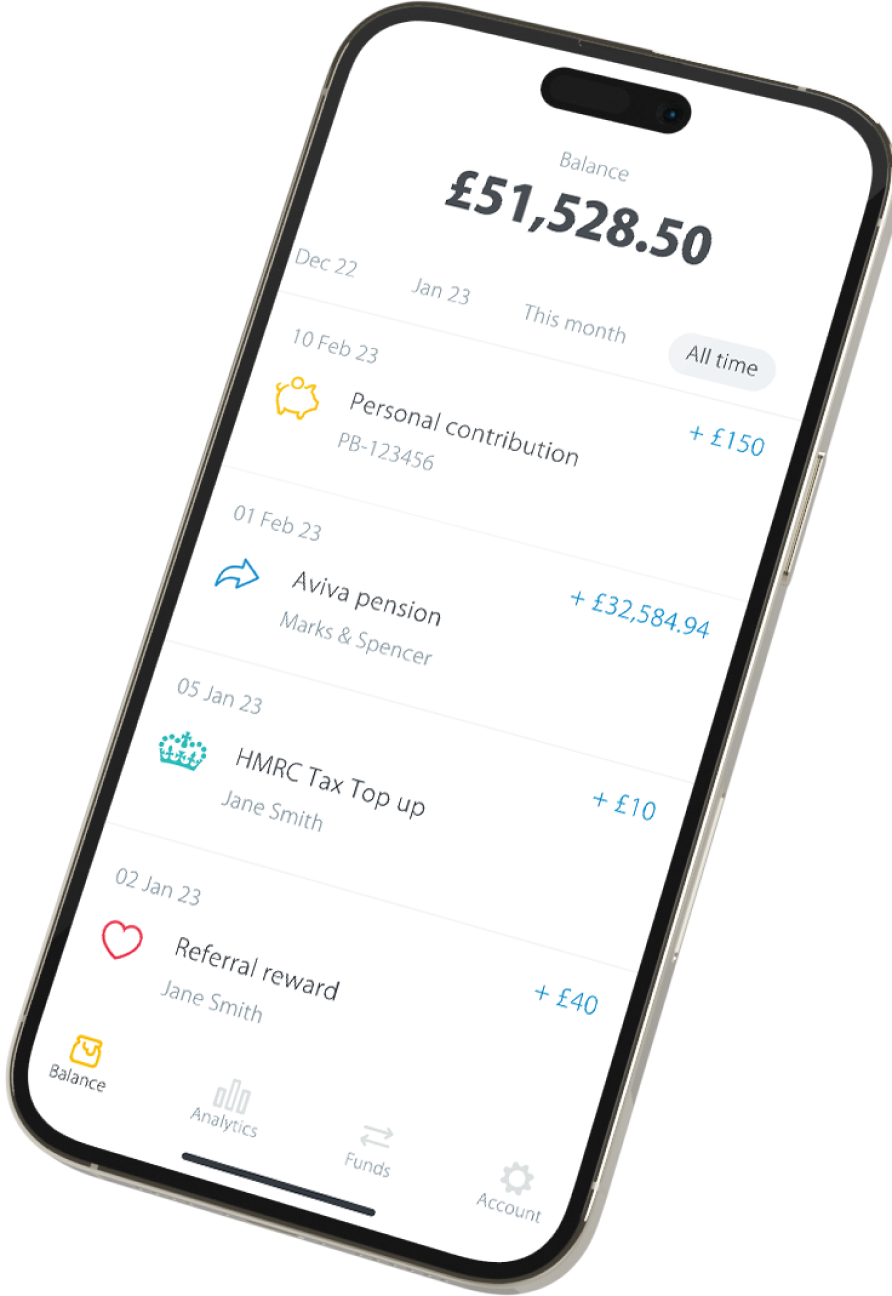
You can now receive £100 (£80 + £20 tax top up) into your pension when you refer a friend! All you have to do is share your unique referral link, which can also be found in your BeeHive under ‘Account’ and then ‘Refer a friend’. Once your friend has opened an account and added £100 or more to their pension, you can claim your £100 reward.

Series Two of The Pension Confident Podcast

In December, we wrapped up Series One of The Pension Confident Podcast, and are thrilled to see our iTunes rating at 4.7/5. If you haven’t already, why not rate us on whichever platform you listen to our podcast on? We’re excited to announce that we’ll be back at the end of January with a brand new series to help you make the most of your finances (here’s a sneak peek of what to expect in Series Two)!

The PensionBee Roadshow’s back

Thanks to everyone who joined us in London for the launch of our PensionBee Roadshow back in October. We’re excited to announce that we’ll be continuing our Roadshow this spring, visiting Birmingham, Manchester, Brighton and Glasgow! It’s our mission to help you save for a happy retirement so all attendees will receive a £25 pension contribution (£20 + £5 tax top up) to add a little honey to your pot.

Over 55? Try out regular withdrawals

Our new regular withdrawal feature provides you with greater control over how, and when, you can take your retirement income from age 55 (57 from 2028). If you’re eligible for pension withdrawals, and want to try our new feature, just drop us an email at feedback@pensionbee.com.

We’re always working on new features to make our customers happy so if you have any ideas or suggestions, please email feedback@pensionbee.com or let us know on social media.

Top 12 self-employed jobs and the retirement income they could expect
Here’s 12 of the most common self-employed jobs in the UK, the average salaries they’re receiving, and the estimated retirement income they could generate.

If you’ve worked for a company in the past decade, it’s likely you were automatically enrolled into its pension scheme. Under the government’s Auto-Enrolment rules, eligible employees will have 8% of their qualifying earnings (5% from the employee and 3% from the employer), paid into their workplace pension. But what happens when you’re self-employed?

Self-employment gives you the opportunity to set your own hours, decide the projects you want to work on, and be in charge of your own career path. Around 13% of the UK workforce is self-employed.). This could be anything from being a Tutor to a Photographer or Web Designer. With self-employment comes the responsibility to set up and save into your own pension. While around 8_personal_allowance_rate of eligible employees are Auto-Enrolled in their workplace pension scheme, just 16% of self-employed workers choose to pay into a pension for their retirement.

Here’s a countdown of the 12 most common self-employed jobs in the UK according to Indeed, the average salaries each job could receive, and how making pension contributions equivalent to 8% of salary could snowball into a happy retirement. The following scenarios are for illustrative purposes only and assume:

  • A salary increase of 2.5% each year, from the 2023 average job title salary
  • Regular contributions of 8% gross salary into one defined contribution pension
  • Each pension experiences investment growth of 5%, inflation of 2.5%, and an annual management fee of 0.7% each year.

12. Tutor

The Tutor’s Association estimates there are up to 100,000 private tutors in the UK (1). Tutors use their knowledge to privately teach a particular subject to adults learners or children studying towards an exam. In 2023, the average UK salary for a Tutor’s £36,191 per year (2).

Tutors saving 8% of their gross annual salary would have pension contributions worth around £2,939 in the first year, and a pension pot of £32,751 after 10 years. After a 40-year career this could provide a pension worth £189,173.

11. Courier

Each day, over 11 million parcels are delivered in the UK (3) - that’s 132 parcels per second! Couriers travel across the country, delivering packages securely to businesses and households. In 2023, the average UK salary for a Courier’s £12,304 per year (2).

Couriers saving 8% of their gross annual salary would have pension contributions worth around £999 in the first year and a pension pot of £11,134 after 10 years. After a 40-year career this could provide a pension worth £64,314.

10. Social Media Manager

The UK’s home to an estimated 53 million active social media users (4). Social Media Managers create strategies and manage social media campaigns to increase brand visibility for businesses. In 2023, the average UK salary for a Social Media Manager’s £33,378 per year (2).

Social Media Managers saving 8% of their gross annual salary would have pension contributions worth around £2,711 in the first year and a pension pot of £30,205 after 10 years. After a 40-year career this could provide a pension worth £174,470.

9. Personal Trainer

Approximately 62% of British Personal Trainers are self-employed (5). Personal Trainers are fitness experts who plan an exercise regime and coach their clients towards a health goal. In 2023, the average UK salary for a Personal Trainer’s £28,493 per year (2).

Personal Trainers saving 8% of their gross annual salary would have pension contributions worth around £2,314 in the first year and a pension pot of £25,784 after 10 years. After a 40-year career this could provide a pension worth £148,935.

8. Web Designer

There’s almost two billion websites in the world and five billion active internet users (6). Web Designers use their user accessibility knowledge to design an engaging website for various audiences. In 2023, the average UK salary for a Web Designer’s £30,187 per year (2).

Web Designers saving 8% of their gross annual salary would have pension contributions worth around £2,452 in the first year and a pension pot of £27,317 after 10 years. After a 40-year career this could provide a pension worth £157,790.

7. Freelance Writer

According to Semrush, half of companies outsource content writing to independent freelancers (7). Freelance Writers multi-task assignments to write copy across formats and industries. In 2023, the average UK salary for a Freelance Writer’s £20,308 per year (2).

Freelance Writers saving 8% of their gross annual salary would have pension contributions worth around £1,649 in the first year and a pension pot of £18,378 after 10 years. After a 40-year career this could provide a pension worth £106,152.

6. Graphic Designer

The Creative Industries Council estimates that only 5_personal_allowance_rate of design employees are educated to degree level (8). Graphic Designers use design tools to create brand assets, from logos to leaflets. In 2023, the average UK salary for a Graphic Designer’s £27,214 per year (2).

Graphic Designers saving 8% of their gross annual salary would have pension contributions worth around £2,210 in the first year and a pension pot of £24,627 after 10 years. After a 40-year career this could provide a pension worth £142,250.

5. Virtual Assistant

Data from the Office for National Statistics (ONS) revealed that around 14% of the labour market works exclusively from home (9). Virtual Assistants work remotely to support businesses in various administrative capacities. In 2023, the average UK salary for a Virtual Assistant’s £32,217 per year (2).

Virtual Assistants saving 8% of their gross annual salary would equal pension contributions worth around £2,616 in the first year and a pension pot of £29,154 after 10 years. After a 40-year career this could provide a pension worth £168,401.

4. Video Editor

The majority of film editing and television work’s based in London (10). Video Editors compile and compress digital video files to produce adverts or films. In 2023, the average UK salary for a Video Editor’s £27,927 per year (2).

Video Editors saving 8% of their gross annual salary would have pension contributions worth around £2,268 in the first year and a pension pot of £25,272 after 10 years. After a 40-year career this could provide a pension worth £145,977.

3. Event Coordinator

Every year almost 280,000 weddings take place in the UK (11). Event Coordinators organise and execute the logistics of important events, from award ceremonies to weddings. In 2023, the average UK salary for an Event Coordinator’s £24,965 per year (2).

Event Coordinators saving 8% of their gross annual salary would have pension contributions worth around £2,027 in the first year and a pension pot of £22,592 after 10 years. After a 40-year career this could provide a pension worth £130,494.

2. Photographer

Each year, over 1.81 trillion photos are taken worldwide (12) - that’s five billion per day! Photographers are hired on a freelance basis to capture moments such as professional headshots or sporting events. In 2023, the average UK salary for a Photographer’s £26,928 per year (2).

Photographers saving 8% of their gross annual salary would have pension contributions worth around £2,187 in the first year and a pension pot of £24,368 after 10 years. After a 40-year career this could provide a pension worth £140,755.

1. Labourer

Data from 2020 found that close to one in five self-employed people work in the construction sector (13). Labourers work on building sites to renovate or expand the architecture of a region. In 2023, the average UK salary for a Labourer’s £23,071 per year (2).

Labourers saving 8% of their gross annual salary would have pension contributions worth around £1,874 in the first year and a pension pot of £20,878 after 10 years. After a 40-year career this could provide a pension worth £120,594.

Figures provided are rounded to the nearest pound.

Which self-employed job could expect the biggest pension pot?

The biggest estimated pension pot belongs to a Tutor, worth a whopping £189,173! On the other end of the spectrum, a Courier has the smallest estimated pension pot at £64,314. To add context, the average UK worker earns £33,000 (22), and could expect a pension pot of £172,494 using the same pension modelling. Here’s the projected pension pots of the 12 most common self-employed jobs in the UK:

If you’ve qualified for the full State Pension, you’ll currently receive £203.85 per week, or £10,600 a year (2023/24). Depending on what your happy retirement looks like, you’ll need at least a modest amount of personal pension savings to retire comfortably. In fact, the Pensions and Lifetime Savings Association’s Retirement Living Standards gives us an idea of how much a single person needs in retirement: the minimum living standard requires about £13,000 a year, a moderate lifestyle costs around £23,000, and a comfortable lifestyle is around £37,000.

As you can see, the State Pension alone isn’t enough to support even a minimum living standard. You can try our Pension Calculator to see how much income your pension could generate in retirement, and the impact of making regular or one-off contributions. Having savings in a personal, workplace, or self-employed pension can help fill that income gap and support a moderate or comfortable lifestyle. While self-employment rates have been rising over the past decade, the pension savings of this group aren’t keeping pace and there’s now a self-employed pension gap.

Introducing an Auto-Enrolment scheme for the self-employed could be a simple way to help close the pension gap between employed and self-employed workers. The Financial Resilience All Party Parliamentary Group has advocated for this legislation in its financial resilience report on UK households. In the meantime, if you’re self-employed and want to start contributing to a pension, PensionBee’s self-employed pension gives you the flexibility to make contributions that work for you. You don’t need to worry about minimum contributions, so you can contribute an amount that fits your budget as often as you’d like.

Footnotes

  1. Tutor’s Association: https://thetutorsassociation.org.uk/
  2. Indeed: https://uk.indeed.com/career-advice/finding-a-job/self-employed-jobs
  3. Shiply: https://www.shiply.com/articles/uk-delivery-and-courier-industry-statistics
  4. Cybercrew: https://cybercrew.uk/blog/social-media-statistics-uk/
  5. Healthily Toned:
    https://www.healthilytoned.com/single-post/self-employed-vs-employed-fitness-instructors
  6. Techjury: https://techjury.net/blog/how-many-websites-are-there/
  7. Semrush: https://www.semrush.com/blog/category/content/content-creation/
  8. The Creative Industries: https://www.thecreativeindustries.co.uk/facts-figures/
  9. Office for National Statistics:
    https://www.ons.gov.uk/employmentandlabourmarket/peopleinwork/
  10. Prospects: https://www.prospects.ac.uk/job-profiles/film-video-editor
  11. Photutorial: https://photutorial.com/photos-statistics/
  12. Office for National Statistics:
    https://www.ons.gov.uk/businessindustryandtrade/constructionindustry/

Risk warning

As always with investments, your capital is at risk. The value of your investment can go down as well as up, and you may get back less than you invest. This information should not be regarded as financial advice.

Four steps to negotiating your salary
We all know about the gender pay gap, but what about the gender ask gap? Find out why women aren’t negotiating their salary at the same rate as men - plus what they can do to earn more money.

Despite progress towards workplace equality, the gender pay gap remains a persistent reality in the UK - with women earning an average of 7.7% less than their male counterparts, according to the Office for National Statistics. While systemic changes are crucial to narrowing the gap, there are a few things women can do on an individual basis - from investing in their personal development to building their professional networks - to advance their careers.

Here are four steps to negotiating your pay.

1. Closing the “ask gap”

CEO and Co-Founder of The Know; Lynn Anderson Clark says: “I think it’s hard to say ‘have more confidence’. But something that helps me is preparation. So when I think about preparation, it’s about doing my research, benchmarking and things like that.”

One key strategy lies in dismantling the “ask gap”. Research reveals a key reason behind the pay gap: women are less likely than men to negotiate their salaries. A staggering 68% of women accept salaries without negotiation, a figure 16% higher than men. This translates to significant missed opportunities, compounding over time.

Before initiating a raise conversation, gather data on your performance and research market rates for similar positions. You can use tools for salary benchmarking to see how your job role and years of experience is typically compensated. This information strengthens your position and allows you to present a compelling case for a raise.

2. Timing the conversation

Social Entrepreneur and Broadcaster; Natalie Campbell MBE says: “Where is the business in the financial planning year? Because budgets are planned in these cycles. So if you go at the wrong time and you get the answer that ‘we can’t accommodate it’, it’s because the budget’s been set already.”

When preparing to ask for a promotion, timing can be just as important as evidencing your contribution. Knowing when the company’s financial planning period is crucial. If you go onto Companies House and look at the company account, you can see the filing date. Your employer’s financial year could run from January to December or more often from April to March.

Alternatively, you could align your request with recent positive developments within the company. Did you just land a major client or successfully complete a significant project? These moments of success are ideal for highlighting your contributions and the value you bring. If a raise isn’t immediately possible, don’t hesitate to inquire about the timeline for future consideration.

3. Navigating the negotiation

Senior Customer Experience Researcher at PensionBee; Priyal Kanabar says: “Make sure you have clarity about what your job role is, and that your manager is on the same page. Because what can end up happening is you absorb tasks from here and there, and your role becomes harder to benchmark.”

When negotiating, it’s best to focus on the value you bring to the company, not your personal needs. You may have found the cost of living crisis stretching your finances and your salary hasn’t kept pace with inflation. While this is valid, it isn’t a business case for progression. Instead highlight your achievements, contributions to projects, and how your work has benefited the organisation.

Although salary is undeniably important, it’s only one piece of the puzzle. You may want to also consider negotiating other elements of the compensation package such as pension contributions, flexible work arrangements, health insurance and professional development opportunities. These can contribute significantly to your work-life balance, well-being, and career development.

4. Be prepared to walk away

Social Entrepreneur and Broadcaster; Natalie Campbell MBE says: “If you know what the salary is, or at least the benchmark of the salary, it means you can have a conversation. When you walk in and they say ‘what’s your salary expectation?’, that’s the biggest bear trap.”

It’s crucial to remember that negotiations are a two-way street. You should confidently advocate for yourself, but be prepared to walk away if necessary. If an employer isn’t willing to meet your expectations and reasonable requests, or if the company culture doesn’t value your skills and contributions, it might not be the right fit for you. As the saying goes: “know your worth, then add tax”.

A Glassdoor survey found that job hoppers experience an average salary increase of approximately 1_personal_allowance_rate - _basic_rate compared to those who stay in the same role over a long period. Plus, if you’re concerned about whether your new employer has a gender pay gap - you may be able to check online. Companies with more than 250 employees are legally required to declare their gender pay gap data on the government’s Gender Pay Gap Service.

Summary

Negotiating your salary and benefits package is a valuable skill that can significantly impact your earning potential. By closing the “ask gap”, timing your approach, considering the total compensation package, and being willing to walk away if needed, you can bridge the gap between your potential and your paycheque, ensuring you’re rewarded fairly for your work.

Listen to episode 25 of The Pension Confident Podcast and hear from our panel of expert financial guests as they discuss their experiences of negotiating pay, as both an employee and employer. You can also watch the episode on YouTube or read the transcript.

Risk warning

As always with investments, your capital is at risk. The value of your investment can go down as well as up, and you may get back less than you invest. This information should not be regarded as financial advice.

How to talk to friends about money
Navigating social circles with different financial priorities can be tricky. Here’s some practical tips for nurturing your friendships without breaking the bank.

This article was last updated on 24/10/2024

Friendships are a cornerstone of our lives. They provide us with support, laughter, and a sense of belonging. But what happens when money enters the equation? The truth is, friendships can become surprisingly complex when friends have different financial priorities. Here’s some practical tips for nurturing your friendships without breaking the bank.

The awkwardness of money talk

Psychologist and Associate Fellow of The British Psychological Society; Dr. Tara Quinn-Cirillo says: “How does your body and your mind respond when you’re under stress? So that can be stress around money, gifting or going away for the weekend. If you recognise how it shows up, that will help you to know when there’s a problem.”

Let’s face it, talking about money can be uncomfortable. According to Intuit’s Prosperity Index Study, Gen Z would rather talk about politics, parenting struggles, sex and infertility rather than debt, their salaries and bad investments.

Avoiding financial conversations may create tension in friendships. But discussing money matters goes beyond breaking the ice, it can have a significant impact on your financial health as well. The Money and Pensions Service (MaPS) says talking about money can help people make better, less risky decisions about their finances.

Tips for talking to friends about money

Head of Brand and Communications at PensionBee; Brooke Day says: “I’m naturally a bit of a people pleaser. Especially in my 20s, I’d feel like if I say ‘no’ to this, I’m not going to be invited again. They’re never going to speak to me again. They’re going to think I’m the worst person.”

When it comes to dealing with money and maintaining friendships, the key is open communication. Talk about your budgets, how much you’re comfortable spending, and suggest alternative activities that everyone can enjoy without feeling left out.

This could be a potluck dinner, game nights, or free outdoor activities. Feel like you’re paying a premium to keep up with your friend’s lavish lifestyle? You can use apps like Splitwise to track group spending and make sure group expenses are divided fairly.

When you’re the wealthier friend

Being the friend with more money can also be challenging. In fact, a LifeSearch survey found that wealthier Britons are more likely to end friendships, with 56% of the highest earners dropping an average of seven friends during 2020 and 2021.

It’s easy to assume that those with the most money also are the most financially healthy. However, this assumption fails to consider the many factors that can influence one’s true financial wellbeing.

The truth is that financial income doesn’t necessarily equate to disposable income. Just because someone earns a lot of money doesn’t mean they have the freedom to spend it as they please. They may have other financial responsibilities that take precedence, such as saving for their retirement or supporting their loved ones.

While it’s natural to want to treat your friends from time to time, always paying for others can lead to resentment. It’s important to set healthy boundaries and be considerate of everyone’s budgets - including your own.

{{main-cta}}

Tips for making lifelong friends

Co-Founder of Millennial Money UK; Niaz Azad says: “It depends on the friendship you have with people. I’ve been reconnecting with friends from my childhood. That’s a pre-status, pre-wealth bond that you have and none of us care what we’re doing.”

Friendships change as we grow older, and money is one of many things that can affect how long they last. Other factors such as health, work schedules, and life goals can also play a part. Here’s how to focus on the things that truly matter.

  • Focus on experiences, not spending - instead of focusing on expensive outings, prioritise making memories together. Engaging in meaningful conversations over coffee can often be more fulfilling than going out for a fancy dinner.
  • True friendship isn’t about money - don’t judge friendships by how much you spend when together. Find happiness in shared hobbies, emotional support, and enjoying each other’s company.
  • Know when to let go - when money becomes a recurring source of conflict or stress within a friendship, it might be worth considering whether the relationship is still right for you. It’s okay to reassess and make decisions that prioritise your overall well being.

Transitioning through different life stages

As time goes on, differences in financial situations between friends can become more noticeable. Milestones like buying a home, going on holidays, or starting a family can highlight these gaps.

Sometimes it’s the unexpected that creates an emotional distance between friends. Events such as losing a job, going through a divorce, or receiving an inheritance, can change your financial situation and priorities.

It’s important to remember that each person’s journey is unique, and these transitions can bring about changes in our relationships. However, understanding and empathy can help maintain strong bonds, even as our life circumstances evolve.

Summary

Friendships improve our lives in countless ways. While money can sometimes add complexity, focusing on shared values can help friendships weather financial storms.

Here are five key takeaways on how to talk to friends about money.

  • Push past the awkwardness - however awkward the conversation might feel, it’s better to be open than create tension with friends or have your own financial health take a hit.
  • Being the wealthier friend - it’s important to set healthy boundaries and be considerate of everyone’s budgets, including your own. Always paying for everything may lead to resentment.
  • Focus on experiences, not spending - prioritise making memories together rather than focusing on expensive outings.
  • Know when to let go - it’s OK to reassess friendships that no longer bring you happiness. Financial behaviour can reveal differing priorities or values. If money becomes a source of strife, it may be the right time to question whether you’re still compatible.
  • Engage in open communication - discuss budgets, spending limits, and suggest alternative activities that everyone can enjoy without feeling left out.

Listen to episode 27 of The Pension Confident Podcast and hear from our panel of expert financial guests as they discuss their experiences of talking about money with friends. You can also watch the episode on YouTube or read the transcript.

Risk warning

As always with investments, your capital is at risk. The value of your investment can go down as well as up, and you may get back less than you invest. This information should not be regarded as financial advice.

What does a politician's pension look like?
It’s well known that politicians receive a comfortable salary, but how do their pensions compare to yours? Read on to find out.

MPs, or Members of Parliament, are individuals elected by the UK public to represent their interests and concerns in the House of Commons. They play a crucial role in the legislative process, considering and proposing new laws, as well as raising issues that matter to the public.

While politicians like to tell voters they’re ‘just like us’, one clear difference is pay. To be in the top 1% of UK earners, you need to earn more than £181,000. The Prime Minister of the UK can expect to earn around £1_state_pension_age,786 in the 2024/25 tax year, with Cabinet Ministers earning close to £158,851.

But the financial benefits don’t stop there. Like many public sector workers, MPs will also receive a generous defined benefit pension when they retire.

Who decides what MPs get paid?

In short, the Independent Parliamentary Standards Authority (IPSA) is responsible for MPs’ pay and pensions. But this wasn’t always the case. Parliament used to be in control of their own compensation. MPs would consult experts, such as the Senior Salaries Review Board, then vote on whether their salaries increased or not.

What changed?

In 2005, The Freedom of Information Act 2000 came into effect and immediately campaigners requested details of MPs’ expenses. This began the slow unravelling of the MPs’ expenses scandal of 2009 which had a profound impact on public confidence in British politicians.

In response to the expenses scandal, the government announced the creation of IPSA, which came into effect in 2010. These days IPSA makes decisions on the pay, pensions and reasonable expenses of the 650 elected MPs and their staff in the UK.

MPs’ salaries

The annual changes in MPs’ pay are determined based on the changes in average earnings in the public sector, as indicated by the Office for National Statistics (ONS) figures. This means that the annual basic salary paid to all MPs is adjusted in accordance with the trends in average earnings.

As of April 2024, MPs receive a basic annual salary of £91,346. It’s worth noting that ministers who are also Members of the House of Commons receive two types of salaries: a MPs salary and a ministerial salary. For example, a Cabinet Minister would receive an extra £_pension_age_from_2028,505, while the Prime Minister gets a further £75,440.

MPs’ pensions

Most modern workplace and personal pensions are defined contribution pensions. On retirement, the amount your defined contribution pension is worth depends on how much money you’ve contributed and the performance of your investments. With a defined benefit pension, the employer guarantees to pay a set retirement income, regardless of how the underlying investments perform.

In 2015, alongside other public service pension schemes, the MPs’ Parliamentary Contributory Pension Fund (PCPF) was reformed. Prior to this, their defined benefit pensions were based on an MP’s final salary, but now they’re calculated based on their average salary over their career. Additionally, the age at which pensions become payable has been aligned with the State Pension age, rather than fixed retirement ages of 65 or 60.

Parliamentary pension double standard

In July 2023, the Chancellor announced the Mansion House Reforms, which aimed to boost investment in UK companies through pension schemes. The Mansion House Compact is a pledge made by nine UK pension providers to invest at least 5% of their default funds in ‘unlisted UK companies’ by 2030.

Unlisted companies are businesses that aren’t traded on a public stock exchange. These earlier stage businesses are generally considered to be riskier, and many of them could fail. At the same time, investing in unlisted companies usually comes with higher costs for pension savers.

Why does this matter? MPs own pension scheme (the PCPF) has underinvested in the UK by their own standards. While UK companies make up 3.6% of the FTSE All-World index series, a report published in The Times found that the PCPF scheme only allocated around 1.3% of its total equities to the UK.

In short, the government has been pushing for more pension investment in UK companies - except for their own pension scheme. The trustees of the scheme (who are current and former MPs) have made the decision that the UK is a bad bet for their retirement, but not for yours.

How to kickstart your pension savings

While we wouldn’t necessarily recommend you become a politician, there are lots of other things you can do to boost your pension savings. Our calculators can help you plan ahead for retirement. Use our Pension Calculator to understand how much you might need to save into your pension. If you feel there’s a gap between your projected and desired retirement income, you can consider combining your old pensions and contributing to your pension to boost your savings.

Risk warning

As always with investments, your capital is at risk. The value of your investment can go down as well as up, and you may get back less than you invest. This information should not be regarded as financial advice.

Can money buy happiness?
Ever wondered if your hard-earned income actually translates to more happiness?

For many people diligently building their nest egg, the question of money’s link to happiness is a natural one. After all, financial security can reduce a significant source of stress. But can simply having more money guarantee a life filled with joy?

What does the research say?

A landmark 2010 study by Princeton’s Daniel Kahneman and Angus Deaton found that increased income positively affects day-to-day happiness, but only up to a point - roughly $75,000 annually in the US (equivalent to almost £58,000 in the UK).

This was contradicted by research published in 2021 by the University of Pennsylvania’s Matthew Killingsworth, suggesting happiness continues to rise steadily with income, even above the $75,000 mark!

To settle the debate once and for all, Killingsworth, Kahneman and Professor Barbara Mellers teamed up in 2023 to find the answers. They found that within each income group, some individuals start off unhappy and then experience a significant increase in happiness until they reach an annual income of $100,000 (£75,000). After reaching this point, their happiness levels plateau. So, it’s clear the relationship between happiness and money isn’t always straightforward.

But what can we do if we want to find more happiness from the money we have? Putting income aside, there are two aspects of our money that can greatly impact our happiness: how you get your money and how you spend it.

How you get your money matters

Research by Harvard Business School professor Michael Norton and Ph.D. student Grant Donnelly, found that people who earn their wealth tend to be happier than those who inherit it.

The study surveyed over 4,000 millionaires worldwide to understand the impact of wealth on happiness. The findings revealed that self-made millionaires were happier than those who inherited money or married into wealth.

Occupational Psychologist and chartered member of the British Psychological Society, Kim Stephenson says: “What they’ve generally found is there’s a happiness set point. So, if you have a lottery win, it’ll boost happiness for a while. Then it usually sinks back [to how it was before]. And if you have a serious accident or you lose money, you tend to ping back. Part of the secret of it is learning how to push your set point up.”

Why might this be the case?

Lottery wins or unexpected inheritance can bring a sudden influx of wealth. While this may initially create a sense of excitement and euphoria, the sudden change in financial circumstances can also lead to challenges in adjusting to the new lifestyle.

Windfalls can create strains in managing finances, as you may not have developed the financial skills necessary to handle large sums of money. Without proper financial planning, the wealth can quickly diminish, leading to financial stress and instability.

On the other hand, income earned through work typically offers a sense of control and stability over your financial situation. Regular paychecks allow individuals to plan and budget, providing a greater sense of security and peace of mind.

Work often plays a central role in shaping your identity and providing a sense of purpose. It can also foster social connections, as colleagues and professional networks offer opportunities for social interaction and support.

How you spend your money matters

Research from Dr. Elizabeth Dunn, Chief Science Officer at Happy Money and PhD student Iris Lok found that people who had donated to charity were happier than those who hadn’t.

The study found that people who spent on social experiences and time-saving services were happier. In other words, when we use our resources to benefit others and prioritise our time wisely, we tend to feel more life satisfaction.

Co-Founder of The Humble Penny and The Financial Joy Academy, Ken Okoroafor says: “How can you commit a little bit of money, or maybe even no money, to [something] that gives you joy every week. So, for me, on Fridays I go on a date with my wife. We go to the cinema, go for a walk and maybe stop off for a mocha. I’m really experiencing joy every week. It’s planned, it’s intentional, it could be low cost, and it works, and everyone can attain that.”

Why might this be the case?

There are several reasons why spending money on others and investing in experiences and time-saving services (such as hiring house cleaners or ordering food delivery) can contribute to greater life satisfaction.

Firstly, when we give to others or contribute to charitable causes, it creates a sense of purpose and fulfilment. Knowing that our actions have made a positive impact on someone else’s life can bring a deep sense of joy and satisfaction.

Secondly, spending on social experiences allows us to connect with others, fostering meaningful relationships and a sense of belonging. Human beings are social creatures, and the quality of our relationships play a significant role in our overall happiness.

Lastly, investing in time-saving services frees up valuable time that can be spent on activities that bring us joy and fulfilment. By outsourcing tasks that we don’t enjoy or that consume a lot of our time, we can focus on activities that align with our passions and values.

Summary

Money provides us with the means to fulfil our needs, pursue our goals, and enjoy certain pleasures in life. It offers a sense of security and freedom, allowing us to experience a higher quality of life. However, it’s important to recognise that money alone doesn’t guarantee happiness.

Here are three key takeaways on how to use your money to increase your happiness.

  • Focus on experiences, not spending - invest in experiences for lasting memories and long-term happiness. Prioritise activities and resources that enhance your physical and mental wellbeing, like gym memberships, yoga classes, therapy sessions, or wellness retreats.
  • Invest in personal growth - use your money to develop new skills and expand your knowledge. Take classes, participate in workshops, or seek guidance from a mentor.
  • Practise mindful spending - align your expenses with your values and priorities. Support your hobbies, passions, or values by spending on books, art supplies, or charitable donations. By being intentional, you’ll derive greater happiness from your purchases.

Listen to episode 30 of The Pension Confident Podcast and hear from our panel of expert financial guests as they discuss how you can use money to maximise your own happiness and the pitfalls to avoid. You can also watch the episode on YouTube or read the transcript.

Risk warning

As always with investments, your capital is at risk. The value of your investment can go down as well as up, and you may get back less than you invest. This information should not be regarded as financial advice.

How PensionBee’s plans are performing in 2024 (as at Q3)
Find out the performance of the PensionBee plans at the end of Q3 2024, when compared to the UK and US stock markets.

This is part of our quarterly plan performance series. Catch up on last quarter’s summary here: How PensionBee’s plans are performing in 2024 (as at Q2).

As we near the end of 2024, it looks like it will be a noteworthy year. Recent data from the Office for National Statistics (ONS) shows that UK inflation is at 1.7% in September, the lowest in over three years. Over in the US, inflation has also dropped for six consecutive months to 2.4%. These trends indicate a stabilising economy, which can boost investor confidence and positively affect pension funds. Given the fear of global recession making headlines in recent years, this apparent ‘soft landing’ from the volatility of 2022 should be reassuring news for savers.

The Federal Reserve cut interest rates to a range of 4.75% - 5%, marking the first reduction since the COVID-19 pandemic began in March 2020. Meanwhile, the Bank of England has kept its Bank Rate at 5%. When interest rates go down, the prices of existing bonds usually go up. This is because new bonds are issued with lower yields, making the older bonds with higher yields more appealing to investors. This is positive news for customers with longer-dated bonds in their pension, such as our Tailored Plan vintages closest to retirement.

Most pensions are heavily invested in company shares across the globe. If we rewind back to July, Japan’s Nikkei 225 Index seemed poised to lead global indices with the US’s S&P 500 Index trailing closely behind. However, growth for the Nikkei 225 has slowed in the last quarter. This was linked to the country’s incoming Prime Minister and concerns about maintaining high interest rates. For context, around 6% of the equity portion of our Tailored (Vintage 2043 - 2045) Plan is invested in Japan.

On the other hand, China’s Hang Seng Index began the year slowly and has since surged impressively following the Chinese government’s easing of restrictions. By the end of September, the Hang Seng had taken the lead as the best-performing major index of 2024, followed closely by the US’s S&P 500 Index. Why does this matter? Asia (excluding Japan) makes up around 11% of the equity portion of the Tailored (Vintage 2043 - 2045) Plan.

Keep reading to find out how global markets and our PensionBee plans have performed over 2024 so far.

2024 performance figures cover the period between 1 January and 30 September 2024 only.

This blog is only meant to provide information. The data comes from our money managers or plan factsheets. Performance figures are before fees. Past performance isn’t an indicator of what will happen in the future. As with all investments, capital is at risk.

Company shares in 2024 (as at Q3)

What are company shares?

Company shares are units of ownership in a company. When a company wants to raise money, it can issue shares to investors who pay a certain amount of money for each share. By buying shares, investors become part-owners of the company and can enjoy its profits or growth. But, they also take on the risk of a decline in share prices if the company performs poorly or even goes bankrupt. Company shares are also known as ‘stocks’ or ‘equities’, and they’re commonly traded on stock markets.

Global stock markets

In the Eurozone, shares performed well, particularly in real estate and healthcare. Over in the UK, company shares rose after the Labour Party’s election win, but concerns about a tough Autumn Budget and rising taxes tempered optimism.

In the US, company shares grew. But the performance across industries was a mixed bag: with investors preferring the stability of utility companies over the excitement of the technology sector.

Japan’s stock market saw high volatility, with a significant drop after the Bank of Japan raised interest rates, but it stabilised later as fears eased. In Asia, markets outside Japan saw solid gains - especially China due to government stimulus.

Index
Investment location
Performance over 2024 (%)
Equity proportion (%)
FTSE 250 Index
UK
+6.9%
10_personal_allowance_rate
EuroStoxx 50 Index
Europe (excluding UK)
+10.6%
10_personal_allowance_rate
S&P 500 Index
North America
+20.8%
10_personal_allowance_rate
Nikkei 225 Index
Japan
+13.3%
10_personal_allowance_rate
Hang Seng Index
Asia Pacific (excluding Japan)
+24._personal_allowance_rate
10_personal_allowance_rate

Source: BBC Market Data

PensionBee’s equity plans

Plan
Money manager
Performance over 2024 (%)
Equity proportion (%)
Shariah Plan
HSBC (traded via State Street Global Advisors)
+19.3%
10_personal_allowance_rate
Fossil Fuel Free Plan
Legal & General
+12.5%
10_personal_allowance_rate
Impact Plan
BlackRock
+8.1%
10_personal_allowance_rate
Tailored (Vintage 2061 - 2063) Plan
BlackRock
+12.4%
10_personal_allowance_rate
Tailored (Vintage 2055 - 2057) Plan
BlackRock
+12.4%
10_personal_allowance_rate
Tailored (Vintage 2049 - 2051) Plan
BlackRock
+11.8%
96%
Tailored (Vintage 2043 - 2045) Plan
BlackRock
+10.7%
85%
Tracker Plan
State Street Global Advisors
+12.7%
8_personal_allowance_rate
Tailored (Vintage 2037 - 2039) Plan
BlackRock
+9.5%
72%
4Plus Plan
State Street Global Advisors
+9.4%
71% ^
Tailored (Vintage 2031 - 2033) Plan
BlackRock
+8.3%
59%

^Equity % at 30 September 2024, asset allocation changes on a weekly basis due to the plan’s actively managed component.

Bonds in 2024 (as at Q3)

What are bonds?

Bonds are a type of investment where you lend money to an organisation, like a government (sovereign bonds) or company (corporate bonds). In return, they agree to pay you back with interest over a fixed and pre-agreed period of time, this is known as the coupon. A bond yield is the anticipated rate of annual return that an investor gets from a bond for its duration (maturity of the loan).

Bonds have different ratings, with AAA grade also known as “investment grade”, signifying the highest quality with minimal risk of default. Due to their historical stability and predictability, bonds are a popular choice for shorter-term investors such as retirees who plan to draw down in the near future. Bonds are also known as ‘fixed-income securities’ or debt.

Global bond markets

Interest rates can impact pensions, especially for savers nearing retirement. When interest rates rise, newly issued bonds provide better returns, which can help pension funds grow. On the other side, low interest rates can reduce returns.

In the US, a surprising drop in jobs and inflation led the Federal Reserve to cut rates by 0.5% in September. In the UK, the Bank of England began cutting interest rates in August - for the first time since the pandemic. This cycle of interest rate cuts has also been mirrored in other major economies, such as Canada and Europe.

Plan
Source
Performance over 2024 (%)
Fixed-income proportion (%)
Schroder Long Dated Corporate Bond Fund
Morningstar
-0.5%
86%

Source: Morningstar

PensionBee’s fixed-income plans

Plan
Money manager
Performance over 2024 (%)
Equity proportion (%)
Pre-Annuity Plan
State Street Global Advisors
-1.9%
10_personal_allowance_rate
Tailored (LifePath Flexi) Plan
BlackRock
+6.2%
72%
Tailored (Vintage 2025 - 2027) Plan
BlackRock
+6.9%
41%

PensionBee’s money market plans

Plan
Money manager
Performance over 2024 (%)
Cash equivalent proportion (%)
Preserve Plan
State Street Global Advisors
+4._personal_allowance_rate
94%

Have a question? Get in touch!

Do you want to know more about your pension plan with PensionBee? You can check out our Plans page to learn how your money is invested in different assets and locations, or log in to your BeeHive to see your specific plan. You can always send comments and questions to our team via engagement@pensionbee.com.

Risk warning

As always with investments, your capital is at risk. The value of your investment can go down as well as up, and you may get back less than you invest. This information should not be regarded as financial advice.

Can you save your way to a lottery-size win?
Discover how switching from lottery tickets to smart saving could lead you to a jackpot size win - without relying on luck!

Each year around 36 million people in the UK take part in the National Lottery, in hopes of winning the jackpot. But what if there was a way to score a financial boost - without relying on luck?

Pension savings vs. lottery tickets

Playing the lottery can be exciting, but the odds of winning a huge amount of money are slim. Nearly 5_personal_allowance_rate of UK adults play the National Lottery each week. According to new research from PensionBee, if they put that money into their pensions instead, they could increase their retirement savings by nearly _money_purchase_annual_allowance.

For example, an 18-year-old who plays the lotto once a week has less than a 0.05% chance of winning _money_purchase_annual_allowance by the time they retire at _state_pension_age. In contrast, if they invested the cost of a weekly National Lottery ticket (£2) into their pension, they could expect to add about £9,958 to their pension pot. This amount, when spread over retirement, could translate to nearly £400 extra per year.

Those who buy lottery tickets twice a week could see an even bigger boost. Contributing £4 weekly to their pension from age 18 could result in an extra £19,930 by age _state_pension_age. This amount could translate to nearly £800 extra per year in retirement income. So while the chance of a big lottery win may feel enticing, saving into a pension is a more reliable way to achieve financial success in the future.

{{main-cta}}

Tips to help you boost your pension savings

So if you’re wondering how to boost your pension savings effectively, here are four simple tips to help you grow your projected retirement income.

1. Consider boosting your monthly pension contribution by 1%

While this may seem like a modest adjustment, a small increase today can have a significant impact on your future pension pot due to the power of ‘compounding’. Compound interest is basically interest that you earn on the interest that’s already built up on your savings.

Increasing your contributions by 1% will be a manageable change for many. If you can afford to, it shouldn’t drastically impact your current lifestyle and instead goes a long way in laying the groundwork for greater financial security in the future.

2. Maximise employer contributions

If you’re employed, you could be enrolled into a workplace pension scheme. Though there’s an eligibility criteria that’s worth checking. If you’re eligible, under Auto-Enrolment rules, both you and your employer must contribute to your workplace pension. As an employee, you must pay at least 5% of your annual qualifying earnings, which includes 1% tax relief from HMRC. Employers must contribute a minimum of 3% of your qualifying earnings.

But some employers may be willing to pay more or even offer matched contributions should you wish to increase your pension contributions. Contribution matching can help build your retirement savings faster, so it’s always worth asking your employer if this option is available.

3. Check the type of investment plan behind your pension

If retirement is still decades away, you may want to consider a medium to higher-risk investment plan, which could provide better returns than a more cautious plan. Many pension schemes automatically shift older workers into lower-risk investments, which could limit your growth potential. So it’s worth checking what pension plan you’re invested in and any past performance data if it’s available. If you’re a PensionBee customer, you can find out more about your plan on the website or in your app.

4. Combine your pensions where it makes sense to

With millions of pension pots and over £50 billion considered ‘lost’ in the UK, it’s crucial to keep track of your old workplace pensions. Combining them can help you assess whether you’re on track for your desired retirement lifestyle and if you need to increase your contributions. By consolidating you can simplify your finances and ensure you’re not missing any savings you’ve already built up.

Summary

Becky O’Connor, Director of Public Affairs at PensionBee, commented: “It’s hard to overcome the allure of receiving millions of pounds overnight, which is why so many play the lottery. But there’s more chance of ‘winning’ big with a pension - the catch is that you have to wait until you reach retirement to reap the reward.”

While the dream of winning the lottery is tempting, achieving financial security usually comes from regular saving and smart investments. Instead of depending on the luck of a lottery ticket, consider putting that money into your pension contributions. This change in focus towards saving consistently can help you build a more stable financial future over time.

Risk warning

As always with investments, your capital is at risk. The value of your investment can go down as well as up, and you may get back less than you invest. This information should not be regarded as financial advice.

10 pension changes and what they mean for your money
As we start the new year, it’s the perfect time to reflect on the significant changes in the pensions industry. Read about the key changes from the last decade and what’s to come.

As we start the beginning of a new year, we’re reflecting on changes in the pensions industry - past, present, and future. The past decade has brought significant changes to British pensions. We’ve seen initiatives like:

  • Auto-Enrolment;
  • advancements in technology; and
  • more flexible regulations.

This has made it easier for individuals to manage and use their retirement savings. Recent changes announced by the Chancellor in the Autumn Budget raised an important question: what further changes could we expect in the coming years?

The past 10 years of pensions

Let’s take a closer look at five key changes in the pensions industry over the last decade.

1. Introduction of Auto-Enrolment

PensionBee’s Founder and CEO, Romi Savova says: “I think Auto-Enrolment has put a new generation on a better footing for the future. Especially if you’re in your early 20s and you’re auto enrolled. If you’re saving throughout your life, come the age of 65, you’re probably going to be doing quite all right. I do think that’s been absolutely transformational.”

Auto-Enrolment is a system where eligible employees are automatically enrolled in a pension scheme by their employer, unless they choose to opt out. This initiative has made it easier for individuals to save for retirement.

In April 2019, the minimum contribution rate increased to 8%. Of which 5% comes from employees’ salaries (including tax relief) and 3% from employers. This change has encouraged more people to participate in pension schemes, helping to boost their financial futures.

2. Pension freedoms reforms

The introduction of the ‘pension freedoms‘ in 2015 made a big difference in retirement planning. Savers aged 55 and over (rising to 57 from 2028) have more choice on how to take an income from their defined contribution pension. Under these reforms, eligible retirees have the freedom to withdraw an income from their defined contribution pension, accessing as much as they want.

The tax rates on these withdrawals will depend on their total income for the year. Up to _corporation_tax of the pension pot can be taken tax-free. Currently beneficiaries can access that money without having to pay Inheritance Tax (IHT) if you pay away before 75.

Although this is set to change - more on IHT and pensions later! This has empowered individuals to manage their pensions according to their needs, although it has also highlighted the importance of understanding retirement costs.

3. The State Pension criteria

Money Advice Editor at The Telegraph, Sam Brodbeck says: “To date, pensioners have largely had final salary pensions and the State Pension. There’s probably going to be a generation, perhaps Gen X, that has none of that. And actually retires quite poor with only the State Pension.”

The introduction of the new flat-rate State Pension in 2016 marked a significant shift in eligibility requirements. To qualify for the new State Pension, individuals must have at least 10 years of National Insurance (NI) contributions, with 35 years needed for the full amount.

In December 2018, the State Pension age for women increased to 65. By October 2020, it rose to _state_pension_age for both men and women. These changes have prompted many to reconsider their retirement plans and the timing of their State Pension claims.

4. The triple lock promise

The triple lock system, designed to ensure that the State Pension keeps pace with inflation, was suspended in 2021. This system guaranteed that the State Pension would increase based on the highest of:

  • average earnings;
  • inflation; or
  • 2.5%.

Due to the impact of the furlough scheme, average earnings rose significantly, which may have distorted figures artificially.

This prompted the government to pause the earnings element of the triple lock for the _tax_year_minus_three tax year. Instead of increasing based on earnings, the State Pension rose by 3.1% in line with the Consumer Prices Index (CPI). But it was reinstated in April 2022 to support pensioners facing rising living costs amid ongoing economic challenges.

5. Abolition of Lifetime Allowance

In April 2023, the Lifetime Allowance (LTA) tax charges on funds exceeding the limit were removed. This allowed individuals to save more without facing penalties. The LTA itself was only abolished in April 2024, when it was replaced by two new allowances:

  • the Lump Sum Allowance (LSA); and
  • the Lump Sum and Death Benefit Allowance (LSDBA).

This significant change was part of the previous government’s Budget announcements in 2023 aimed at encouraging higher pension savings.

Additionally, the annual allowance for pension contributions increased from £40,000 to _annual_allowance (2023/24). This further incentivises individuals to boost their retirement savings. This increase remains in effect for the 2024/25 tax year as well. This move was expected to benefit many savers, providing them with greater flexibility in their pension planning.

What could the next 10 years look like?

Looking ahead, here are five proposed or potential changes we might see in the pensions industry over the next decade.

1. Inheritance Tax on defined contribution pensions

For a long time, it’s been possible to pass on pension funds to beneficiaries without them incurring Inheritance Tax (IHT). This has led many individuals to draw down on other assets as they age, allowing them to leave their pensions intact.

Under current rules, if someone passes away before age 75, their unused pension funds can be paid to beneficiaries tax-free. If they die after 75, their beneficiaries still don’t pay IHT, but they’re liable for income tax at their marginal rate on any withdrawals.

From April 2027, unused pension funds and death benefits will be included in IHT calculations. This could increase the tax burden on estates with large pension funds. It’s worth mentioning that the details of this change are still under consultation and the specifics of this new policy are currently unknown.

2. Rising pension age

Founder of Money to the Masses, Damien Fahy says: “I think the rules around pensions are changed too frequently. It’s a game they’re playing, but the rules are always changing. The age at which you can access your pension would’ve changed since you first put money in. I think we need to have a period of calm around pensions.”

The number of centenarians (people reaching 100 years old) has more than doubled in the past 20 years, according to the Office for National Statistics (ONS). The State Pension age is currently _state_pension_age but will rise to _pension_age_from_2028 starting 6 May 2026. Future changes will depend on population size and life expectancy.

The normal minimum pension age is the earliest point at which individuals can access their personal or workplace pensions without facing hefty tax penalties. From 6 April 2028, this age is set to rise from 55 to 57 years old.

3. The arrival of the Pensions Dashboard

Back in 2002, the Secretary of State for Work and Pensions suggested a web-based retirement planning tool. Fast forward over two decades and this still hasn’t been implemented. In September 2016, the government first announced its plans to deliver pension dashboards. The suggested Pensions Dashboard would allow savers to view their combined pensions information online, helping to reconnect lost pension pots.

This is more important than ever. New analysis conducted by the Centre for Economics and Business Research revealed that nearly one-in-five (_corporation_tax_small_profits) UK adults feel certain they have lost a pension pot. This equates to approximately 8.8 million individuals.

As such, there’s a critical need for timely implementation of the Pensions Dashboard to help millions of savers manage their pensions effectively. However, in October 2024, the Pensions Minister announced a prioritisation of the MoneyHelper Pensions Dashboard launch. This is a government backed and non-commercial digital service to enable people to access their pension information in a single place online.

In contrast, the Pensions Dashboard is specifically designed to enable commercial organisations to give users a detailed view of their pension savings. The launch of the Pensions Dashboard is currently delayed, which will affect how soon savers can access important information about their pensions. This delay means that consumers will have fewer options until the launch of commercial pension dashboard services. Once these services become available, it’ll increase savers’ options and encourage greater involvement in managing their pensions.

4. A 10-day pension switch guarantee for consumers

PensionBee’s Founder and CEO, Romi Savova says: “A ‘Pension Switch Guarantee’ is the obvious reform that we’ve been asking for many years. [It works] the same way that if you want to move any other financial asset. You tell one company that you’re joining and another company that you’re leaving. They have 10 days to move the money from one place to another.”

PensionBee analysis of Origo’s latest Pension Transfer Index has uncovered a 17% increase in transfer times over the last three years. Despite slow transfer times being identified as a problem by the Financial Conduct Authority (FCA) back in 2015, the issue remains prevalent amongst a number of key players.

The ‘Pension Switch Guarantee‘ initiative is campaigning for all providers to use electronic transfers for defined contribution pensions. Not only is this quicker, but it’s much safer for customers as payments are tagged and traced. This way you’ll know where your money is at every step of the process.

5. Expansion of Auto-Enrolment

The government needs to decide on the future of minimum pension contributions, including potential increases. The Pensions (Extension of Automatic Enrolment) Act passed in 2023 aims to expand enrolment to younger workers aged 18 to 21. It also removes the _lower_earnings lower earnings limit for qualifying contributions.

This change would result in additional contributions, significantly impacting take-home pay for low earners. By making pensions more accessible to younger workers, the government can help foster a culture of saving for retirement from an early age. This could boost the financial security of future generations.

Summary

The pensions industry is evolving quickly to meet the needs of today’s savers. In the past decade, we’ve seen key changes like Auto-Enrolment and pension freedoms that have made saving for retirement simpler.

Recent announcements from the Autumn Budget indicate that the government is keen to make further improvements. Looking ahead, we’re set to see new rules such as:

  • IHT on pensions;
  • changes to what age you can access your savings; and
  • the launch of the Pensions Dashboard to help people keep track of their savings.

Ideas like a 10-day pension switch guarantee and the expansion of Auto-Enrolment could also make pensions more accessible. As these changes unfold, it’s important for everyone to stay informed and engaged with your retirement plans.

To learn more, listen to episode 34 of The Pension Confident Podcast. You can also watch the episode on YouTube or read the transcript.

Risk warning

As always with investments, your capital is at risk. The value of your investment can go down as well as up, and you may get back less than you invest. This information should not be regarded as financial advice.

Starting a pension at 50
Feeling behind on retirement savings in your 50s? You’re not alone! Find out how even when starting from zero savings you can still snowball a pension to fund your happy retirement.

This article was last updated on 28/04/2025

If you find yourself in your 50s, with nothing set aside for retirement, it can feel like a daunting mountain to climb. Yet, this scenario is more common than you might think, with an estimated seven million people over 50 in the UK having no private pension savings at all.

Let’s face it, when you were younger, there wasn’t the financial awareness or planning tools we have today. Even benefits like Auto-Enrolment - which has meant more employees were automatically saving into a workplace pension - are relatively recent. However, it’s not too late to start saving, and the power of compound interest can help you make up for lost ground.

It’s never too late to start

The first thing to understand is the power of compound interest. Albert Einstein once famously referred to it as the ‘eighth wonder of the world’. Compound interest works on the principle that the interest you earn on your savings also earns interest. So, even if you’re starting to save later in life, your money can still grow significantly over time.

Example: Sarah’s 50 years old with no private pension savings, but she’s able to start saving £400 a month into a personal pension. For every £400 she contributes, the government adds an extra £100 in basic rate tax relief, effectively boosting her savings by _corporation_tax.

Assuming a growth rate of 5% after fees and inflation, she’d have a pension pot worth around £200k in 20 years time. This could give Sarah an extra £8k of income in retirement. Combined with her full new State Pension entitlement, she’d comfortably have over £20k a year to live on from her 70th birthday.

Many people now consider 70 to be the new 60. Research even indicates that baby boomers are experiencing a slower aging process compared to previous generations. With retirement ages already on the rise, it seems that not only is retirement being postponed, but so is the experience of old age.

Delaying retirement offers several advantages. Emotionally, remaining in the workforce can create more social connections, reducing the feelings of loneliness many retirees face. Physically, maintaining a routine that includes even light exercise can lead to improved health outcomes and increased life expectancy. Financially, the benefits of compound interest continue to grow, meaning that working longer and continuing to contribute to your pension can further bolster your retirement savings.

How much do I need to save?

Fortunately, for those curious about the potential expense of retirement, the Retirement Living Standards provided by Pensions UK offer a helpful resource. These standards estimate the costs associated with retirement living at three different levels.

The living standards for 2024/25 are:

  • Minimum - which covers all your needs, with some left over for fun. This costs £14,400 a year for one person, or £22,400 for a couple.
  • Moderate - which offers more financial security and flexibility. This costs £31,300 a year for one person, or £43,100 for a couple.
  • Comfortable - which includes more financial freedom and some luxuries. This costs £43,100 a year for one person, or £59,000 for a couple.

Here’s a graph to illustrate how much income you’d need from workplace and personal pensions, on top of a full new State Pension entitlement (more on this later!), to achieve these different lifestyles in retirement.

If you want to retire at 60, a good rule of thumb is that you’ll need savings of about 20-25 times your desired annual income in retirement. With this, you’ll also need to consider when you can access your pension money. You can start taking your personal and workplace pension at 55 (rising to 57 in 2028). But if you’re eligible for the new State Pension, you won’t be able to claim it until you reach _state_pension_age (which will rise to _pension_age_from_2028 in 2028).

Waiting to take an income from your pension gives you more time to save and allows your investments to grow. This potentially could lead to a more comfortable retirement and better financial security in the future.

How to start from zero savings

Starting your pension savings from scratch can feel daunting, but you can still make great progress in your 50s. Here’s a simple guide to help you get started.

1. State Pension

Your State Pension entitlement is based on the National Insurance contributions you make and the number of ‘qualifying years’ you accumulate. You can see how much you could receive, when you can claim it, and ways to increase it at gov.uk. Simply fill in a few details to check your National Insurance record.

As of _current_tax_year_yyyy_yy, the full new State Pension is worth _state_pension_weekly per week, amounting to _state_pension_annually per year. To receive any State Pension, you need at least 10 years of contributions, while 35 qualifying years are required for the maximum amount.

Checking your State Pension forecast is essential for retirement planning, as it helps you understand what you’ll receive from the government. If you’ve been a caregiver, you may qualify for National Insurance credits through Child Benefit claims, so make sure to claim everything you’re entitled to.

2. Workplace pension

A workplace pension is a pension that’s arranged by your employer. If you’re eligible, you’ll be automatically enrolled and contributions will be taken directly from your wages and paid into your pension each month. Usually, your employer also adds money to your pension and contributions from the government will be added in the form of tax relief. Usually basic rate taxpayers get a _corporation_tax tax top up, meaning HMRC adds £25 for every £100 you pay into your pension making it _lower_earnings_limit.

If you’re unsure whether you already have a pension, you can use our ‘Do I have a pension?‘ tool could be a good starting point. You can also search for your previous employers and find out which pension provider they likely used.

New analysis conducted by the Centre for Economics and Business Research reveals that over £50 billion pounds in hard-earned pensions are at risk of being misplaced or lost. If you have several pension pots, consolidating your pensions can be a good way to get on top of your retirement savings.

3. Personal pension

While a workplace pension is set up by your employer, you can choose and set up a personal pension yourself. When you start a personal pension you’ll usually be given a choice of investment options. Once you’ve chosen a plan, you can begin making regular contributions and one-off payments.

Why not take a moment to check which plan you’re currently in and think about how much risk you’re comfortable with? You might also want to look into specialist plans that really resonate with your values and financial goals. Taking this personalised approach can help you feel more confident that your investment strategy is right for you.

For _current_tax_year_yyyy_yy the tax-free annual allowance is 10_personal_allowance_rate of your salary or _annual_allowance (whichever is lower). This is the amount you can save into a pension each year while still receiving tax relief. If you earn less than £3,600, or you don’t earn anything at all, you’re still allowed to receive tax relief on pension contributions up to £3,600 gross. That means you can save up to £2,880 net plus a _corporation_tax tax top up.

Summary

Starting your pension saving from scratch in your 50s may not feel ideal, but it’s still worthwhile. With a clear plan and some discipline, you can still grow a sizable pension pot for your retirement. It’s your future that matters, so begin your planning today.

Consider it like planting a tree: the best time to plant one was 20 years ago, but the second-best time is now. Even if you’re starting in your 50s, you could have 20 more years to prepare for your future - which can truly make a difference.

Risk warning

As always with investments, your capital is at risk. The value of your investment can go down as well as up, and you may get back less than you invest. This information should not be regarded as financial advice.

4 reasons why investing in your pension beats those Black Friday deals
Here’s 4 reasons to forget Black Friday this November and invest in your pension instead.

We’re nearing the end of November and retailers are keen to remind us that Christmas is around the corner. Finding the perfect present is a full-time job: from tracking deliveries to hunting down deals. And our gifts aren’t the only export.

Black Friday’s an American export that’s been adopted internationally. Held the day after Thanksgiving, on the final Friday of November, it hosts a huge range of retail sales. And it seems UK consumers can’t resist a good deal.

The Black Friday discount day is back with a bang this year with shoppers expected to spend almost £9.2bn next weekend – _ni_rate more than in 2020 when much of the UK’s high street was in lockdown. https://t.co/5QGPLiNvJQ pic.twitter.com/seGHivHNkB
— FinancialAccountants (@InstituteFA)

Whether you’re window shopping or browsing online for inspiration, discounts have started appearing everywhere. Question is, are those Black Friday deals really saving us money?

Consumer champion Which? investigated whether we were better off skipping the Black Friday fad. It found that over 9_personal_allowance_rate of Black Friday ‘bargains’ were equal or cheaper in price six months ago. While the savvy shopper may grab a good deal with plenty of research, many consumers will be left out of pocket if they fall for these fake discounts.

Just because we’re not splashing the cash on Black Friday deals, doesn’t mean we can’t still make a super saving. Investing in your pension could be the answer. Younger savers can take part in the ‘30 by 30‘ challenge, and the adventurous saver may want to aim for the ‘million pound pension‘ milestone.

There are many exclusive perks to paying into your pension. With all that in mind, here’s four reasons you may want to forget Black Friday this November and invest in your pension instead:

1. Get a _corporation_tax tax boost, not a _corporation_tax markdown

Saving can be approached in two ways: purchasing at a reduced price, or putting money aside to grow. It’s easy to fill up your basket when shops are showering you with buy one get one free or half price offers. But remember, it’s only a real saving if you planned to buy it at full price.

Pensions are optimised for the long-term and offer several benefits. Basic rate taxpayers usually receive a _corporation_tax tax top up on personal contributions to their pension. For every £100 you save, _lower_earnings_limit gets invested. It’s up to you whether _corporation_tax more is better than _corporation_tax less.

Tip: Make the most of your money by boosting it with a _corporation_tax tax top up.

2. Save your Christmas market money for the stock market

Similar to how shops have sales seasons, the stock market can offer better value at different periods. A tried and tested approach to riding out the ups and downs is regularly investing a set amount each month.

Some commentators, for example, believe that December is historically the strongest month to invest your money, based on analysis of the average returns from different months. Whatever time of year you invest, it’s important to remember that past performance isn’t a reliable indication of future performance and investments should be made with the long-term in mind.

Tip: Reach your retirement goals by regularly investing in your pension.

3. Start battling inflation, not the shopping crowds

It seems that everything is becoming more expensive. That’s because the rate of inflation is raising the costs of goods. Ordinarily we see around 2.5% annual inflation, however in 2021 we’ve peaked at 3.8%. Base prices are increasing and Black Friday sales won’t stop that.

You can’t prevent inflation, but you can prepare. Part of that is building up a pension pot that grows in line with (or above) inflation. Regular contributions are one way you can grow your savings. Another is consolidating your pensions so you’ll avoid paying multiple annual management fees.

Tip: Prepare for inflation with one consolidated pension pot.

4. Make a positive impact with your money

Shopping for others (or ourselves) is rewarding, but supporting unsustainable industries through everyday purchases has an impact on our planet. PensionBee research revealed that “94% of adults are taking steps to live more sustainable lifestyles“.

You don’t have to go without to protect the planet, simply by investing your pension in companies that lead in sustainability could make a difference. Consumer interest in sustainability is why we launched our Fossil Fuel Free pension. Giving you the choice to invest your pension savings responsibly.

Tip: Use your pension savings to save the planet through responsible investing.

{{main-cta}}

Benefits of skipping Black Friday and saving instead (recap)

  • Grab _corporation_tax tax top ups on personal contributions
  • Beat the rate of inflation with regular investing
  • Drive positive environmental change with a responsible pension

Risk warning

As always with investments, your capital is at risk. The value of your investment can go down as well as up, and you may get back less than you invest. This information should not be regarded as financial advice.

Your guide to going green (and saving money)
Here’s 7 simple swaps you can make to save the planet - and the pounds.

This article was last updated on 05/12/2024

Governments across the globe are waking up to the effect of excessive carbon emissions on our environment. Slowly we’re seeing new initiatives and investment in green infrastructure. But you don’t need to wait for legislation to go green yourself. Being more carbon conscious is a personal choice - and potentially a cost-effective choice too.

Here’s your guide to going green and maybe even growing your wealth!

7 simple swaps to save the planet (and the pounds!)

Climate change is a worldwide issue and only communal action can change its course. While polluting corporations have come under pressure from the public to change their ways, we also need to do our fair share of smaller day-to-day carbon reductions. Here are seven simple swaps to reduce your carbon footprint and boost your finances:

1. Trace back your footprints

Our world is more interconnected than ever and every journey takes its toll on our environment. But there are plenty of ways we can be more thoughtful with how we travel. Driving less, or switching to a hybrid car, may help reduce your everyday carbon footprint. Also taking fewer flights abroad can avoid releasing extra carbon emissions into our atmosphere.

2. Powered by the planet

Keeping the lights on is getting more expensive as energy prices increase. So switching to LED bulbs could reduce your electricity bills - and carbon emissions from creating your energy. Taking these changes further up the chain, you could switch energy providers too. For a green energy supplier there’s Octopus Energy.

Tip: protect our oceans from plastics

Disposable plastic takes upwards of decades to decompose. So continual use of single-use products isn’t sustainable for the planet. In fact, half of all manufactured plastics have been made in the past 15 years alone. Let that sink in. Every recycled item is one less in landfill, which is still a small win.

3. Invest in vintage furniture

A passion for preloved furniture has become popular. For cost effectiveness, green credentials or individual style, more people are moving towards purchasing pre-owned. And from big international players like eBay to locally powered companies like Gumtree, apps supporting online sales of second hand goods are increasing. You’re spoilt for choice!

Tip: avoid waste and create space

Entire industries are built on us buying products we don’t need. And the costs add up as much as the clutter. Resisting these spending impulses can reduce your impact on the environment. You can be philosophical and take the Marie Kondo approach - only having objects that support essential living or spark joy.

4. Cut carbon, not calories

Bodies are all different, so naturally no day-to-day diet will work for everyone. However, a carbon conscious diet can benefit our bodies and our planet. You can still eat meat, yet in smaller quantities and from local suppliers. Or fight food waste with Too Good To Go. Not eating to excess can also save you money and improve your health.

5. Every cup of coffee

In our ‘on the go’ schedules it’s easy to grab a drink whilst getting from A to B - especially when in a rush. All those disposable cups add up, though. Using reusable cups might require some responsibility in remembering to pack it, but could also result in a cheaper drink. Many coffee shops even offer discounts when you bring your own cup.

6. Fighting fast fashion trends

Sustainable living is in style. In fact, PensionBee research found that 82% of female customers aged 30 and under distrust (and don’t want to invest in) the fast fashion industry. Quality clothing often outlasts inferior alternatives, and the ‘cost to wear’ equation can prove cheaper to opt for the bigger price tag product instead of rebuying clothes again and again.

Tip: don’t buy cheap and buy twice

Quality purchases can be expensive to begin with, but cheaper overall. Lower quality products are more likely to break and need replacing, doubling the cost as you’re buying it twice. You can save money on some quality purchases by buying them second-hand but still in good condition. Reusing these items gives you the best of both worlds on cost and quality.

{{main-cta}}

7. Look towards the future

If big businesses are the biggest polluters, how can you really challenge the status quo? Well, you can make a big impact through your pension. Responsible investing is growing in popularity and capital.

Invested in line with the Paris Agreement goals, PensionBee offers a Climate Plan that invests in more than 800 publicly listed companies globally actively reducing their carbon emissions and leading the transition to a low-carbon economy. The Climate Plan is designed to achieve net zero emissions by 2050 through an accelerated decarbonisation strategy.

Your guide to going green

Here are the seven simple swaps to going green and maybe even growing your wealth:

  • driving a hybrid or electric car, or taking public transport where possible;
  • have your home powered by the planet with renewable energy;
  • investing in second-hand furniture or vintage pieces;
  • fighting food waste by rescuing meals from restaurants;
  • bring your own reusable cup to cut the cost of your regular coffee;
  • treat yourself to preloved fashion when expanding your wardrobe; and
  • switch to a pension plna that’s in line with your values.

Risk warning

As always with investments, your capital is at risk. The value of your investment can go down as well as up, and you may get back less than you invest. This information should not be regarded as financial advice.

What happened at PensionBee in May 2022?
From how financial markets have performed in May to our latest Pension Confident Podcast episode - get all the latest news from PensionBee HQ.

May was another busy month at PensionBee as we made an exciting announcement: ‘regular withdrawals’ are coming soon! Our existing withdrawal feature enables customers who are of retirement age to draw down money from their pension pot whenever they choose. Following the release of this feature in the mobile app earlier this year, it’s now much easier for many of our customers to withdraw from their pension as they can now do it directly from their phone in a few clicks, as well as via our website

Keep reading to find out how financial markets performed last month and what we got up to at PensionBee HQ.

How did financial markets perform in May 2022?

May market performance

During the first few months of the year we’ve faced several challenges affecting pensions; inflation, supply chain issues and the ongoing war in Ukraine. This combination of factors is driving down market prices, which you’ve probably seen reflected in the value of your pension pot.

It’s normal for the value of your pension to go down as well as up each day as the markets fluctuate. Naturally, though, it’s most concerning when the markets, and typically the value of your pension too, appear to be trending downwards for a sustained period of time.

The old saying “sell in May and go away” (referring to the historical pattern of an underperforming stock market between May and October), may have inspired the widespread sell off across even profitable stocks. The downward trend markets are following has raised the dreaded term: ‘bear market’.

For a more in-depth look at market performances, read What happened to pensions in May 2022?

Remember that your pension is a long-term investment when considering short-term performance. Past performance is not a guide to future performance. As with all investments, capital is at risk.

The Pension Confident Podcast Episode 6: Shariah investments

Pension Confident Podcast episode six

Globally, Shariah investment is on the rise. Recent data from Reuters estimated that the global market for Shariah funds has ballooned by more than 30_personal_allowance_rate in the last decade. In this episode, Shariah investments: what are they? And are halal pensions only for Muslims?, we break down what Shariah investments include and exclude - and whether a Shariah pension may be right for you, even if you’re not Muslim.

We were joined this month by Ibrahim Khan, former lawyer and Co-Founder of investment and personal finance platform Islamic Finance Guru, and Martin Parzonka, Head of Product at PensionBee.

Subscribe and download our latest episode on Spotify or your favourite podcast app. You can read the transcript of this episode on our blog, or you can watch the episode on Youtube. Don’t forget to share your thoughts on social media or by leaving a review!

And don’t forget to tune in to next month’s episode where we’ll be discussing how to protect yourself from financial scams.

Keep an eye out for our next update on our blog. We’re always working on new features to make our customers happy so if you have any ideas or suggestions, please email feedback@pensionbee.com or let us know on social media.

What happened at PensionBee in June 2022?
From how financial markets have performed in June to our latest Pension Confident Podcast episode - get all the latest news from PensionBee HQ.

Few people could’ve predicted the economic turmoil the first half of the year has brought: headline inflation, market volatility, and rising interest rates. Suffice to say, 2022 has had a rocky start. But what effect has this had on personal finances?

You may have seen your investments, including your pension, take some unexpected turns. While it’s normal for your balance to go up and down, our current situation in the UK is (and forgive the term) ‘unprecedented‘. So, what do you need to know?

  1. Inflation is a general increase in the prices of goods, the current rate of inflation rose this month to 9.1%.
  2. Interest rates measure the cost of borrowing and reward for saving cash. The current interest rate is 1._corporation_tax, which means when you borrow money you’ll have more to repay, and when you save money you’ll earn more interest.

Why does this matter? In the UK, both inflation and interest rates are the highest they’ve been in decades. As inflation erodes the value of your pension, and high interest rates impact pensions too, those saving towards retirement will have been doubly hit this year.

Keep reading to find out how financial markets have performed this month and what’s new in PensionBee HQ.

How did financial markets perform in June 2022?

June market performance

June began a sharper global market downturn as the UK officially entered into a ‘bear market‘ (a continued period where prices of company shares fell _basic_rate or more). Yet arguably the greatest surprise was the decline in the performance of bonds. So, what are bonds?

Bonds are basically loans given by investors to companies. Historically, bonds have been seen as ‘safe assets‘. As such they’re often included in pensions, especially for those approaching retirement, as they tend to fluctuate a lot less than stock markets.

Thriving on market stability, bonds aim to provide moderate growth for investors. However, recent surges in inflation and rising interest rates have pushed bonds between the proverbial rock and a hard place - leaving investors understandably concerned.

For a more in-depth look at bonds and the current market performances, read What happened to pensions in June 2022?

Remember that your pension is a long-term investment when considering short-term performance. Past performance is not a guide to future performance. As with all investments, capital is at risk.

The Pension Confident Podcast episode 7: The rising tide of financial scams

Pension Confident Podcast episode seven

Last year saw a 3_personal_allowance_rate hike in swindlers’ profits compared to the year before. Our latest episode of the Pension Confident Podcast discusses the rising tide of financial scams: what to look out for and how to stay safe from fraud.

We were joined this month by Michelle Cracknell CBE, Independent Non-Executive Director of PensionBee and former Chief Executive of The Pensions Advisory Service, Lisa Markey, Head of Security and Counter Fraud at the OBIE, and Jonathan Lister Parsons, Chief Technology Officer at PensionBee.

Subscribe and download our latest episode on Spotify, or your favourite podcast app. You can read the transcript of this episode on our blog, or you can watch it on YouTube. Please share your thoughts on social media or by leaving a review!

And don’t forget to tune in to next month’s episode where we’ll be discussing the importance of teaching kids about money.

What else is new?

At PensionBee HQ we’re constantly innovating to help make managing your pension simple. Following the success of our Easy Bank Transfer mobile feature (where you can make safe and easy payments to your pension from your phone) we’re now working towards rolling this out across the web too.

We’re looking for volunteers to help provide feedback on everything from exciting new products to existing features. If you’d like to participate in surveys, focus groups, prototype testing and more, sign up to become a HoneyMaker.

Keep an eye out for our next update on our blog. We’re always working on new features to make our customers happy so if you have any ideas or suggestions, please email feedback@pensionbee.com or let us know on social media.

What happened at PensionBee in July 2022?
From how financial markets have performed in July to our latest Pension Confident Podcast episode - get all the latest news from PensionBee HQ.

Investments have tumbled in a downward trend during 2022. Stock markets are reacting to an unfolding story of three economic shocks: the war in Ukraine, rising global inflation rates, and China’s supply chain disruptions. Due to these shocks, many investments within your pension will have felt the effects of this economic pressure. However, in July we saw positive movements, so are pension investments entering a recovery period?

Keep reading to find out how financial markets have performed this month and what’s new in PensionBee HQ.

How did financial markets perform in July 2022?

July market performance

This year market volatility has veered into bear market territory, which is where markets are in significant decline for a few months at least. As investors, it’s concerning but this period has never been permanent.

July saw marginal growth as markets appeared to stabilise after a turbulent six months. Whether pension investments are entering a recovery period, or this is simply a brief moment of respite from this year’s volatility, remains to be seen. What we do know is in the US the S&P 500 rose by 6.64%, and in the UK the FTSE 250 rose by 5.83% in July.

For a more in-depth look at current market performances, read What happened to pensions in July 2022? And for your plan’s performance, read How PensionBee’s plans are performing in 2022 (as at Q2).

Remember that your pension is a long-term investment when considering short-term performance. Past performance is not a guide to future performance. As with all investments, capital is at risk.

The Pension Confident Podcast episode 8: How to teach kids about money

Pension Confident Podcast episode eight

Our latest episode of the Pension Confident Podcast discusses how to teach kids about money. According to the Money and Pensions Service, almost _higher_rate of adults in the UK don’t feel confident managing their money.

We were joined by Laura Miller, Financial Journalist, Will Carmichael, Co-Founder and CEO of NatWest Rooster Money, and Emma Maslin, certified money coach, PensionBee customer and Founder of The Money Whisperer website.

Subscribe and download our latest episode on Spotify, or your favourite podcast app. You can also read the transcript of this episode, or watch it on YouTube. Please share your thoughts on social media or by leaving a review!

It’s not just the kids that are taking a summer holiday! We’ll be off this month and back in September to discuss how you can stop your money affecting your mental health.

What else is new?

We’re delighted to have recently won four Europe FinTech Awards for ‘Pensions Tech of the Year’, ‘FinTech of the Year’, ‘Diversity and Inclusion’ and ‘Best Employer’. In addition, we won ‘Employer of the Year (Small Firm)’ at the FTAdviser Diversity in Finance Awards and ‘FinTech Company of the Year’ at FinTech Awards London.

At PensionBee HQ we’re always enhancing features for your BeeHive - with the help of our user experience community of HoneyMakers! Using Open Banking technology we’re working to give our customers more flexibility to manage their finances from our website with our latest update: Easy bank transfer. In future, when initiating a contribution, you’ll be able to select from a list of supported banks and authorise your payment either in their mobile app (via a QR code you can scan) or via their website - whichever you prefer. This feature is currently an exclusive preview for HoneyMaker customers.

Keep an eye out for our next update on our blog. We’re always working on new features to make our customers happy so if you have any ideas or suggestions, please email feedback@pensionbee.com or let us know on social media.

Thank you! Your submission has been received!
Oops! Something went wrong while submitting the form.

E45: The rise of micro-retirements with Ola Majekodunmi, Lauren Spearman, and Tom Carter

17
Dec 2025

The following is a transcript of our monthly podcast, The Pension Confident Podcast. Listen to episode 45 or scroll on to read the conversation.

Takeaways from this episode

PHILIPPA: Hi, welcome back. Now look, imagine hitting pause on your career, not decades from now, but far, far sooner. What would you do with all that freedom? We’re talking today about the rise of micro-retirements, or sabbaticals, as maybe they’re better known. Gen Z are big fans, but it’s a big thing with mid-career workers, too. A rejuvenating break, meaningful time for non-work projects, maybe travel or even education. So unlike traditional retirement, micro-retirements offer that chance to hit pause more than once. So if you’ve ever wondered whether taking a break mid-career might boost your happiness and productivity, you’re in the right place.

Now, just before we begin, if you haven’t subscribed to The Pension Confident Podcast yet, why not click right now so you never miss an episode?

We’re talking about the rise of micro-retirements. Here with me, I have Ola Majekodunmi. She’s the Founder of financial literacy platform, All Things Money. And when she’s not inspiring the next generation of savvy savers, she’s off travelling the world. Lauren Spearman is with us, too. She’s become a bit of a TikTok sensation, championing pay transparency and urging employers to treat their people better. From PensionBee, we’re joined by Tom Carter. He’s already taken a sabbatical. Last year, he took three months out from his Senior Performance Marketing Manager job at PensionBee and backpacked through South America.

Hello, everyone.

ALL: Hello.

OLA: What an intro!

PHILIPPA: Here’s the usual disclaimer, just before we start, please do remember anything discussed on the podcast shouldn’t be regarded as financial advice or legal advice. When investing, of course, your capital is at risk.

Tom, I’m so envious. How was it?

TOM: It was fantastic. It was, I think, a once-in-a-lifetime experience. Yeah, it was fantastic. Nice to get away and to see something that you don’t see all the time.

PHILIPPA: Where did you go?

TOM: I was in South America, I flew out to Brazil, and then I horseshoed down and around. Brazil, Argentina, Chile, Bolivia, and Peru.

PHILIPPA: Have you guys done this?

LAUREN: I haven’t been travelling on a sabbatical, but I did take three months off to renovate a flat. In between jobs, I was very fortunate that I had a new job offer and said, “look, can I delay the start by three months because I’m going to throw my all into a flat renovation?” And I loved it. I absolutely love it. I just learnt so many new skills about project management, about managing my patience with builders, all sorts of lovely stuff. Yeah, I’m really grateful to have that time to give it the headspace.

PHILIPPA: That’s a hard deadline. Did you get it done in time?

LAUREN: I did, and I started the job two days after I moved in.

OLA: Wow.

PHILIPPA: Ola, you’ve done lots of little trips, haven’t you?

OLA: Yes, I’m big on taking mini career breaks throughout the year. So I haven’t, as such, done a traditional sabbatical - but I do love taking breaks in the form of travelling whenever I can.

PHILIPPA: So how long do you go for?

OLA: Anywhere between 2-3 weeks, but I did do a month working abroad in Bali at the beginning of this year as well.

PHILIPPA: OK, that sounds all right.

OLA: Yeah, not too bad.

How popular are micro-retirements?

PHILIPPA: So, Tom, is there actually any hard data on how big this is?

TOM: Yeah, it’s definitely becoming more mainstream. There was a study just about the general workforce, I think. I think it’s one-in-three are now considering a mini retirement for about one-to-three months.

OLA: Wow.

PHILIPPA: That’s very high. Do we know about the number of people who’ve already done it?

TOM: 26% of people have taken a sabbatical, and I can imagine that number for both of those is only going to increase further.

PHILIPPA: It’s not always travel, though, is it?

LAUREN: No. Interestingly, I was chatting to a friend about this recently, and she was saying she actually took a sabbatical because she was going through IVF, and actually she took it as a ‘fertility break’. I think having that time to almost give herself the headspace and looking after herself physically and mentally, and then go, “actually, what do I want to do and how do I want to live my life? Can I set myself up for the best fertility journey I may have going through IVF?”.

PHILIPPA: I mean, this all sounds great, but do you tend to get paid, do companies usually offer to pay?

LAUREN: As part of my portfolio career, I’m a Marketing Consultant. I have a client at the moment that offers sabbaticals after five years, I believe it is. And generally, I’m not seeing people that are getting paid for those sabbaticals.

PHILIPPA: So they say you can take the time -

LAUREN: - yes -

PHILIPPA: - but you’re on your own. How long can you take?

LAUREN: Anywhere up to three months.

PHILIPPA: OK.

LAUREN: Yeah. So most people tend to take one [month] just because it feels like it’s a manageable amount to take off given that you’re not going to be earning in that time.

PHILIPPA: Yeah. Tom, what was your experience of that?

TOM: Yeah, I think just adding, I think one month, I feel like it’s quite common. I think it’s also a way of not using all your annual leave, especially if you take it earlier in the year. I think it can be a bit scary if you’re fully employed that you might use a big chunk of your annual leave. So I think the sabbatical is a good option to give you a bit more flexibility. In terms of my experience, the PensionBee policy is you get three months after three years of service with them. And I actually took the full three months and then added on a bit of annual leave for a week -

OLA: Wow!

TOM: - I think, when I was enjoying myself a little bit, so I took a bit longer.

PHILIPPA: I can see why you would.

Making the most of our health capital

PHILIPPA: Maybe you want to do that stuff sooner. And also there’s always that thing that if you do wait right until you’re properly older, you might not be in good shape to do it. You never know, do you?

TOM: Yeah, I completely agree. I think as well as me having that more financial stability, the job security, it gave me the opportunity, for example, in mine - I don’t want to talk too much about it - but I could hike up Machu Picchu. That was a five-day trip. I went into the Amazon. It just gave me the opportunity to really go on maybe some of these longer trips -

OLA: Yeah.

TOM: - that I wouldn’t be doing in 20, 30, 40 years.

PHILIPPA: So physical hardship trips.

OLA: Yeah, it’s so true. Even when I went to Japan, we were doing 25,000 steps a day. It’s a lot, and I, in my 20s, I was struggling. And so, yeah, I think maybe that’s something that people are considering as well.

PHILIPPA: I think we’re all thinking we’re going to work longer, aren’t we? Do you think it’s stemming from that, Lauren? This whole idea that our attitude to work, it’s different now. It’s probably going to be longer.

LAUREN: Yeah, I think so. And if you think about the traditional working pattern of a 9-to-5 with a two-day weekend, that’s been in place for 100 years and it hasn’t evolved since then. The thought of, I’m 41 now, but the thought of working for another almost 30 years at the rate I am with no pause, where’s the fun in that?

Actually, I’ve got a lot of friends in their 60s and 70s that retired, and I see how much fun they’re having. I’m like, “I don’t want to wait until I’m that age to have that fun. How can I have those micro moments and intentional pauses?”, which I think is really motivating.

PHILIPPA: Yeah, because it’s that thing, isn’t it? Particularly if you’re thinking about doing something maybe educative or skills based or something. I mean, later, fine. I’m not saying [you can’t do] lifelong learning. That’s great. But quite handy to do that sooner rather than later.

TOM: Yeah, adding on to that. I think when I was younger, I was always envisioning the ‘FIRE movement’: work hard, finish early, and then go and do this travelling. But I think [I] got to a situation where after being in the career for, I suppose, around 10 years working, it gave me [the] opportunity where I had that financial stability. I didn’t have any family commitments, I had the job security as well. I could spend a bit more money, a bit more comfortable, and then come back to a job as well and not have to then be struggling to find a job as well.

PHILIPPA: Yeah, that FIRE movement you talked about, it was a thing, wasn’t it? It was a big thing. This was Financial Independence, Retire Early, which sounds great and obviously nothing wrong with it. But this sounds like a new iteration of it.

TOM: Yeah, I agree. And I think, I mean, partly it’s probably down to the sacrifices you need to make for that. I think [for] myself, I live in London, it’s getting more and more expensive. And I think I wasn’t ready to commit to that, I suppose.

PHILIPPA: Yeah. I mean, I’m wondering, because obviously first-time buying, people are buying their own homes, that’s getting later and later. 35, I think, is the average age now, isn’t it? Some people are just taking - they aren’t going to do it because they know they’re not going to be able to amass enough deposit to even think about that. And we had talked on a podcast before about what are they doing with that money, that otherwise they’d be stashing for a deposit. Do you think maybe that’s playing into this, too? That thinking, “OK, well, I want to save for that instead?”.

OLA: I think it’s about balance for a lot of people I’ve met and I work with. I think it’s about being in a process of being really witty and smart with your money, but also enjoying the little wins as well. And if that little win means you can save an extra £3,000 just to go away travelling for two weeks, then I think a lot of people will like to go down that route, as well as also still saving for their property and saving for retirement. I think a lot of young people, especially in the era of social media, where we’re constantly being told to save and save and invest and retire soon.

PHILIPPA: It’s you telling them to do that, Ola.

OLA: Yeah, it’s me. I’m not going to lie to you on that. But I think it’s also about making that process enjoyable, and that process becomes enjoyable because you can enjoy those little wins along the way. And I think some people are in a privileged position where they can do a little bit of both.

Tips for saving towards two retirements

PHILIPPA: Did you have rent then?

TOM: Yeah.

PHILIPPA: What did you do?

TOM: I think it’s a big burden. One of the little things I deliberately made a point of - so PensionBee, it’s three months unpaid - but I deliberately made a point of going mid-month. So what it meant is I got half a paycheck in August, then half a paycheck in November.

PHILIPPA: That was smart.

TOM: So that was a little bit. I was able to find someone to come in and sublet as well, which definitely helped.

PHILIPPA: Did you come back with a big debt?

TOM: It wasn’t too bad, no. I had my pot that I’d saved up for as well. So I wasn’t completely walking home. There was a bit of money left, which was good.

OLA: I think that’s what we’re finding. Well, that’s what I’m seeing as well, in terms of young adults that are like, “I’ve been saving for five, six years, but actually, is homeownership my immediate goal? No, it’s not”. And I think that’s what a lot of people are realising. So I think a lot of people are sitting there thinking, “OK, where do I actually want to go in life? Is it retiring early? Is it just making sure I’ve got just some investments, but I can still live in the now?”. I think a lot of people are really reassessing those societal norms.

TOM: I’m probably guilty of that. You look on social media, I was comparing [myself] to my friends. I think relationships plays a part, one of my friends at home, growing up outside of London, they were all in longer term relationships. They’re going to be buying together. So where you’ve got that aspect, I wasn’t.

PHILIPPA: Different life stage?

TOM: Exactly. You moved to London, house prices suddenly were a lot higher. I was saving for my first house. And then after a while, it was a bit like, “hang on, let’s step back a minute here”.

PHILIPPA: And having done that, that still feels like a good choice to you now?

TOM: Completely. Yeah, 100%. I think it was nice to have that break. And I think the stat is that 96% of people who take a sabbatical or a mini-retirement come back feeling more refreshed. I think it can give them some fresh ideas. So I definitely felt like I did. Came back and was ready to then jump back into work and really push on with that. I think it gave me that nice reset as well.

LAUREN: Do you think that that stat, do you think that’s related to people that leave a job where they feel valued, they feel like they matter, they feel like they’re connected to the purpose? Or actually, I wonder if you don’t feel any of that. You actually do come back rejuvenated, but rejuvenated to leave!

PHILIPPA: I think there’s probably quite a lot of that, don’t you? Because whenever you travel, don’t you find this? You come back and you’re just full of ideas. Because you’ve got out of that grind. And other times you think, “I hate this job”.

LAUREN: I’ve definitely had jobs where if I had taken a sabbatical, I would’ve loved to have come back because I loved the job. And then other places that would’ve made me go, “actually, what am I doing?”.

Are sabbaticals the cure for burnout?

PHILIPPA: You see, that brings me very neatly to my next question, because I’m going to throw a little bit of shade at this and say, what do employers make of it? Because I’m thinking, is there that thing where they’re thinking, “you want three months off? I mean, maybe we offer it, maybe we don’t. But what does that say about your commitment?”.

LAUREN: I think good employers are actually starting to bring that in as part of the benefits package, because I think they know that if their staff are treated well, they feel like they matter, they’ve autonomy over the work they do, all of that, they feel valued.

PHILIPPA: So I guess my thought might be then what would be the best way to frame it on your CV? So if you’re thinking about future employers, that gap.

OLA: If it’s a sabbatical in the workplace, where you’re in a place where it’s been offered as a benefits package -

PHILIPPA: That’s all good.

OLA: - I don’t think it necessarily needs to be disclosed on your CV. I also don’t think there’s necessarily an issue in terms of taking career breaks in between jobs where you’ve just decided to go travelling. Because I think people often overlook the skills and how much you develop travelling. I don’t know about you, Tom, when you went backpacking, but I always come back learning something new, and some, when I’ve gone backpacking. I think there’s so many things you can bring into that when you’re in the interview process.

LAUREN: As someone that’s hired plenty of times before, I would’ve been really interested to be like, “what did you do? What did you learn in that time? What did you take away from it?” I think it can be a real positive thing if you’re an employer that wants to hire ambitious, driven people.

TOM: I agree. I think it’s becoming very mainstream. I think there’s probably less questions asked.

LAUREN: I was actually in a meeting yesterday, and there were some stats around the more autonomy someone has over their work, the more engaged they’re as an employee. So actually being able to make that choice is a net positive.

PHILIPPA: It’s very empowering. Yeah. I’m going to play devil’s advocate here and say, if you’re an employer, particularly a small employer, this isn’t an easy thing to give, is it?

OLA: No.

PHILIPPA: Because if you’ve got a small team and someone disappears, even for a month, that’s quite tricky, isn’t it?

LAUREN: Yeah. I think sometimes that’ll be based on [the] duration of how long you’ve been in the business, right? Five years is a long time to work in a business to have a month off. Actually, the reality is that month will go incredibly quickly, but it also allows the employer to plan for that as well. How would they cover that? How would they make that work? So again, I think the success comes in the planning.

PHILIPPA: There’s quite a lot of planning, isn’t it? Because I’m thinking if you’re a small to medium-sized company, obviously, most employers are in this country, and this happens, and then the person comes back and they say, “it was so great”, and then everyone wants to do it. And then you’ve got this repeating pattern of short absences, which could be quite tricky to handle for a business.

TOM: I think one way to look at it is, I also think there’s that retention element -

PHILIPPA: Yes.

OLA: Yes.

TOM: - where I think someone may look at taking that mini-retirement, whereas if you switch it to a sabbatical. I think the cost there’s to train or hire a new person could be quite high; whereas if you know the original person is coming back, I think that can be beneficial.

So they’re not having to put a job advert up, hire someone probably on a higher salary, potentially, and then train them up to know about the company and the role, specifically. If you’re getting the original candidate back, then I think that can help. I guess you could potentially flip it as well and think it’s an opportunity for other people in the company to learn new skills and more about that individual’s role.

PHILIPPA: Or cover a more senior role, briefly.

TOM: So I think that was an element of mine, I guess.

PHILIPPA: Was it?

TOM: Yeah, I suppose one worrying aspect for mine was I thought I was going to come back and then potentially them say they don’t need me anymore, because they would’ve been able to cope without me.

PHILIPPA: Oooh, that would’ve been bad. I hadn’t thought about that.

TOM: It was a bit comforting.

OLA: You’re still here.

TOM: I’m still here.

PHILIPPA: Particularly if you’re on contract, that would be a thought in your head, wouldn’t it? Short contract work, like “do they really need me? They’ve discovered, actually, I’m an expensive luxury and they don’t need me”.

TOM: Exactly. So thankfully, that didn’t happen.

Switching off during your sabbatical

PHILIPPA: OK, I’m going to say, self-employed, because you’re self-employed, right?

OLA: Yes.

PHILIPPA: So this is obviously a different ball game, isn’t it? No employer to fall back on.

OLA: No.

PHILIPPA: Tell me about organising work and how it works for scheduling work for when you come back, and all those things that you need to think about.

OLA: Yes. So when you’re self-employed, I feel like it can be very easy to start the year in January, get to December, and never have taken a day of annual leave. And so whilst everyone is always down my neck about the fact that I’m always travelling, I do feel like that’s the most efficient way for me to actually take a break, because I work from home.

If I’m ill or I want a day off, I’m still at home with my laptop where I can still see all my social media notifications. I can see all my LinkedIn messages. I can see all my emails. And so I do need to take a step back. So when it comes to planning that, I do need to plan months ahead. One, just from a financial standpoint, because I’m just like, “OK, this is at least two weeks where I’m not earning any money”. Also to just let my clients know that I’m actually going away.

PHILIPPA: How do they tend to take to that?

OLA: Absolutely fine. And I think the more notice you give them, sometimes it can be good, because they at least know. But sometimes it can be bad, because then they’re like, “OK, can you get all of this done before we go?”.

PHILIPPA: A mountain of work before you go.

OLA: In the new year, I want to go travelling in February, go to Sri Lanka. But I have to plan, “OK, what does that look like in terms of social media content, the podcast? Do I have episodes going live there? Do I need to let clients know in terms of any brand work, coaching?”. So I started planning that in November, but I’m not planning on going away until February. So, yeah, there’s a lot of planning that goes into it.

PHILIPPA: Yeah, this sounds familiar to me because I’m self-employed, too. I’ve been self-employed for years. And as you said, I first took time out, I took about three months out of my 20s and went to China and Southeast Asia. And it was great. But at that stage, being young and not so smart, I really hadn’t thought very hard about what I was doing when I came back. So I came back to a really ‘no work, no money’ [situation]. Taught me a valuable lesson. Didn’t do that again. But it’s lovely, isn’t it? To be able to schedule. But I think more planning for the self-employed, obviously.

OLA: Definitely.

PHILIPPA: That’s the thing you have to do.

TOM: Just on that as well Ola, sorry. So I found when I was away, I was fully switched off, deleted all the work, emails, apps, everything from my phone, which was fine. I’d said if there’s an emergency, then they can contact me, but we’re very good. With yourself, with your clients, like you were saying, you can plan ahead. Did you find yourself wanting to check messages and emails and stuff?

PHILIPPA: Or did they send you stuff regardless?

OLA: I’m very strict. I have my ‘Out Of Office’ on, and then I delete the Mail app, delete LinkedIn. Instagram is really hard, because I use Instagram for work and pleasure. So Instagram is always on, but I share more of the highlights of my holiday and what I’m getting up to. But everything else is just incognito, which is sometimes really needed because you don’t realise how much your brain is always on when you’re self-employed.

PHILIPPA: OK, you’re bolder than I am. I always have my stuff just like ticking away. Just in the corner of my eye.

OLA: Sometimes I’m like, “oh, should I download it?” But I’m like, “nah”.

LAUREN: I need to take a leaf out of your book, because I’m self employed and I’m about to take my first period of a month off. And similar to you, this has been a long, probably about three months in the making. And I’ve been working ridiculous hours, which isn’t something I glamourise. I always say I don’t have a dream job, I have a dream lifestyle and work can facilitate it. And that’s really motivating for me.

But I’m quite nervous about taking that time off. I think I won’t necessarily do any client-facing work, but there’s still business admin, lots of bits and pieces. I brought in a Virtual Assistant and I’ve said, “if there’s money on the table, an email comes in, there’s money on the table, obviously, let’s talk”. But there’s a lot of guilt of “well, I might still work, and is that OK?”. Actually, maybe that does calm my nervous system to go, “I’m going to spend 15 minutes just reading my emails in the morning, so then I can switch off”. But it’s that mental preparation is almost just as tough as the financial preparation, too.

OLA: Yeah, always. I think you’re always thinking, “oh, my gosh, the business is going to burn to the ground when you come back”. But then I feel like if you never take that break, when will you?

Financial planning for your micro-retirement

PHILIPPA: You’re right. Ideally, you should definitely step away. I want to talk about financial planning, so you’re about to do this. So tell us how you’ve set about that.

LAUREN: I’m not sure if this is the smartest advice, but what I have done is say “yes” to a lot. Say yes to pretty much everything that’s come my way over the last few months.

PHILIPPA: So you’re stashing the cash.

LAUREN: Yeah, but I have also moved things back so that I know when I come back in February, March, there’s things lined up -

OLA: Yes!

LAUREN: - which makes me feel, I feel much more secure. I have a runway. If I came back and nothing else comes in for the next couple of months, that’s fine.

PHILIPPA: That’ll be so stressful, otherwise not knowing you had and who to come back to.

LAUREN: That’s giving me peace of mind.

PHILIPPA: And your clients and the people you work with?

LAUREN: Yeah, I have. Some clients I’ve worked with extended contracts. I’m like, “just so you know, these are the dates I’m away”.

PHILIPPA: And they’re OK with this?

LAUREN: Yeah. I think I was expecting their panic. I’m like, “oh, actually, they’ll be fine without me”.

PHILIPPA: Like you said, I’m not sure that’s really very good news. It’s swings and roundabouts.

OLA: Having that financial cushion. So God forbid, if you didn’t have any work for a month when you came back, you don’t have to stress. And so, yeah, I always make sure I have at least ‘X’ amount of months runway. So even if I wasn’t going on holiday, I’ll always have that to fall back on.

PHILIPPA: That’s a good tip. Maybe the trick would be to add at least another month or two in your mind to your financial planning. And that either leaves you gloriously well off when you come back or not frightened, at least, of the debt.

LAUREN: Yeah, it’s like with any big project, you’d always add a contingency. It’s almost the equivalent, why not do the same with the sabbatical, too?

TOM: Yeah, exactly that. I think in terms of the savings, I deliberately made a conscious effort for that. The pension, I’ve always made an effort to up a couple of percentages on how much I’m contributing to that. So yes, like I said, “I’d love to retire at 40 or whatever“, but it’s not going to happen for me. But I’d always make an effort to still be thinking about that whilst I’m doing it and you’re not giving up on retiring at any point. We’re all still living for longer and need to still think about that, even with these micro-retirements.

PHILIPPA: I’m just going to ask about our future selves, we’ve been talking about throwing - looking at the now. But we’re a savings and investments podcast here. So I’m going to say, this is all great, but we do really want to keep those rolling. Did you bring down your pensions and savings contributions when you went away or did you just ditch them?

TOM: When we were away, they stopped. So I wasn’t earning any salary or anything into my pension. But it was, like I said, in terms of the planning for it in advance, I was saving more into my pension and still do that now to help for that in the future.

PHILIPPA: So you front loaded it?

TOM: Yeah, front loaded it. Still do that now. I think like you were saying in terms of I’m always saving for that. Yes, you’ve got your emergency pot, but also for these experiences. And we’ve spoken a lot, I think, about travelling, but I think it’s more about whether it’s self-development. Do you just want time off? Do you want to renovate your house? Maybe spend time with your family, depending where you’re at.

PHILIPPA: It might be a year to do a Masters or something. Exactly.

TOM: So I think for me, it’s being intentional about my savings now. I think it’s taught me it’s saving for experiences as opposed to just that traditional retirement of 60, 65, 70 [years old].

PHILIPPA: What’s your plan on - You’re about to do this? On the ongoing saving front.

LAUREN: I’ll still continue to save while I’m having time off, but I’ll reduce it. The reason I’m able to do that’s because the nature of invoices getting paid, even though I’m not technically working that period, there’ll still be invoices coming in.

PHILIPPA: Trickling in.

LAUREN: It’ll still allow me to contribute just at a slightly reduced rate.

PHILIPPA: Obviously, the trick there’s to make sure you kick it back up again -

LAUREN: Yes.

PHILIPPA: - when you come back. Because it’s very easy to get used to contributing or saving less.

OLA: Yes.

LAUREN: Very easy.

PHILIPPA: Yeah. I’m going to wrap this up by asking you if your number one tip people think about it. So go on, tell me yours.

LAUREN: I guess my biggest tip is you often regret the things you don’t do, not the things you do. So go for it.

PHILIPPA: Tom?

TOM: I think save early. And then when you’ve got a figure in mind of what you want to save, save a lot more on top of that.

OLA: Yeah, that’s a good one, isn’t it?

PHILIPPA: OK, more on saving.

OLA: Just have that goal in mind and have set a financial goal towards that and save accordingly. I think it’s all good and well said, “I want to take a sabbatical, I want to take an early retirement”, but not actually know how much you’re going to need for that financially. So yeah, set a goal.

PHILIPPA: So you’re going to Sri Lanka next. Where would it be after?

OLA: Maybe Australia. We’ll see.

TOM: I think Central America.

LAUREN: Yeah, I’m off to the Caribbean in January.

OLA: Oh!

PHILIPPA: OK. I’m not liking Lauren as much as I did. We’re all very jealous. Thanks, everyone. That was so interesting!

TOM: Thank you.

OLA: Thanks for having us.

LAUREN: That was a great conversation.

PHILIPPA: If you’re enjoying the series. Give us a rating and a review. It really helps us reach more listeners like you. And if you’ve missed an episode, don’t worry. You can catch up any time on your favourite podcast app or YouTube, or if you’re a PensionBee customer in the PensionBee app, too.

We’ll be back in January. In the meantime, we’ll be sharing a special bonus episode featuring the best bits from Series 4 over the Christmas break. So stay tuned for that. Just a final reminder that anything discussed on the podcast shouldn’t be regarded as financial advice or legal advice, and when investing, your capital is at risk. Thanks for being with us this year. We’ll see you next time.

Risk warning

As always with investments, your capital is at risk. The value of your investment can go down as well as up, and you may get back less than you invest. This information should not be regarded as financial advice.

Period
Market Event
FTSE World TR GBP (%)
4Plus Plan (%)
4Plus Plan’s inception – 6 Sept 2013
QE Tapering, China Interbank Crisis and its aftermath
-5.44
-2.41
3 Oct 2014 – 15 May 2015
Oil price drop, Eurozone deflation fears & Greek election outcome
-5.87
-1.77
7 Jan 2016 – 14 Mar 2016
China’s currency policy turmoil, collapse in oil prices and weak US activity
-7.26
-1.54
15 June 2016 – 30 June 2016
BREXIT referendum
-2.05
-1.07
Period
Market Event
FTSE World TR GBP (%)
4Plus Plan (%)
4Plus Plan’s inception – 6 Sept 2013
QE Tapering, China Interbank Crisis and its aftermath
-5.44
-2.41
3 Oct 2014 – 15 May 2015
Oil price drop, Eurozone deflation fears & Greek election outcome
-5.87
-1.77
7 Jan 2016 – 14 Mar 2016
China’s currency policy turmoil, collapse in oil prices and weak US activity
-7.26
-1.54
15 June 2016 – 30 June 2016
BREXIT referendum
-2.05
-1.07
Popular

Ready to boost your retirement savings?

Ready to boost your retirement savings?

Every contribution counts towards a more comfortable retirement. When your pension is in a good place, you’re in a good place.
Combine your old pensions into one simple plan
Invest with one of the world’s largest money managers
Make paper-free online withdrawals from the age of 55
Pay just one simple annual fee
  • Sign up in minutes
  • Transfer your old pensions into one new online plan
  • Invest with one of the world’s largest money managers
  • Pay just one simple annual fee
Capital at risk
Button with Google Play logo and text 'Get it on Google Play' on a black background.
Capital at risk

Choose a self-employed pension that puts you in the driving seat

Sign up to our flexible pension plan for the self-employed and contribute as much or as little as you like, as often as you like.
Get started
When investing, your capital is at risk