In March 2025, US President Donald Trump escalated his trade policies. This included sweeping tariffs on key US trading partners like Canada, Mexico, and China. Effective from 4 March, these measures introduced a _corporation_tax tariff on imports from Canada and Mexico, and _basic_rate on Chinese goods.
His administration justified these actions by citing concerns over illegal immigration and drug trafficking. In particular the influx of fentanyl into the United States.
This has caused global stock markets volatility, which is why you may see your pension balance fluctuating more than normal.
Keep reading to find out what these tariffs mean for your pension savings.
What happened to stock markets?
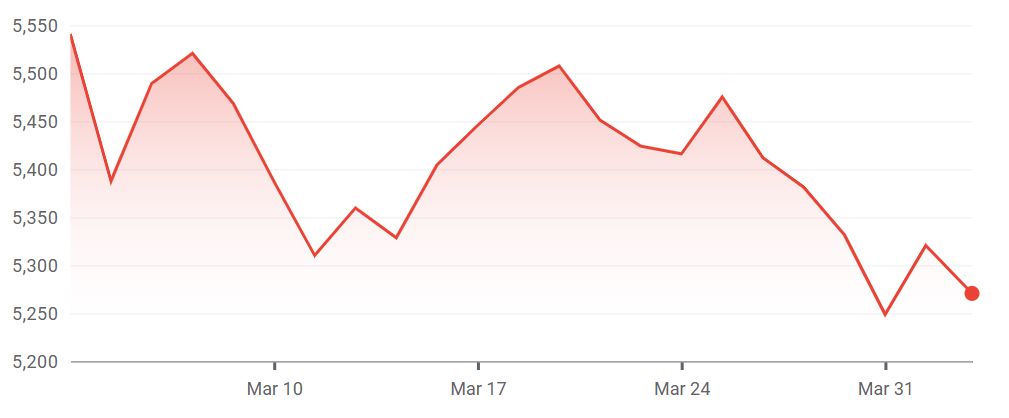
In the UK, the FTSE 250 Index fell by 4% in March. This brings the 2025 performance close to -6%.
The announcement of these tariffs led to immediate volatility in global financial markets. This is because stock markets don’t like the uncertainty that these tariffs bring. Major US stock indices experienced significant declines; for instance, the S&P 500 fell by 1.75% on the day of the announcement.
In response to US tariffs, China introduced additional tariffs ranging from 1_personal_allowance_rate to _ni_rate on American imports, including agricultural products such as soybeans, pork, and beef. China also implemented export controls and added 12 American companies to its ‘unreliable entities‘ list. This is a list of organisations that are thought to harm China’s national security and interests. Canada announced plans for _corporation_tax tariffs on $155 billion worth of US goods, while Mexico considered its own set of retaliatory measures.
European markets, however, showed resilience in March. The EuroStoxx 50 Index, representing leading blue-chip companies in the Eurozone, recorded gains. This reflects investor optimism about the region’s economic prospects despite global trade tensions.
How US politics is affecting UK pensions
For UK pension savers, these developments highlight the importance of understanding where pension funds are invested. Whilst many pensions have exposure to US company shares (also known as equities), most are globally diversified. This means your investments are spread across different asset classes and regions. Volatility in American markets has meant a downturn in the S&P 500 during March, and this may have a short-term impact on pension valuations. However, diversification can help mitigate these effects. Notably, European and Asian markets have shown relative stability, which may offset some of the negative impacts from US market fluctuations.
While the long-term consequences of these trade policies are uncertain, it’s essential for pension holders to maintain a long-term perspective. Historically, pension investments have demonstrated resilience, recovering from short-term market disruptions over time. However, past performance isn’t an indicator of future results.
Do you want to know more about your pension plan with PensionBee? You can check out our Plans page to learn how your money is invested in different assets and locations, or log in to your BeeHive to see your specific plan. You can always send comments and questions to our team via engagement@pensionbee.com.
Risk warning
As always with investments, your capital is at risk. The value of your investment can go down as well as up, and you may get back less than you invest. This information should not be regarded as financial advice.
Period
Market Event
FTSE World TR GBP (%)
4Plus Plan (%)
4Plus Plan’s inception – 6 Sept 2013
QE Tapering, China Interbank Crisis and its aftermath