











The following is a transcript of a bonus podcast episode of The Pension Confident Podcast. Listen to the episode or scroll on to read the conversation.
PHILIPPA: Hi, welcome to Behind the Pensions. This time we’re going to hear from Jonathan. He’s a man who likes to plan.
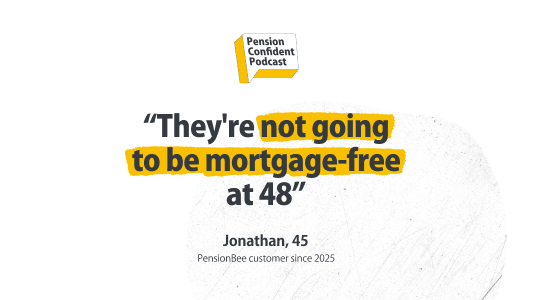
JONATHAN: It does make me laugh though when I think about my friends who laughed at me with a spreadsheet because they’re not going to be mortgage-free at 48 [years old].
PHILIPPA: These episodes are all about ordinary people navigating their financial priorities and this month we’re going to be hearing from Jonathan as he explains how he and his wife have used their trusty spreadsheet to plan for their future. It’s worked so well, in fact, that they’re set to achieve the very impressive goal of being mortgage-free before they even hit 50 [years old].
Meet Jonathan
PHILIPPA: So, how did they do it? Let’s meet Jonathan.
JONATHAN: My name’s Jonathan Goodwin. I’m 45 years old. I live in the North West, in a place called Crosby in Liverpool. And for my profession, for 25 years, I’ve been working in pharmaceuticals. Probably first started saving for retirement, probably about eight years ago, when we first decided to start doing a joint decision, me and my wife Rebecca, to start making overpayments on our mortgage.
So, the plan was to get the big debt out of the way as soon as possible whilst also in parallel, having an additional private pension each. Also investing in various other areas with other assets. But the first big challenge is the overpayments and getting rid of the mortgage. So, we’ve been doing that for eight years and happy to say in two years I’ll be mortgage - we’ll be mortgage-free, which’ll be great.
PHILIPPA: Pensions expert, Dan Stean, from PensionBee was listening to that with me. Hi, Dan.
DAN: Hi, Philippa.
PHILIPPA: So, Jonathan and his wife, they’re aiming to clear their mortgage while keeping up their pension contributions at the same time. Now, he talked about “overpaying his mortgage”. What exactly does that mean?
DAN: I mean, fair play to Jonathan for overpaying on [his] mortgage. So, overpaying on your mortgage can help you clear it sooner because you’re paying off more [of the debt] each month. Paying off more each month can actually help you pay less interest across the actual term of your mortgage. So, it’s not building up as quickly. One thing to mention with that though is some providers will charge you if you do end up paying off more of your mortgage. Sometimes it’s like 10% [of your remaining mortgage balance] maybe.
PHILIPPA: In an Early Repayment Charge (ERC)?
DAN: In an early repayment, yeah. So, they might charge you for actually paying off more. So, you need to be careful with how much you want to pay off each month.
PHILIPPA: OK, so, you want to check before you overpay. But does it make good financial sense to prioritise your mortgage over your pension?
DAN: It’ll depend on your circumstance -
PHILIPPA: because obviously your mortgage is costing you money, [with] your pension, you’re saving. So, it’s about the interest rates you’re getting or paying on both?
DAN: Yeah, exactly. So, your mortgage might have an interest rate of 2%, but your pension each year might be averaging 6% [returns]. So, you’re ‘net’ or you’re up 4%. So, probably saving more in your pension makes sense if that works for you. But if it was the other way around and your mortgage was 6%, but you were getting 2% on your pension, it’d probably make sense to pay more off your mortgage, if you’re able to.
PHILIPPA: So, it’s going to vary, isn’t it? Because these things always vary over time and circumstance. But what we’re saying here is: you need to know.
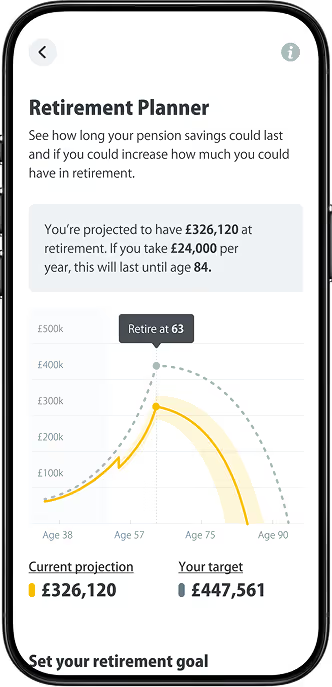
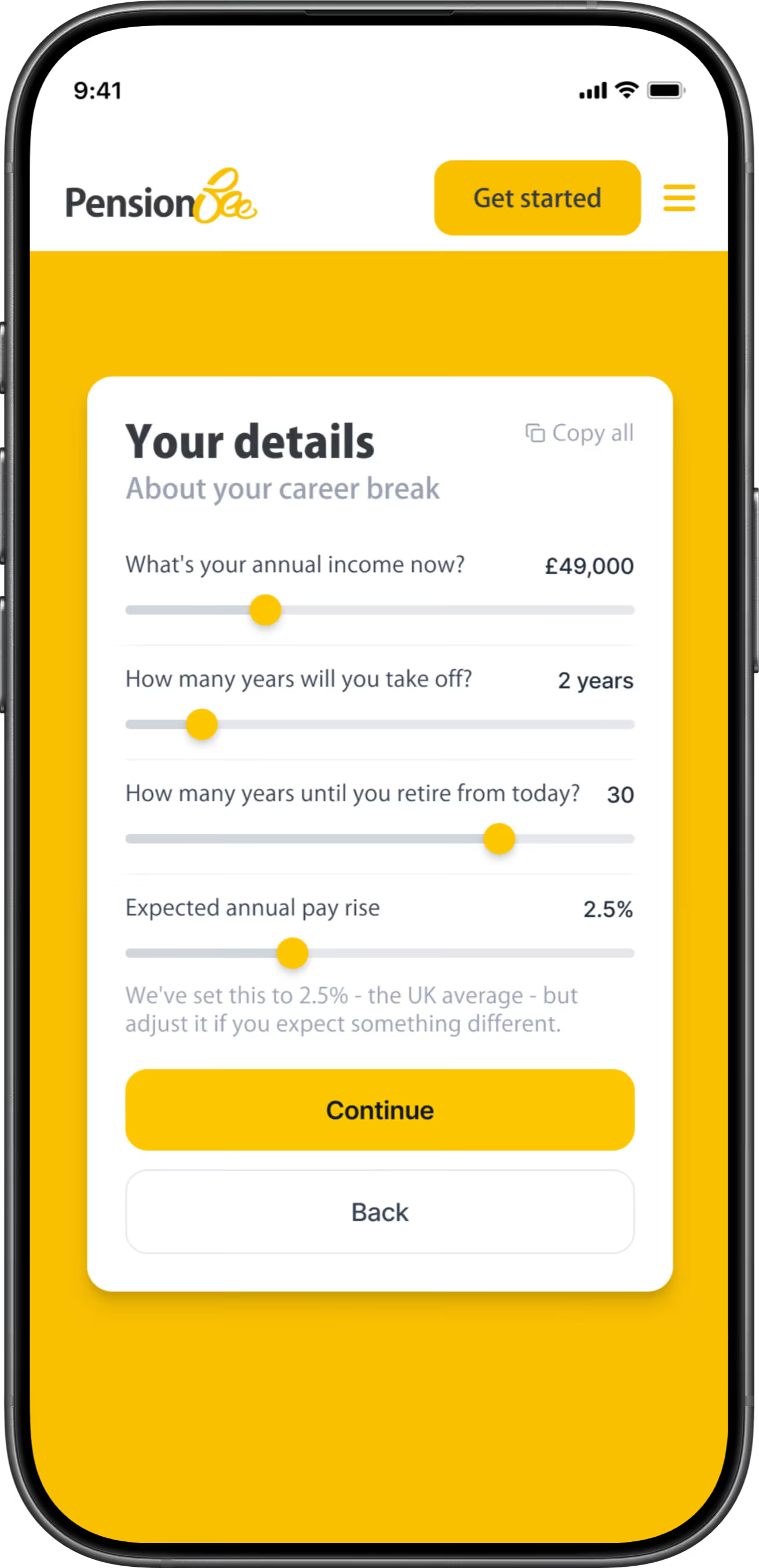
DAN: Yeah, you need to know. Like you said, it varies over time. The rate that you’ll get on your pension can vary. Same with your mortgage rates, if you get variable mortgage rates. And there are some tools out there, so for example, PensionBee’s Pension Calculator can tell you how much you’re going to have, depending on if you contribute more. And you can have that usually on your mortgage app as well. You can usually say, “Oh, I want to do an extra £50, £100, £200”, and it’ll usually tell you when - or how [much] earlier you can pay your mortgage off by.
PHILIPPA: OK, and this is what Jonathan and his wife have done. They’ve done both, haven’t they? So, they know exactly where they are.
DAN: Yeah, I mean, that’s very good planning. I love a spreadsheet [too], so I’m very with Jonathan and his wife on this. I mean, having everything planned is really good, and if you’re able to do your pension and your mortgage, then fair play.
PHILIPPA: A new Prime Minister and a new Chancellor could mean changes to pensions - good and bad. Stay up to date with it all here on The Pension Confident Podcast. Subscribe on your favourite app.
Budgeting as a couple
PHILIPPA: Now, they’ve come to this decision to overpay their mortgage together, and that’s because they take their financial planning very seriously.
JONATHAN: But I think if we’re thinking about a specific time point when we decided, me and my wife, to start focusing more on our finances, it was probably way back in - well, probably about 24 years ago when we first met. Just some simple things like having a spreadsheet to track your incomings and outgoings. It does make me laugh though when I think about my friends who laughed at me with a spreadsheet because they’re not going to be mortgage-free at 48 [years old].
PHILIPPA: Yeah, well, he’s right, of course. Jonathan and his wife, they’ve really thought hard about this. They’re going to reap the benefits of doing that. The key thing here was that they planned together and they planned early, right?
DAN: Joint planning can be sensible for couples.
PHILIPPA: And we’re not just talking about married people here, are we?
DAN: No. So, even if you’re in a long-term relationship, planning your finances does make sense. It can reduce conflict and just make sure you and your partner are on the same level and same page with everything. And most importantly, you can plan for your future, what you want, together.
PHILIPPA: Yeah. Any other helpful tips that other couples might take from Jonathan and Rebecca?
DAN: I think just budgeting in general with your money so you know where your money is going. A lot of basic steps, from the very beginner level, is [to] see how much you’re spending each month and where that’s going. Another thing that a lot of people will do is have short, medium, and long-term goals, and that’s down to the individual circumstance.
Something that’s really good is having an emergency fund. Some people say you need £1,000. Some people say you need to have five times your monthly income.
PHILIPPA: Yeah, it’s what’s doable for you, isn’t it? But the unexpected does happen, so it’s never going to be a bad idea.
DAN: Yeah. If you’re able to have a buffer, whether that’s a couple hundred pounds even, is always beneficial. And a spreadsheet is great. I love a spreadsheet, but there are apps out there like the Emma App that can really help with budgeting. But it’s again, whatever suits your needs.
PHILIPPA: So, you just keep track of where your money’s going every month?
DAN: Keep track. Be as meticulous as you want. I think it’s always good to know where your money’s going.
Teaching kids about money
PHILIPPA: And the nice bonus, it seems to me, is if you put a bit of work into understanding how to financially plan, you can teach your kids, if you’ve any, how to do that too, right? And that’s exactly what Jonathan and his wife have done.
JONATHAN: And I think about my children. I’ve done a lot of educating around value and where to find value and online - how to use your cards for my children, and again how to shop around and all that thing. But I think the curriculum should cover a little bit more, from early days when the kids are young - simple income, outgoing, financial management, balance sheets. Just having that mindset to think about finances a little bit more.
And I think if I knew then what I know now, I’d not have taken an interest-[only] mortgage on my first house because when I eventually sold it, I had zero equity in it. And usually when you sell a property, you should have some equity in it. A little bit more education will go a long way with the children.
DAN: Yeah, I mean, what Jonathan said is spot on. The earlier you start learning about finances and money, the better. Research suggests that money habits are set as early as age seven [PDF] -
PHILIPPA: that’s amazing, isn’t it? -
DAN: it’s so young! And obviously you’re still in school, so you should be learning about this stuff. And I think what I’d emphasise to listeners is take a leaf from Jonathan’s book about speaking to your children about good money habits. Because there’s a lot of content out there that can really help your financial decisions and behaviour when you get older and that can really help with lifelong financial decisions.
PHILIPPA: Yeah, just normalise it from early on. Thanks very much, Dan.
DAN: Thanks for having me.
PHILIPPA: And of course, to Jonathan for sharing his story with us.
Stay tuned for our next episode. We’ll be joined by a panel of experts to unpack how to build generational wealth. If you’ve missed an episode, don’t worry, you can catch up anytime on your favourite podcast app, or on YouTube, or if you’re a PensionBee customer, in the PensionBee app.
Here’s a reminder before we go: anything discussed on the podcast shouldn’t be regarded as financial advice or legal advice, and when investing, your capital is at risk. Thank you for being with us. We’ll see you next time.
Risk warning
As always with investments, your capital is at risk. The value of your investment can go down as well as up, and you may get back less than you invest. This information should not be regarded as financial advice.
Period | Market Event | FTSE World TR GBP (%) | 4Plus Plan (%) |
|---|---|---|---|
4Plus Plan’s inception – 6 Sept 2013 | QE Tapering, China Interbank Crisis and its aftermath | -5.44 | -2.41 |
3 Oct 2014 – 15 May 2015 | Oil price drop, Eurozone deflation fears & Greek election outcome | -5.87 | -1.77 |
7 Jan 2016 – 14 Mar 2016 | China’s currency policy turmoil, collapse in oil prices and weak US activity | -7.26 | -1.54 |
15 June 2016 – 30 June 2016 | BREXIT referendum | -2.05 | -1.07 |












%201.png)