Blog
How to invest wisely for retirement
Find out what you can do to ensure your retirement plans have the best chance of remaining on track.

This article was last updated on 24/07/2025

Investing could provide competitive profits if your risk appetite is up for it. Savings products (like pensions) may invest your money in the stock market with the aim to rise above the rate of inflation and grow your retirement savings over the long-term.

Investing your money may seem complicated. But it really comes down to choosing between guaranteed smaller returns of a savings account or potentially higher returns of an investment product.

Six tips to invest wisely for retirement

There are lots of ways to invest for your retirement, from property to pensions to the stock market, and even fine art! However you choose to invest your money, consider these tips to help invest wisely.

1. Get debt sorted

Out of sight isn’t the same as out of mind. Research has found that half of adults with debt problems are living with mental ill-health. Getting your debt sorted isn’t just a weight off your mind, but also off from your credit score.

If your mental health is impacted by debt, help is out there. Recovering your mental health and finances is more possible than you realise.

Lynn, a PensionBee customer and CEO/Founder of Mrs Mummypenny, shared her debt story. Facing her problem directly she spent two years paying off £16,000 of credit card debt. By making a debt repayment plan, she’s now debt-free and saving towards a happy retirement.

You can put a debt repayment plan together with help from a debt advisory company, and additional support is available through charities like Citizens Advice.

2. Plan over the long term

The saying goes that ‘Rome wasn’t built in a day’, and the same applies to your retirement savings. Investments that are optimised for long-term objectives - like a pension - may outperform shorter-term funds that are at a higher risk of failing.

Here are some long-term investment options that could provide a retirement income:

Two common methods of holding shares are directly (through a shareholding platform) or indirectly (through an investment portfolio). Holding shares directly may require more decision making about buying and selling. Aim to keep track of where your investment holdings are, to avoid running the risk of having all your eggs in one basket.

For a hands-off approach, holding shares as part of a carefully composed investment portfolio may suit some savers better. Often offering more diversification than direct shareholding as it invests your money widely, so you’re not reliant on the success of a single stock to make a return on your investment. Some providers will highlight the previous performance history, though this doesn’t guarantee future returns.

{{main-cta}}

3. Beware fees

Some platforms and products charge various fees on your investments. Individually they may be small, but stacked up together they can add up. Finding out what fees you’re paying - and switching if necessary - could save you money.

Higher fees don’t guarantee higher returns. You can ask for an activity statement from your pension provider (similar to current account statements) and see the costs against the gains.

Some providers may charge for transferring out of their funds - although this could be more cost-effective if you’re consolidating your pension pots. Your pension provider’s fees aren’t the only thing affecting your pension value - there’s also inflation.

Inflation is the rate at which the cost of everyday goods increase. If your pension isn’t increasing in line with the rate of inflation then your savings are decreasing in value. Use our Inflation Calculator to help learn how far your savings could go in future.

4. Feeling confident

Understanding your risk tolerance is key to investing. You should always feel comfortable with your decisions and confident in the performance of your investments. Of course, fluctuations are to be expected, but these dips shouldn’t damage your investments too dramatically in the long-term.

Cryptocurrencies are gaining wider awareness and have turned some investors’ heads with stories of high returns. But without financial regulation or firm assets defining the value of these cryptocurrencies, they can be very risky. One rule of thumb is to not invest more than you’re willing to lose - especially where higher risk investments are concerned.

5. Invest with know-how

It can be hard to invest wisely if you don’t know where - or what - your money’s invested in. You don’t have to be a financial expert to find out these things. Ask your pension provider directly for a breakdown of how your investment is diversified.

At PensionBee, simplicity is one of our values. So we’ve got a range of carefully curated plans to choose from:

All our pension plans are managed by some of the world’s biggest money managers: State Street, HSBC and BlackRock. With each plan you can easily see who manages your plan and how your money is invested.

6. Tax-free tips

Certain investments can give you even more for your money, thanks to tax relief. If you’re paying into a pension, you’ll usually get a _corporation_tax tax top up on contributions up to _annual_allowance (_current_tax_year_yyyy_yy) or 10_personal_allowance_rate of your gross salary (whichever is lower).

Did you know that you don’t pay capital gains tax on your pension? You’ll pay income tax on 75% of your pension pot and the remaining _corporation_tax can be taken tax-free!

In fact, your pension can even cut your tax bill. And higher and additional rate taxpayers can receive additional tax relief on their pension contributions via their Self-Assessment - one more reason your pension may outperform other saving products.

Risk warning

As always with investments, your capital is at risk. The value of your investment can go down as well as up, and you may get back less than you invest. This information should not be regarded as financial advice.


How Open Banking is serving our customers
Find out how Open Banking is simplifying finance and what's next for this new technology.

Open Banking has been around for some years and it’s likely that it’s here to stay. This new technology has benefited more than 4 million people in the UK and is expected to reach 40 million by 2024.

So what exactly is Open Banking - a technology used by more and more people, even if they’re not aware of its existence?

A bit of history

The UK introduced an Open Banking Standard in 2016 to make the financial industry work harder for the benefit of its customers. The Standard was introduced to regulate and protect customers’ data.

Since the introduction of the regulations, the UK government and the Competition and Markets Authority (CMA) have set deadlines for the largest banks (including Barclays, HSBC Group, Lloyds Banking Group and Natwest Group) to adhere to these new standards.

So what exactly is Open Banking?

Open Banking is a technology that allows customers to share their data securely between financial institutions. The data is shared via APIs (Application Programming Interfaces), which is a secure technology that requests and sends data with the customer’s consent.

Whilst data sharing is one of the most important features - and benefits - of Open Banking, another big one is payment initiation. Simply put, payment initiation means that instead of having to log into your bank account to make a payment, another company can direct you straight into your bank account to confirm or reject a payment request.

Payment initiation is not only a big time saver, but it also prevents human mistakes when it comes to typing out the recipient’s bank account details.

What’s the benefit for you?

By sharing customer data, financial institutions are able to offer more suitable and tailored products to the specific needs of individual customers.

For example, a Starling Bank customer that wishes to become a PensionBee customer, could consent to Starling sharing their data with PensionBee in order to open a pension. After an account has been created, the customer could allow PensionBee to share their pension balance with Starling so they can view it from their Starling app, alongside their bank account balance.

Sharing data in this way can also mean that customers with a short credit history could still be eligible for credit, as the lending company would be able to view their spending history using their bank account data.

Some companies, like Snoop, also offer data aggregation, where they can show all your financial data from different bank accounts and other financial products in one place. This provides a clearer picture of your financial health, and allows the company to make recommendations based on the full picture of your finances.

Payment initiation offers time saving benefits to customers as well as being more secure, meaning that there’s less chance for error in the set up of payments.

How do we use Open Banking at PensionBee?

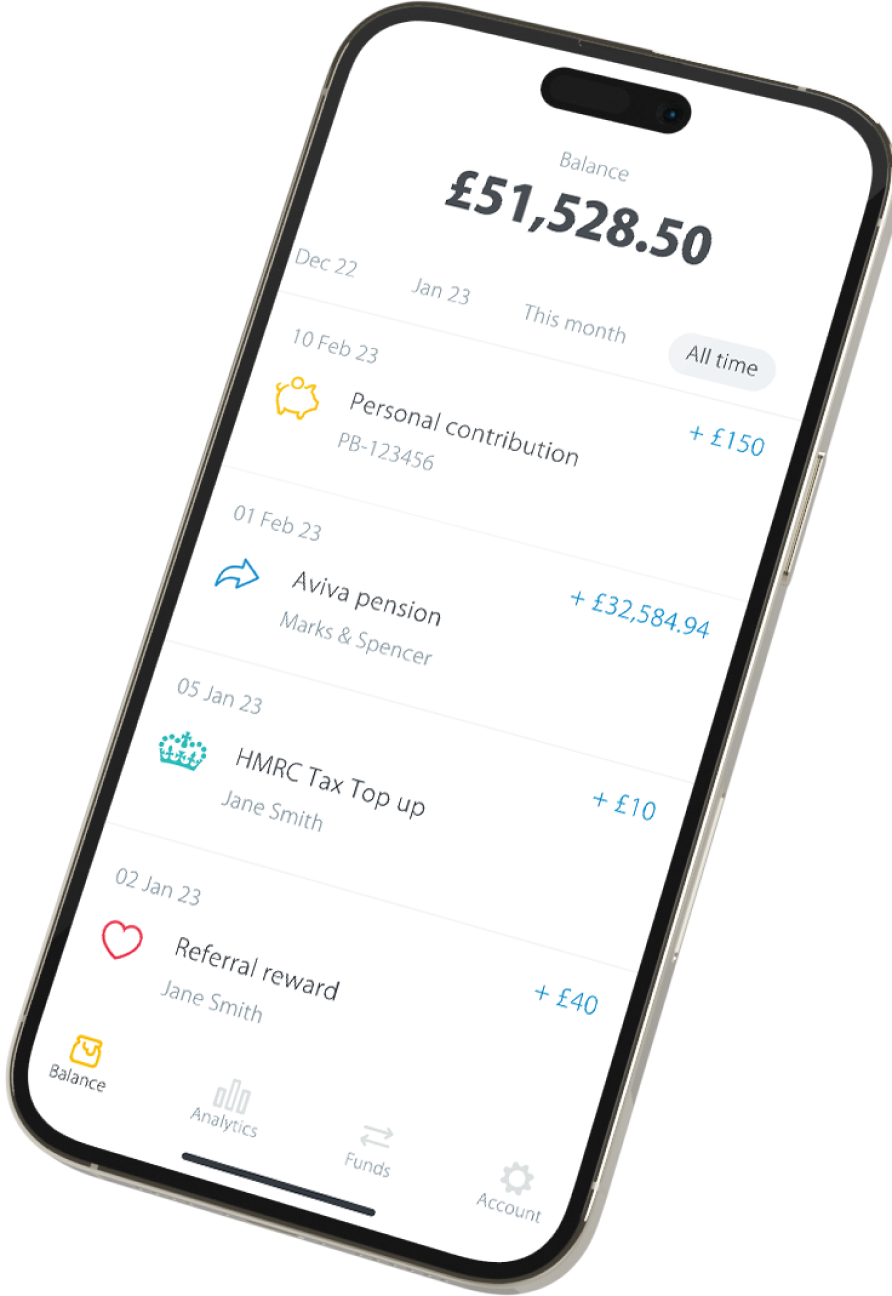
Saving into a pension is key to meeting your retirement goal. At PensionBee, we try to make saving towards your future as simple as possible, to help our customers enjoy a happy retirement. That’s why we’ve partnered with Plaid to enable payment initiation services (PIS) for our customers.This allows customers to set up contributions into their pensions without leaving their PensionBee app (available from Apple App Store and Google Play). Rather than typing out card numbers or setting up Direct Debits, we’ve enabled a smooth, quick and safe journey that takes less than a minute.

Payment initiation was the first milestone on our Open Banking journey and we’re excited for what else is to come!

What’s next for Open Banking?

As you can see, Open Banking is all about sharing data and requesting payments in a secure and efficient way. This technology has evolved very quickly and will likely continue to do so in the coming years. It’s a legitimate question to ask ourselves what we can expect to see next.

Many companies in the financial services industry are not yet using Open Banking to its full potential. And we’ve highlighted the way this technology works and how we use it at PensionBee.

At the core of Open Banking is the value of secure data sharing. It is now on banks and other financial institutions to find creative, innovative and useful ways to utilise that data for the benefit of their customers.

Financial institutions will need to put the customer at the heart of their businesses and development in order to make Open Banking a success!

Risk warning

As always with investments, your capital is at risk. The value of your investment can go down as well as up, and you may get back less than you invest. This information should not be regarded as financial advice.

What happened to pensions in November 2022?
Find out how the performance of your pension plan is directly impacted by the performance of its investments.

This is part of our monthly pension update series. Catch up on last month’s summary here: What happened to pensions in October 2022?

Markets have journeyed through choppy waters this year. In fact, over 87% of the S&P 500’s trading days in 2022 have endured swings of 1% or more. Between energy and food shortages as a result of the conflict in Ukraine, and supply chain issues from China’s manufacturing shutdowns, the perfect economic storm was born. The pressure of these supply chain issues has been felt intensely on the price of these commodities. In turn, inflation has risen as have interest rates.

The unpredictability of evolving global economic conditions led to many central banks, and investors alike, feeling lost at sea. Finally, recent weeks have revealed the direction of travel as the UK economy’s officially in recession, with many other European countries expected to follow suit. As we sail into 2023, will markets find a safe harbour for an economic recovery, or will next year be an encore of this year’s volatility?

Keep reading to find out how markets have performed this month, and how next year may impact your pension balance.

What happened to stock markets?

November has been a favourable month for investors, despite the current ‘bear market‘ environment. While movements in stock markets are often caused by business performance and political climates, a less tangible factor at play is confidence. Following months of variability, confidence has been in short supply creating a bleak outlook for investors.

What’s changed? The fog of uncertainty’s lifting, as central banks are expected to make smaller interest rate increases in future announcements. This slower pace has given rise to economic commentators anticipating when inflation and interest rates may peak. While the factors influencing market volatility continue, optimism, at least, is emerging.

In UK stock markets, the FTSE 250 Index rose by over 6% in November, bringing the year-to-date performance close to -19%.

FTSE 250 Index

Source: BBC Market Data

In European stock markets, the EuroStoxx 50 Index rose by over 9% in November, bringing the year-to-date performance close to -8%.

EuroStoxx 50 Index

Source: BBC Market Data

In US stock markets, the S&P 500 Index rose by almost 6% in November, bringing the year-to-date performance close to -15%.

S&P 500 Index

Source: BBC Market Data

In Asian stock markets, the Hang Seng Index rose by over 18% in November, bringing the year-to-date performance close to -19%.

Hang Seng Index

Source: BBC Market Data

What’s the outlook for 2023?

The global economy’s looking weak going into 2023. Fortunately, global inflation is expected to peak in 2022. Recovery from this post-coronavirus economic crisis will move unevenly, with some countries and industries progressing faster towards growth than others. Goldman Sachs predicts companies in consumer goods, energy, and medicine will manage to grow due to their natural immunity against inflationary pressures on household spending.

Looking outward at global economies, the US (where the majority of pension equity is invested) is well positioned to be resilient and evade the recession that Europe’s entering. Even smaller economies are signalling hopeful returns in 2023, including emerging markets like Brazil. The long-awaited reopening of China should bring relief to manufacturing dependent industries. In short, it’ll be a bumpy ride back to the highs of late 2021.

As supply chains recover and inflation cools down over the course of next year, the fortunes of companies will be a mixed bag. Investors should heed a reminder about the importance of a well diversified portfolio to weather this volatile environment. The good news is that opportunistic investors may enjoy this prolonged sale on quality company shares.

Summary

We’re currently in a bear market. The good news is global markets have recovered from every bear market in history. Moreover, the value of most global markets not only recovers, but typically goes on to reach new highs. Even the biggest market crash since the Great Depression, the 2008 global financial crisis, was followed by the longest period of sustained growth in market history until the coronavirus pandemic struck markets in 2020.

As a general rule of thumb, when markets are down, company shares become more affordable to investors. Putting your pension under a microscope, you’ll see that you probably own a very small percentage of many of the world’s largest and most successful companies, like Apple and Microsoft. When company shares have reduced in value, the same level of contributions can buy more shares. If you’re able to, consider adding to your pension pot to grow your pension in the long term, as purchasing shares below their average price could give them more opportunity to grow.

You may find yourself rethinking your pension savings during the cost of living crisis, or worrying about whether you’re making the right choices. PensionBee customers can have peace of mind knowing that our pension plans are being managed by some of the world’s biggest money managers. Again, it’s worth remembering that it’s normal and expected for pensions to go up and down in value over time. If you’re over the age of 50 and are considering your retirement options, you may benefit from a Pension Wise appointment. You can book your free appointment online.

This is part of our monthly pension update series. Check out the next month’s summary here: What happened to pensions in December 2022?

Have a question? Get in touch!

You can check out our Plans page to learn how your money is invested in different assets and locations. You can always send comments and questions to our team via engagement@pensionbee.com.

Risk warning

As always with investments, your capital is at risk. The value of your investment can go down as well as up, and you may get back less than you invest. This information should not be regarded as financial advice.

How can we improve financial health amongst women?
Women’s financial health is statistically lower than men’s. What can we do to improve the outlook for women?

It may not come as a surprise to learn that women’s financial health’s statistically lower than men’s. In fact, a recent study by Investment Platform, Ellevest, found that financial health amongst women is the lowest it’s been in five years.

What do we mean by financial health?

Simply put, financial health (or financial wellbeing) is used to describe the state of someone’s finances. Factors that impact your financial health include your income, how much in savings you have, whether you have any debts or loans, as well as economic factors like inflation. And while we know there’s a gender pay gap, which leads to a gender pension gap, it’s also now apparent that there’s a disparity between genders when it comes to how they feel about their overall financial situation.

Why’s financial health in women so low?

Low financial health affects women of all ages - those who are older face a challenging economy which impacts their spending, and could leave them worrying about the finances they’ll have for their retirement, while women of a younger generation are battling with the cost of childcare, rising housing prices and job security. Some of the key indicators that contribute to a lower financial health for women include:

Income

We know that there are historic income disparities between men and women. But what’s the state of play today? According to data from the Office for National Statistics (ONS), the gender pay gap among full-time employees in 2022 is 8.3%, which is up from 7.7% in 2021.

Reasons for this could include women filling more part-time roles and working in keyworker sectors, like education and healthcare. While these sectors tend to offer more flexibility, their employees disproportionately feel the impact of low pay.

Child and elderly care

The issue of access to affordable childcare and parental leave is one that’s closely linked to the gender pay gap and is also a key reason why women tend to fill more part-time roles than men. Our own research found that the gender pension gap could be closed completely if men took an equal share of childcare responsibilities.

But it’s not just childcare that plays a part in women falling short in terms of pay and savings. We also found that female savers between the ages of 50 and 64, who take on the caring responsibilities for elderly relatives, experience an hourly pay gap of _corporation_tax and end up with £139,451 less in their pension pot than their male counterparts.

Savings

So, bearing in mind that women earn less and tend to take time out of work for caring responsibilities in more cases than men, it’s no surprise that this impacts the amount of money that women are able to put towards savings like ISAs and pensions. If they’re enrolled in their workplace pension, the amount their employer contributes will also be less than their male counterparts, as employer contributions are based on a percentage of salary.

Global and economic changes

Global issues play a part too, and the effects of COVID-19, such as redundancy and school closures, have left women’s financial health worse off now than before the pandemic.

While inflation impacts everyone’s financial situation, this is more true for women - who tend to be responsible for more household shopping, such as groceries and toiletries, all of which are greatly affected by rising prices. And of course, the impact of rising prices tends to be worse for those on lower incomes which, as previously mentioned, is disproportionately women.

The UK is entering its second recession in two years, and past economic issues suggest this is likely to affect more women than men. When the last recession was announced in 2020, dubbed the ‘She-cession‘, experts commented that the outlook for women was particularly bad, as they were already being hardest hit by job losses and falling pay, which only worsens during times of economic downturn.

What can be done to improve financial health amongst women?

At industry level

Greater flexibility from employers is needed across most industries to improve women’s financial health. Introducing policies such as working from home, flexible hours and job sharing offer many women the opportunity to balance their family life while keeping jobs they love and continuing to grow in their careers.

The financial services industry’s heavily male-dominated which means products, including fintech, resonate more with men than women. So it’s crucial that accessibility to financial products is improved.

At government level

Improvements to childcare are key to ensuring women can achieve work/life balance and ultimately, improve their financial health. Crucially, the cost of childcare‘s something that needs to be addressed by the government urgently.

Whilst legislation exists to ensure companies across the UK report on the gender pay gap, more needs to be done to implement any real change. A disappointing report by the Institute for Fiscal Studies in 2021 found that government policies have made almost no difference to the gender pay gap for the last 25 years.

Access to benefits is another area that should be addressed to help improve women’s financial prospects. The UK’s benefits system is notoriously difficult to navigate - with many people not claiming for the help that they’re entitled to, simply because they aren’t aware or don’t know how. Analysis by Entitledto, an online benefits calculator, found that around half a million families are missing out on just under £1 billion in Child Benefit. Many organisations are calling on the government to improve the benefits system including Child Poverty Action Group and Money and Mental Health.

What can individuals do?

First off, you should find out what you’re entitled to, whether that’s by checking your eligibility for Child Benefit or, what your options are when it comes to taking parental leave. If you aren’t sure, reach out to your company’s HR department and make sure you’re up-to-date with Statutory Parental Leave rights.

If you have a partner, make sure you’re being fair with your family’s finances. If you’re taking time out of work for parental leave or other care responsibilities, it’s a good idea to work out how you’ll organise your finances, like your pension, ahead of time. For example, it’s important to consider whether you’ll continue to save and contribute to your pension while you’re not working, or whether your partner will contribute on your behalf in these special circumstances.

Focus on your financial future by making the most of the amount you can contribute to your pension yourself but also, if you’re employed full-time, make sure you’re auto-enrolled into your workplace’s scheme to benefit from employer contributions too.

Not employed full-time? If you’re self-employed, work on a freelance basis or don’t work enough hours to benefit from Auto-Enrolment, make sure you’re still saving for the future by starting a self-employed or personal pension.

If you’re able to, consider investing your money for the medium to long-term rather than saving it in a cash account for greater opportunity of growth over time, whether that’s in a stocks and shares ISA or pension.

If you’re wondering how you might be able to support your partner, friend or family member, read our blog on 10 things men need to know about money (and women).

{{main-cta}}

What does the future look like?

There are far more policies than ever before supporting women and their finances. The introduction of Shared Parental Leave and gender inclusive parental leave policies, and companies such as us here at PensionBee offering this to their employees, give hope to a more equal future for women and their financial health. But sadly, seven years after the policy was launched, data from 2021 found that take-up’s still only between 2-8% of eligible couples. So there’s still lots of work to be done.

Despite the many obstacles facing women when it comes to their finances, it’s encouraging to see positive trends appearing. According to ONS data from 2021, women are taking on more leadership roles than ever before and in 2022 they reported that the largest fall in the gender pay gap since before the pandemic - from 16.3% to 10.6% - is among managers, directors and senior officials. So we can only hope this progression continues well into 2023 and beyond.

Improving your financial outlook

One of the most accessible things you can do to improve your financial health and resilience is to further educate yourself and gain greater control over your finances. There are some great resources out there as well as right here on our website including our Pension Academy video series, Pensions Explained articles and other blogs that can help you understand personal finance. Here are three things you can do to improve your financial health today:

  1. Start engaging with your finances whether that’s creating a budgeting spreadsheet, consolidating your pensions, investing some of your money for long-term growth, or setting yourself financial goals for the next six months or year.
  2. Join the community at Vestpod, a platform that aims to help women achieve financial independence through live events, podcasts, newsletters, forums and more.
  3. Listen to our Pension Confident Podcast and learn from personal finance experts each month who discuss; whether you should put more money into your mortgage or your pension, looking after your financial wellbeing, how to cope with debt and ways to plan and save for a happy retirement.

Risk warning

As always with investments, your capital is at risk. The value of your investment can go down as well as up, and you may get back less than you invest. Anything discussed on the podcast should not be regarded as financial advice.

What to do with inheritance money?
Inheritances come in all shapes and sizes. Find out how an inheritance can help you begin planning your financial future.

This article was last updated on 26/04/2024

The process of executing a will can often feel overwhelming, especially when you’re still grieving for your loved one. Receiving an inheritance as a beneficiary of a will can take months, or even years if the will is contested by other parties. That’s why many people hire solicitors to help them execute the will, and sort the estate of their loved one.

Inheritances come in all shapes and sizes, and your personal circumstances will likely have the largest influence on how you manage your inheritance. If you’ve got high interest debts, an inheritance could be an opportunity to clear your arrears and improve your credit score.

Once your financial past is taken care of, you can begin planning your financial future: your dream home, a comfortable retirement and maybe even a few luxuries along the way. Here’s a seven-step guide to managing your inheritance money:

Short-term goals

One of the first things you may wish to do is set yourself some short-term goals such as clearing any outstanding debts, or paying bills in advance to take a weight off your mind.

1. Budget and pay necessary bills

Even if the inheritance you’ve received has left you better off financially, it’s good practice to spend your money wisely. Start by sitting down and writing a list of all your monthly expenses, from household utilities to subscription packages. By looking over your outgoings, you might identify opportunities to cancel some unnecessary bills.

2. Create an emergency fund

Life can throw us some curveballs - which is why it’s recommended that everyone should have an emergency fund. A general rule of thumb is saving between three and six times your monthly expenses. This could help cover everyday costs if you lose your job, or need a new boiler, for example. Emergency funds are usually saved in easy access cash accounts, so you can get yourself out of a bind quickly.

3. Erase debt to improve credit

You don’t want past financial mishaps coming back to haunt you - or your credit score. In fact the higher your credit score, the more likely you’ll be accepted for a credit card or loan. It can even lower the interest rates you’ll pay, saving you money in the long run. Signing up to a credit score company can give you personalised insights into how to improve your own credit score. Often they’ll suggest taking actions such as paying off high interest debt you may have first, or being careful about not defaulting on your utility bills.

{{main-cta}}

Long-term goals

You can also use your inheritance to secure your long-term savings goals. You may want to think about making your ideal retirement a reality: whether that’s travelling around the world or simply living without any financial worries.

4. Funnel money into your pension

Even if your inheritance is smaller, there are several ways you can use it to boost your pension balance. Most basic rate taxpayers benefit from a _corporation_tax tax top up on their pension contributions, up to an annual limit. So, for example, a monthly contribution of £100 into your pension would be topped up to _lower_earnings_limit by HMRC. And, if you’re employed, make sure to check if you’ve been auto-enrolled into your workplace pension scheme.

5. Get on the property ladder

Being a mortgage-free property owner is a dream for many people. First-time buyers under 40 years old can save up to £4,000 per year towards a deposit with a Lifetime ISA (LISA), and receive a _corporation_tax top up on their contributions. The rest could be saved tax-free using a remaining annual ISA allowance of £16,000. So, it might be worth using some of that inheritance to start a LISA.

For mortgaged home owners, an inheritance may present an opportunity to reduce your loan value and increase your equity value. You could do this by setting up regular overpayments with your mortgage provider, or making a one-off lump sum overpayment. Many providers have an annual overpayment limit of 1_personal_allowance_rate of your outstanding balance, meaning if you overpay too much, you may incur a penalty charge. Be sure to check with your mortgage provider before taking any action.

6. Put away a lump sum into savings

Savers are familiar with regularly squirrelling away smaller sums of money for their long-term goals. However, receiving an inheritance is a unique opportunity to make a large one-off contribution to savings pots, like your pension. You can receive pension tax relief on any contributions you make, up to 10_personal_allowance_rate of your salary, capped at _annual_allowance gross for 2024/25. Depending on your pension contributions in the previous three tax years, you may be able to carry forward an annual allowance of up to £180,000.

7. Plan for your own inheritance

As morbid as it may sound, receiving an inheritance is a good reminder to get your own affairs in order. Whether that’s writing your will, notifying your pension provider of your pension beneficiaries, or making tax-free gifts to your loved ones. Each tax year you’re able to give away belongings or money, up to the value of £3,000, without it affecting the Inheritance Tax your beneficiaries may pay on your estate. This could help your loved ones with their own financial freedom. You can even carry over your unused annual exemption from the last tax year into the next.

Seven steps to managing your inheritance money

  1. Budget and pay necessary bills
  2. Create an initial emergency fund
  3. Erase debt to improve credit score
  4. Funnel money into your pension
  5. Get on the property ladder
  6. Make a lump sum saving
  7. Plan for your own inheritance

To find out more about inheritance money, listen to episode 20 of The Pension Confident Podcast. Our guests discuss the rules around inheritance tax, how to make sure your pension is passed onto beneficiaries and more. You can also read the full transcript.

Risk warning

As always with investments, your capital is at risk. The value of your investment can go down as well as up, and you may get back less than you invest. This information should not be regarded as financial advice.

What do self-employed pensions look like post-COVID?
Post-COVID, people are increasingly looking for ways of working that complement, rather than compete with, their lifestyle outside of employment.

This article was last updated on 12/02/2024

The COVID-19 pandemic changed working and personal lives for many of us, including the self-employed who might now be thinking differently about their financial security and long-term goals compared to before.

Post-COVID, people are increasingly looking for ways of working that complement, rather than compete with, their lifestyle outside of employment.

Examples of this include:

  • The ‘Great Resignation’, which has seen employees choose not to return to the positions they held before the pandemic, instead pursuing new paths, including self-employment.
  • The ‘quiet quitting‘ movement, where employees adopt a ‘work to rule’ practice instead of working overtime, unpaid.
  • An increase in people looking to work from anywhere in the world, and become digital nomads, as working from the office, or indeed from home, becomes a thing of the past.

For many that are self-employed, their personal life and business can often be tightly intertwined, and shouldering all the responsibility to generate an income can leave little time to enjoy pursuits outside work, or plan for the future. If this sounds all too familiar, read on to discover some key long-term considerations that shouldn’t be overlooked.

1. Impact of delaying retirement savings

Inconsistent and variable income can cause many self-employed people to delay setting up and paying into a pension – without realising how much this can cost at retirement, stealing away dreams of retiring comfortably or early.

The difference of waiting just a few years can be huge, and the effect is bigger the longer you wait to start contributing to a pension.

This can mean having to work much longer than you wanted, or intended to, before retiring. Or, having your lifestyle curtailed later in your working life as you increase pension contributions to make up for lost time, in order to still achieve the lifestyle you desire in retirement.

Unbiased, has created a calculator to show the impact of delaying contributing to your pension. For example, starting saving at 30, with a retirement age of 65, investing £100 a month gives a potential future value of savings of £141,745.

Delay this by just five years and this falls to £100,562, a drop of £41,183. Wait 10 years and the difference is even more stark – falling to £69,787, making your retirement pot smaller by £71,958.

The cost of delaying retirement saving by 15 years is truly colossal. The £100 a month from age 45 will, by retirement, leave you with just £46,791, a huge £94,954 less compared to starting pension saving at age 30. But, starting late is still much better than not starting at all.

2. Consider how much you need to retire

Self-employed people are typically not paying into a pension. According to government data, only 16% of self-employed people are paying into a pension compared to 88% of those eligible for Auto-Enrolment through their employer.

Though still a tax efficient way of saving, there may be less of an obvious incentive for self-employed people to pay into pensions because they don’t receive employer contributions. And without nudging from an employer, those that are self-employed may not be as aware of how much they really need to retire.

Figures based on research by the Pensions and Lifetime Savings Association (PLSA) outline that the minimum needed for a single person is:

  • £13,400 a year for a basic retirement with a few luxuries
  • £31,700 a year for a moderate retirement with a few more luxuries
  • £43,900 a year for a luxury retirement filled with holidays

The earlier you wish to retire, the bigger the initial pension pot you’ll need in order to stretch that over the 10, 20, or even 30 years of paying for your lifestyle post-work. For example, a _threshold_income pension pot may sound a lot but in reality it’ll only provide just over 18 years at a basic level of retirement income, and less than 10 years of a retirement of moderate luxury.

Knowing roughly how much you’ll need in retirement is the crucial first step, following that, keeping your self-employed pension on track is just as important.

3. Think about retiring later

Whether you started saving into a pension later in life and could benefit from more time for the money to grow or, you’ve seen your existing pots decrease in value due to cost of living crisis and other factors, delaying retirement for a few years might mean you’re financially better off in the long-term.

Delaying your retirement‘s a difficult decision to make and continuing to work as you get older may seem daunting, and perhaps disappointing, as you’ve worked and saved hard for many years.

If you’re unsure whether you need to retire later than planned and are a PensionBee customer, you can log in to your account and use our retirement planner to help estimate how long your current savings pot might last you.

While you may want to delay retirement for financial benefit, it might not be possible for you to continue working. The important thing to remember is that you’ve got options, whether that’s delaying claiming your State Pension, choosing to alter your personal pension contributions or opting to draw down your pension.

Key takeaways

  1. Self-employed people may never think it’s the ‘right time’ to start pension saving, but delays may significantly reduce their final pot size.
  2. Curious how much you need a year in retirement? See the PLSA’s income standards.
  3. Think about your options - retiring later or delaying claiming State Pension could help ensure you’re financially better off in the future.

Laura Miller is a freelance financial journalist.

Risk warning

As always with investments, your capital is at risk. The value of your investment can go down as well as up, and you may get back less than you invest. This information should not be regarded as financial advice.

My pension balance has gone down, where has the money gone?
Discover how the performance of your pension plan's impacted by the performance of its investments.

Seeing your pension balance go down can be alarming, even if you already understand that with investments, your money moves around daily depending on what’s happening in global stock markets. When staring at your balance screen you may wonder where has my money gone? Is the loss purely from market volatility?

So, what’s going on and should you be concerned?

How does investing work?

Simply put, investing is buying assets with the aim of generating positive returns. When you invest, you’re purchasing an asset at one price with the hope that same asset will increase in value over time, and create a profit when sold. However, there are no guarantees with investments. In broad terms, owning anything from artwork to property to shares in a business can be considered an investment.

Buying a property for £165,000 in 2012, and selling it six years later for £225,000 in 2018 would be seen as a successful investment, as it produced a _annual_allowance profit. Whereas buying a Damien Hirst painting for £30,000 in 2008, and selling it a decade later for _isa_allowance in 2018 would be an unsuccessful investment, as it lost _money_purchase_annual_allowance in value.

Whilst there’s no crystal ball when it comes to investing in ‘real’ assets (such as property), there is more guidance when it comes to ‘financial’ assets (such as your pension), as we’ve got lots of historical data to point towards when considering how these may perform over time.

Although a single investment (like a painting or a property) may fail to create a profit, spreading your money across different investments may reduce your overall risk of investment failure. That’s why diversification of your investments is so important.

Diversification is a strategy of investing your money in a mix of assets. Most pension funds contain a mixture of different types of investments such as bonds, property, cash or company shares, all batched together in a plan, for easy and cost-effective investing.

How do pension investments work?

PensionBee pensions (like all pensions) are made up of units. That means when you invest, by transferring old pensions or making contributions, you buy units in your chosen pension plan. If you own 100 units in your plan and each unit is worth £1.25, then your pension balance is _lower_earnings_limit.

Once a day, on weekdays, we get an update from your money manager with the updated unit price. The unit price changes every day and reflects the performance and value of your plan on that day. The unit price is made up of the value of the underlying company shares in the plan eg. if the value of Google falls and you are invested in an index that includes Google, this impacts the unit price of the plan.

So, if the unit price drops to £1.10 and you have 100 units, your pension balance becomes £110. Remember, unit prices go up as well as down, and reflect the health of the market on any given day. The principle is, that if the value of the underlying companies you’re invested in fall, then the value of your plan falls. Where the money ‘goes’ is that your portion of that company has decreased in value and the value of the unit price goes down with it.

Is there an impact to not investing?

In 2022, a mixture of geopolitical struggles, high inflation, and supply chain issues created the perfect storm of market volatility, which impacted both company shares and bonds. Consequently, the value of your units in 2022 may have gone down. As this is a global issue, transferring to another provider won’t recover your market losses.

It’s important to remember that the value of your pension will go up again, when the markets recover. Choosing to withdraw your money when your balance is down might seem tempting, but if the unit prices improve after you’ve taken your money out, reinvesting your money into your pension would cost you more, as prices would be higher.

Also, as inflation erodes the real value of cash over time, investments like pensions still prove to be a competitive choice against the rising cost of living.

Should I do something?

Withdrawing your money won’t recover losses. Money invested may see recovering markets so, if you can, prioritise using rainy day funds before realising losses on your investments. Those are the key takeaways to navigating market volatility.

As strange as it may sound, contributing to your investments when markets are low can be cost-effective. Adding £100 when markets are down will usually buy you more units than when markets are up, when unit prices are more expensive.

Again, it’s worth remembering that it’s normal and expected for pensions to go up and down in value. And it’s expected that they’ll recover and grow further in the future. If you’re over the age of 50 and are considering your retirement options, you may benefit from a free Pension Wise appointment. You can book your appointment online.

Risk warning

As always with investments, your capital is at risk. The value of your investment can go down as well as up, and you may get back less than you invest. This information should not be regarded as financial advice.

Do I need to change my pension after I get divorced?
Major life changes, like divorce, can provide a good reminder to look again at your finances and longer-term financial plans.

Major life changes, like divorce, can provide a good reminder to look again at your finances and longer-term financial plans, including pensions. Your income and outgoings may have changed significantly as a result of the divorce. This may affect how much you can contribute to your pension, and affect your future retirement plans - from what you were planning to do in later life to how much money you expected to have.

Your pension may have been split as part of the financial settlement in the divorce. This could also trigger changes to your pre-divorce retirement plans.

How can assets be split on divorce

Firstly, these are the five main ways used to divide pensions at divorce:

Pension offsetting

This is when you use the value of your pension to offset other assets, such as property. Pension offsetting could allow you to keep your pension, for example, while your former partner is awarded a larger share of another asset such as your shared home.

Pension Sharing Order (PSO)

A Pension Sharing Order lets you take a percentage share of your former partner’s pension pot straightaway. It provides a clean break and you can either join their pension scheme or transfer your money to a scheme in your name.

Pensions attachment order

Also known as ‘pension earmarking’ in Scotland, a pensions attachment order is when some of your pension’s paid to your former partner, usually when you start to withdraw it. Unlike some of the other options mentioned above, this doesn’t provide a clean break as one partner’s reliant on the other to begin drawing their pension.

Deferred lump sum

This is similar to a pension attachment order and enables you to receive a lump sum when your former partner retires. It’s not available in Scotland, but can be used anywhere else you divorce in the UK.

Deferred pension sharing

If there’s an age gap between you and your former partner, and they are already drawing a pension, you can apply for a Deferred Pension Sharing Order which allows the younger party to delay taking their pension entitlement until they reach pension age. This option isn’t available in Scotland either.

If both you and you and your former partner have retired, pensions can still be split, however it won’t be possible to take a share as a lump sum.

People are getting divorced later in life. The average age is now 46.4 for men, compared to 47.4 in 2019 and 43.9 for women compared to 44.8 .As people divorce later, they have less time to build a retirement income – especially if they don’t have a pension of their own. It’s therefore vital not to leave pensions off the table during a divorce to avoid pension poverty.

{{main-cta}}

How to deal with your pension plans after divorce

Future life plans

The future you imagined when you got married may look very different now. Take some time to reimagine what your new ideal retirement looks like, and how that’ll be achievable and affordable post-divorce. Will there be more or fewer exotic holidays? You may have had to move to a smaller home, perhaps in a different area, leaving friends and hobbies behind, how will you replace them?

Retired spending requirements

You probably had a figure in mind for how much you’d likely need to live comfortably in retirement. After a divorce you may have additional or fewer financial responsibilities. How will this affect how much you need when you retire?

Retirement age

Think about the retirement age you’d previously intended. If that still seems achievable, and desirable, then it can stay the same. If not, change it, and account for the knock on effects to the rest of your retirement plans. Can you scale back your expenses and retire earlier? Or will you need to work for longer?

Target pot size

Depending on how the financial assets in your marriage were split, your pension pot may have increased or fallen in size. If your pot’s now smaller than you thought it’d be at this life stage, you may have to scale back your retirement plans. Alternatively a divorce may have freed up more or your retirement income, as you now only have to take care of yourself, meaning you have more than enough in your pot to live a luxurious later life. Whichever it is, you need to adjust for it in your financial planning and tend to your pot as required.

Regular contributions

All of the above will affect whether your current pension contributions need to change. To achieve your new goals, you may need to increase your pension contributions. Alternatively you may have scaled back your plans and won’t need to contribute as much. It’s important to know where you stand and make any adjustments as soon as you can to ensure you have ample time to grow your savings, if necessary.

Women – beware the pension divorce trap

Women in particular can lose out in terms of pension entitlement in divorce. Usually the lower earner, and with less in pension savings due to time out of the labour market to raise children, women often plan their retirement by relying on joint finances with their spouse.

On divorce, pensions should still form part of the financial settlement to account for this, but many women miss out. Three in five women didn’t get a share of their ex-spouse’s pension in their divorce, a survey by law firm Stowe Family Law found in June. Another 12% were not sure whether they did or not.

Experts are warning this problem of women not getting, or being aware they are entitled to, a rightful share of their ex-spouse’s pension, could get bigger with the introduction in April of ‘no fault’ divorces. The Divorce, Dissolution and Separation Act (2020) means a spouse, or a couple jointly, can now apply for a divorce by stating their marriage has broken down irretrievably. It removes the need for either party to unnecessarily blame the other for the end of the marriage.

But there is concern these ‘quickie’ divorces, in which the couple themselves do much more of the paperwork, will neglect proper sharing of pension assets. Family Law Court statistics including pensions show there were 116,612 petitions filed for dissolution of marriage in 2019, but only 13% contained some sort of pension settlement order.

Laura Miller is a freelance financial journalist.

Risk warning

As always with investments, your capital is at risk. The value of your investment can go down as well as up, and you may get back less than you invest. This information should not be regarded as financial advice.

What happened to pensions in March 2022?
Find out how the performance of your pension plan is directly impacted by the performance of its investments.

This is part of our monthly pension update series. Catch up on last month’s summary here: What happened to pensions in February 2022?

After a rocky start to the year, stock markets stabilised and even grew in some regions during March. So it’s likely that your pension experienced some growth as a result.

But there are two important things to bear in mind as we move into April:

  1. A recovery in March doesn’t mean this will continue in April
  2. There are still lots of economic challenges that need to be resolved

Thankfully, your pension is a long-term investment that isn’t reliant on things being good all the time - as tempting as it can be to check in on your balance each day. So long as the global economy continues to grow in the long-term (which it always has, historically) then your pension should return to growth once the current short-term challenges have resolved.

The current challenges affecting pensions

Right now, several things are causing challenges to the world’s economy.

First, there’s Russia’s ongoing invasion in Ukraine. This has caused all sorts of problems, from the rising price of food staples like wheat, to the price of energy spiking as Europe attempts to wean itself off Russia’s oil and gas. Unless a peace deal is struck soon, it’s uncertain when these costs may fall again, as the world’s supply chains adjust to make up for the shortfall.

Then there’s inflation - or the rising cost of goods and services - which was increasing even before the invasion in Ukraine. In effect, it means that the cost of doing business goes up and the money people have to spend on non-essentials goes down. Stock markets don’t like this, because it means that many businesses are likely to make less money. However, central banks like the Bank of England have started to raise interest rates in an attempt to slow the rise of inflation. And the Office for Budget Responsibility thinks that the cost of goods will start to go down again from the start of 2023, which would be good news for stock markets.

The world is also still dealing with the effects of the pandemic. And some countries aren’t necessarily over the worst of it. The Chinese government put its largest city, Shanghai, on lockdown in March, causing economic disruption to millions of people and factories. Car manufacturer BMW closed its plants in Shenyang as a result of pandemic controls. As the world’s major supplier of manufactured goods, China’s restrictions are being felt around the world.

As a PensionBee customer, you can rest assured that your pension plan is being managed by one of the world’s leading money managers: BlackRock, HSBC, Legal & General, or State Street Global Advisors. They’re all experts at navigating challenges such as these, and design and adjust your investments based on your pension plan’s goals.

What happened to the markets in March?

March saw some major stock markets recover from their February falls, while China’s main market fell as pandemic controls subdued their economy.

In the UK, the FTSE 250 rose by nearly 4%.

Chart Eleven

Source: Google

In the US, the S&P 500 rose by over 5%.

Chart Twelve

Source: Google

In China, the SSE Composite fell by nearly 7%.

Chart Thirteen

Source: Google

The price of gold fell by 0.5%.

Chart Fourteen

Source: Business Insider

This is part of our monthly pension update series. Check out the next month’s summary here: What happened to pensions in April 2022?

Have a question? Get in touch!

You can check out our Plans page to learn how your money is invested in different assets and locations. You can always send comments and questions to our team via engagement@pensionbee.com.

Risk warning

As always with investments, your capital is at risk. The value of your investment can go down as well as up, and you may get back less than you invest. This information should not be regarded as financial advice.

The future is female: but why aren’t women investing in theirs?
The future is female, yet research indicates women aren't investing enough in theirs. Discover what obstacles women face when investing.

From a casual throwaway phrase to a trending hashtag - “the future is female” means just that. Women are becoming more visible and more heard. In fact, ONS data from 2021 shows that women took on more leadership roles as the gender pay gap continued to narrow, albeit slowly. While women are shaping the future in so many ways, very few consider themselves confident when it comes to investing in theirs.

There’s lots of research out there that indicates that women tend to be ‘cautious investors’ and a recent study from Unbiased highlighted a gender disparity in investing. The research indicated that only 1_personal_allowance_rate of women have a stocks and shares ISA compared to 17% of men in the UK.

Despite their hesitancy, when women choose to invest, they often make better investment decisions than their male counterparts, with men making 5_personal_allowance_rate more mistakes than women when it comes to investing. It seems that confidence, not competency, is preventing women from investing in their future.

One of the key factors to understanding this crisis of confidence is the gender pay gap. Due to this (and other factors such as the ‘pink tax‘), women often have less disposable income than men. Stereotypes of men being better than women with money have likely stemmed from men simply having more of it, rather than being savvier.

Issues like the gender pay gap compound over time. And whilst awareness of the gender pay gap is strong, many aren’t aware of how a lower income in working life usually translates to a lower income in retirement too. PensionBee’s annual study of the UK Pension Landscape found that, on average, there’s a 38% gap between the size of men and women’s pension pots.

From gender pay gaps, to expectations of caring for young children and elderly parents, women face many barriers when it comes to saving for a comfortable retirement. Our CEO, Romi Savova, recently discussed what the gender pension gap is and how we can tackle it together in her International Women’s Day blog and episode 3 of the Pension Confident Podcast.

But what other barriers do women face when it comes to investing?

3 obstacles women face when investing

1. Lack of financial literacy guides for women

Financial literacy is essential for navigating adulthood. However, survey results from BlackRock’s Investor Pulse revealed that non-investors found information about investing complicated. With 65% of women, compared to just 53% of men, revealing that they find jargon hard to understand. Aside from pay gaps, there’s a divide in financial literacy too.

When it comes to understanding why the financial literacy gap is greater for women, it seems that part of the issue lies in the financial services industry itself. According to BritainThinks, women perceive the financial services industry as ‘unwelcoming, patronising, and male-dominated‘.

Additionally, many financial products, especially investment products, are often marketed towards men. This in itself, creates a culture where women view investing as ‘not for them’. These invisible barriers prevent some women from confidently making investment decisions.

Emilie Bellet, founder of Vestpod says: “Investing sounds complicated, it’s not. The most important thing I learnt about investing is to get started. It pays to start investing early and it’s never too late to join the game. Make mistakes, learn, make money over time.”

2. Lower risk appetite compared to men

Investing is only the first step. The FCA’s Financial Lives survey explored the gender divide in participants’ attitude to risk: with 82% of women admitting to having low willingness to take risks, compared to 69% of men.

Women are more likely to save into cash accounts and less likely to invest in the stock market, limiting their returns. Today, with interest rates low and inflation rates high, women may find their money isn’t growing fast enough to meet their savings needs.

On one hand, making considered decisions contributes to women making fewer investment errors than their male counterparts, as men tend to be more impulsive, especially when it comes to buying and selling new shares. On the other hand, women’s lower risk appetite can lead to lower returns on the investments they do decide to make, which can have a significant impact over many years.

Holly Mackay, founder and CEO of Boring Money says: “Traditionally, women have engaged less with investing and as a group, data tells us they feel less confident and more risk averse than a group of male investors.”

Women face a lifetime of barriers to financial confidence. Low risk appetite is one explanation, but it’s important to note: childcare costs, parental leave, part-time employment, and supporting elderly relatives all take a toll on women’s financial health.

3. Lack of confidence making investment choices

As mentioned earlier, women are playing a bigger part in our economy. Yet we’re still seeing a gender disparity in investing. In the 21st century this shouldn’t be an issue.

At the end of 2021, PensionBee surveyed a thousand savers from across the UK and found that there are barriers to investing at almost every stage of a woman’s life. From taking time off to start a family, to reducing hours to care for elderly parents. These factors directly limit their ability to save for retirement.

Despite these barriers being acutely felt by women, PensionBee research revealed men tend to underrate the impact of these challenges. In fact, almost a fifth of male survey respondents disagreed that caring responsibilities would impact women’s retirement, for example.

Jonathan Lister Parsons, Chief Technology Officer of PensionBee says: “Our survey shines a light on the multifaceted and systemic challenges faced by women, as well as the huge disconnect between how men and women perceive these barriers.”

{{main-cta}}

Building your pension knowledge

At PensionBee we want all savers to be financially literate, confident, and in control so that they can enjoy a happy retirement. Especially women, who’ve been repeatedly let down by the financial services industry.

We’re creating resources to support our customers at every stage of their financial lives, from beginners to retirees. Like our Pension Confident Podcast hosted by Peter Komolafe. Subscribe to hear from some of the best brains in personal finance every month, and get expert insights from the PensionBee team.

If you’re interested in going back to the pension basics, check out our Pension Academy video series hosted by lifestyle and finance influencer, Patricia Bright. The series has been designed to empower you with the knowledge you need to take control of your pension.

Risk warning

As always with investments, your capital is at risk. The value of your investment can go down as well as up, and you may get back less than you invest. This information should not be regarded as financial advice.

Are the self-employed saving enough for retirement?
Are you self-employed and worried that you're not saving enough for retirement? Find out what you could be doing and how you can plan for your retirement.

This article was last updated on 27/01/2025

Being your own boss comes with many perks: flexible hours, freedom to choose who you work with, and a chance to follow your passion. However, there are lots of things to consider when it comes to being your own boss and there’s one aspect where payrolled employees are outperforming their self-employed counterparts: pension wealth. Many self-employed savers aren’t prioritising their pension and risk running out of income in retirement. In fact, only 16% of self-employed people are even saving into their pension to begin with.

Why aren’t self-employed people saving more?

For the 4.4 million of the workforce who are self-employed being their own boss also means that they’re responsible for sorting their own retirement savings as they don’t benefit from Auto-Enrolment. It’s understandable that some business owners become overwhelmed with all the decisions they must make at the same time as the day-to-day running of their business, especially as often they don’t have a human resources department to turn to.

What options do self-employed savers have?

With 16% of the UK population being self-employed the pension savings of this group aren’t keeping pace with the rising cost of living. So how can the self-employed better prepare for a happy retirement? Everyone has different dreams for their golden years - whether that’s retiring to Spain, gardening at home or starting their own business in retirement. At the core retirees want financial freedom and to achieve that, you must start by taking control of your pension today.

Here’s a breakdown of your retirement income options as a self-employed person:

Entitlement to State Pension

How do you get a State Pension? Well, when you pay National Insurance you’ll accrue State Pension benefits. To get the full new State Pension you’ll need 35 qualifying years of contributions. If you’re a few years off, you can make voluntary contributions to top it up. However, even the full new State Pension is only £221.20 per week.

Previous workplace pension pots

Employers now automatically enrol most employees into a workplace pension. If you earned more than £10,000 a year and were over 22 years old, you’ll probably have saved into one. Lost track of where your old pensions are? You can try the free government Pension Tracing Service to find information about your previous employer’s pension schemes.

Starting a self-employed pension

If you work for yourself, setting up a pension and ensuring you save enough for retirement is your responsibility. Most people usually receive tax relief from the government with a self-employed pension, but won’t benefit from employer contributions. But if you’re the director of a limited company, company contributions may be considered an allowable business expense and could be offset against your company’s corporation tax.

Like being in control of your pension? A Self-Invested Personal Pension (SIPP) is a pension plan that lets you choose how your savings are invested. Building a pension pot may seem tricky if you don’t receive a regular income. At PensionBee we allow flexible payments, so you can contribute what you can afford, when you can afford it. Our self-employed pension allows you to make both employer and employee contributions from our app.

{{dark-cta}}

Benefits of having a self-employed pension

1. Pick the plan that’s right for you

Self-employment gives you more choice, such as what pension plan you’ll save into. Choosing a pension involves comparing scheme details like annual fees and risk level. You may place the long-term impact of your investment as a priority, for instance choosing a plan that’s Shariah-compliant or a sustainable plan such as our Climate Plan.

If you’re looking for a private pension to make self-employed contributions into, you may want to consider the benefits of accessible and transparent technology. Open Banking is a technology that allows customers to share their data securely between financial institutions. This makes payment initiation easier and quicker than manually entering your details.

2. Combine pots to accelerate compounding

To consolidate your pensions into one single plan, you will need to provide information about your pensions to your new provider. The average person works 11 jobs by the time they retire. Transferring any old pensions into your new one can make your savings easier to manage and you’ll only have one fee to pay.

Another advantage of having one pension pot is compounding. The interest on your savings is reinvested which means your interest gains interest - this is the power of compound growth. Through compounding over the long-term even small pensions can see significant growth.

3. Make flexible contributions

One of the best things about setting up a self-employed pension is that you’ll usually be eligible to receive tax relief on your contributions from the government. Most UK taxpayers usually get tax relief on their personal pension contributions, which means that the government effectively adds money to your pension pot. Most basic rate taxpayers usually get a 25% tax top up; HMRC adds £25 for every £100 you pay into your pension making it £125.

If you pay a higher rate of tax, you’ll be able to reclaim additional tax relief through your tax return. When you’re making decisions about your finances - don’t pay yourself less, pay yourself first. Paying into a self-employed pension plan may help you enjoy a comfortable retirement or even afford to retire early.

PensionBee’s flexible self-employed pension

Our flexible pension for self-employed customers means they can start a new pension with no minimum contributions. We understand that month to month your income can vary when you’re self-employed so we wanted a product that allows the same level of flexibility.

Romi Savova, CEO of PensionBee commented: Without the benefits of Auto-Enrolment, the self-employed are at a significant disadvantage and need access to simple and flexible products urgently if they are to avoid a shortfall in later life. The self-employed currently make up 20% of the PensionBee customer base, so we know their needs well and are committed to helping many more self-employed consumers plan for a happy retirement and achieve better financial outcomes.

It takes just a few minutes to sign up to PensionBee’s self-employed pension, which is available exclusively to sole traders and directors of limited companies without an existing workplace or private pension to consolidate. Why not listen to the keeping your self-employed pension on track episode of our Pension Confident Podcast to hear from the experts themselves? If you’re thinking about venturing into self-employment you may want to listen to our podcast episode on How to start a business.

Risk warning

As always with investments, your capital is at risk. The value of your investment can go down as well as up, and you may get back less than you invest. This information should not be regarded as financial advice.

E5: The cost of living crisis - with Clare Reilly, Lynn Beattie, and Scott Mowbray
In this episode Clare Reilly, Chief Engagement Officer at PensionBee, Lynn Beattie, Managing Director of Mrs Mummypenny, and Scott Mowbray, Co-founder and Chief Communications Officer at Snoop, discuss the cost of living crisis.

The following is a transcript of our monthly podcast, The Pension Confident Podcast. Listen to Episode 5 here, or watch on YouTube. Scroll on to read the conversation.

PETER: Hello, and welcome back to PensionBee’s Pension Confident Podcast. I’m Peter, your host, and unless you’ve been under a rock for the past couple of months, you’ll know that there’s something called the cost-of-living crisis going on right now. So this month, we’re going to be talking about the squeeze, why it’s happening, when it will be over, and of course, how your pension fits in because it does.

Music starts

The new tax year is upon us and the chancellor gave us his budget last month. The big takeaway was that the government can’t do as much as we’d hoped to protect us from surging prices. So I’m joined by three guests, experts in their fields who are going to help us understand what’s going on with inflation, how it’s going to impact us moving forwards, and how we can future proof ourselves financially, even whilst we’re in the middle of it. So we’ve got here Clare Reilly, who is PensionBee’s Chief Engagement Officer. Hello, Clare.

CLARE: Hi, Pete. Hi, everybody.

PETER: And I’m also joined by Lynn Beattie, who is a personal finance expert and author of The Money Guide to Transform Your Life.

LYNN: Hi Peter. Thanks for having me.

PETER: And lastly, I have with me Scott Mowbray, who is the co-founder and Chief Communications Officer at Snoop, an app that helps you save on your energy, broadband and mobile phone bills.

SCOTT: Hi, everyone. Thanks for having me.

PETER: Now, just as a reminder, on the podcast, anything that you hear here should not be taken as financial advice. Obviously, when you are investing, like you would do with your pension, your capital is at risk. Right. So we’re going to come on to inflation in a moment. But first and foremost, I want to start with Clare. Russia’s invasion of Ukraine has obviously had an impact on global markets. Do you have an update on that for PensionBee customers currently?

CLARE: Yes. So if you’ve been reading our blogs, you’ll know that PensionBee plans have close to zero investment or direct investment in Russia. But if you’ve been checking your balance recently, you’ll also see that your balance is moving around more than normal. And so the wider implications of war are impacting all pensions, as markets react to the news of the war, they react to the twists and turns in peace talks and of course, you know, that global supply of goods coming out of the region is severely impacted as well. But, you know, to put it into context, when big shocks happen such as war, such as the pandemic, stocks, which we refer to commonly as equities, they’ll respond almost immediately.

So when Russia invaded Ukraine on the 24th February, typical global equity stocks dropped by about 1%. They lost about 1% in their value compared to the day before. But if we think about how the market reacted to the pandemic, those same global stocks would have dropped about 9% in one day when we first heard news from the UK government that we had to cease all contact and non-essential travel. Obviously, if you are close to retirement, and you have plans to access that money in the short term, it can be pretty anxiety-inducing to watch your balance swing about, but we have to remember that fluctuations are normal behaviour for equities. And you know, we can expect their value to go up and down in the short term. So even though global equities have gone down this year, by like 3.5%, if we think about what’s happened over the last three years, they have consistently gone up _basic_rate each year over the last three years. So we need to put it into a bigger context and of course, you know, even though we’ve got these bumps in the road now with your pension, you know, it’s important not to overreact to the kind of short term market shocks like these.*

And I should add there as well that if you do have any questions about your plan, then please feel free to contact the PensionBee team by using the website live chat, or you could just email the team at engagement@pensionbee.com. So that’s engagement@pensionbee.com.

Figures estimated based on the performance of the MSCI World (GBP) provided by State Street Global Advisors as at 31 March 2022. Figures are subject to rounding.

Cost of living crisis

PETER: Now, if you’ve noticed the cost of your shopping going up more than usual over the last year, you’re not imagining things. Inflation, that’s the rate at which the cost of things goes up each year was over 6% in the 12 months to February this year. That’s as high as it’s been since the 90s. Lynn, I’d like to start with you on this one. It’s been a very intense few years for the economy. So there’ll be a lot of listeners who will be worrying about how high prices could get. I mean, we’ve all heard the reports about people having to choose between heating their homes and buying their groceries. Could you give us some context around where we are right now in comparison to say, 1970s or so, because we have been here before with inflation?

LYNN: Yeah, we have been hit. Well, we’ve been in a worse place with inflation and interest rates. Is it going to go back to as bad as it was then, who knows? But yeah, we need some kind of intervention from the government to not let us get back there. But where I - what I feel is quite different to maybe 30 years ago is people’s sort of accessibility to debt. And I really feel like we’re lining ourselves up for a problem in a year’s time, in six months’ time, in two years’ time where we’re going to see astronomical levels of debt and people just not being able to cope and pay back that debt.

PETER: Yeah. Some of the things that happened back then, the 3-day week, energy being rationed, do you think that that is a potential issue that we might face or something that might be introduced? What do you think, Scott?

SCOTT: I don’t think there’ll be drastic measures. I mean, so you know, if you look at the 70s, I just think of glam rock, chopper rally bikes, David Bowie, and the undercurrent in the 70s was - the challenges were incredible. So kind of you started the 70s with the 3-day week, in lieu of this podcast, I was talking to my parents, because I’m not old enough to have grown up in the 70s. I was born in the 70s and my dad was talking about, he worked all the overtime he could do and then suddenly, a 3-day week was invoked and that kind of, you know, cut him at the knees, so to speak, and times are really difficult. So he talked about the kind of interest rates when we left the 70s. I think Margaret Thatcher, you know, when the government controlled setting interest rates it was 17%, as we entered the 80s. It’s a very different set of circumstances, I think. And as Lynn points out, the kind of accessibility to debt - buy now, pay later, credit cards, overdrafts. We are in a different world and it does need a different set of policy interventions. Hopefully not as drastic as we’re kind of talking about here.

PETER: I suppose the big question is, what can we do about rising inflation? We want inflation to go down, but how do we go about doing that Clare?

CLARE: I think it’s important for us to understand a bit more about inflation, like why inflation happens, because I think we’re all seeing the prices go up and maybe people don’t really kind of know what causes inflation. Inflation is rising costs of goods and services. And that happens when you have less supply and more demand, which we have right now at the same time. So we’ve got less supply, because some parts of the world are still dealing with the pandemic. So across China, we’ve got new lockdowns, factories just are not able to produce at the same rate. We’ve also got sanctions on Russia so you’ve got that whole global supply chain impacted of goods coming out of that region. And then of course, I think, even with the pandemic, you know, global supply chains haven’t gone back to what they were.

So that’s happening on one side, and then on the other side, you’ve got the rest of the world coming out of the pandemic, wanting to just resume all of their regular spending, having been locked up for two years. And so you’ve got that huge demand, weak supply and that’s what’s causing prices to go up. And as well, the problem with this war, and everything that’s going on, is it kind of creates this sentiment of scarcity as well. And that scarcity plays into the prices. And so I mean, well, how do we reduce it? I mean, so you either need to produce more, but as I’ve just said, that’s very difficult right now. So one way to control inflation is for central banks to increase interest rates. So you may have seen the interest rates - that’s borrowing costs - have gone up recently.

The Bank of England is helping to plan their spending by setting an inflation rate target of 2%. So raising interest rates at the moment, from 0.5 to 0.75% is going to help bring the rate of inflation down and slow the impact of inflation. So it’s really something to be mindful of when you’re consuming. I mean, not to be all doom and gloom, the Office of Budget Responsibility has said the cost of goods will start to go down again at the start of 2023, which is some good news.

PETER: Yeah. It’s funny, you talked about the correlation between the fact that we’ve just come out of a pandemic. People were locked down, we’ve got the bottleneck with the supplies, and people coming out of lockdown are kind of like spend, spend, spend, because we’ve not been able to do it for a while. I mean, it’s a very, very interesting, kind of dynamic when you look at how inflation works in the real world.

SCOTT: Yeah, I mean, definitely you need a bit of inflation but when it overshoots, it becomes a problem. Deflation is a problem, too, which is why the Bank of England focuses only on one thing, which is their 2% target. And I think you mentioned 6.2% inflation, it’s more than that at the moment. There’s a time lag in the data. And so people, you know, so what we’ve done at Snoop, for example, is said to people, we’ve tried to take them beyond the grim headlines and personalise what their inflation number is. So kind of by looking at transaction data, how much you pay for your bills. I think you touched upon a moment ago, Clare, that kind of the OBR thinks it’s going to hit about 9-1_personal_allowance_rate and then return to normal in 2023. I think that might be optimistic, because also you’re talking about what’s happening in China, severe lockdowns. Who knew that Ukraine was kind of such a big producer and provider of corn? Russia and fertiliser. Farmers are going to struggle and that’s going to feed through, input prices are going to feed through to consumers. Yeah, I mean, let’s hope 2023 is a world which looks more reasonable, normal, affordable, but I think it might be optimistic.

The Spring Budget

PETER: Okay, well, we’ve seen how inflation is increasing the cost of living and the negative impact that’s having on people’s lives. But we need some good news and believe it or not, it could come in the form of tax. After all, tax is one of the biggest levers the government can pull to increase or reduce the burdens on people’s finances and I think a good place to start would be to look at the spring budget, which was announced a few weeks ago. In it, the Chancellor, Rishi Sunak, stuck to his planned 1._corporation_tax rise to National Insurance. He also raised the income threshold at which people start to pay National Insurance. And he said that he’ll be cutting the basic rate of income tax from _basic_rate to _corporation_tax_small_profits but we’ll have to wait until 2024 for that one. Lynn, is the average family going to be able to cope?

LYNN: So the first problem with the National Insurance thing is, we’ve got a bit of a lag. So we’ve got the 1.25 increase, which is taking effect from right now. But then the change of the National Insurance limit, so it’s gone up by about £3,000. That doesn’t kick in until July, so we’ve got like three months now of people paying more. And also it only impacts certain people, it’s around £35,000- £40,000. If you earn less than that, then you will benefit after July. If you earn more than that, then you won’t. I’m reticent to comment on the change in income tax in two years’ time, because it’s not necessarily going to happen, right? And it’s based on the government meeting quite a lot of targets. I mean, who knows what’s going to happen in six months, let alone two years’ time? So it just felt like a bit of a dangling carrot and close to when there’s an election. Cynical me.

PETER: I watched it almost like, why even - why even mention it now?

SCOTT: Yeah. I mean, we can’t really talk about that now because the cost-of-living crisis is in the here and now. Announcing that in two years’ time doesn’t help anyone at the moment. The measures that he did announce, you know, in part were good, they’re just gonna be nowhere near enough to bridge the gap, basically.

LYNN: It wasn’t - it wasn’t enough. And people were angry after that statement. I sat there watching it thinking, where’s the help for the vulnerable people in the UK right now?

SCOTT: I think what he would say to that, it’s this idea of a household fund, isn’t it? He doubled it from _higher_rate_personal_savings_allowance million, he put another _higher_rate_personal_savings_allowance million in that for the most vulnerable. Is that enough? I mean, I think only time will tell.

LYNN: You have to jump through a few hoops to get hold of that money as well. There’s finding out how much your local authority has got, filling in the right forms. It’s like this, this induces a lot of anxiety for people, particularly, you know, the vulnerable, struggling people. They’re sometimes scared of even making a phone call.

PETER: I think the overall sentiment is there needs to be more intervention to really help people to make sure that, you know, people don’t fall into what is, you know, a really, really dire situation.

SCOTT: Yeah, I mean, we’re seeing that at Snoop, right? So this kind of money is really tight for a lot of people and when money is tight, people do turn to credit. People are turning to alternative credit cards, they’ll dip into their overdraft. These are potentially expensive ways to borrow and we’re talking about interest rates that are only heading in one direction at the moment and that’s north, so it will become more expensive. It’s a real problem because it stores problems for the future. People struggling under a mountain of debt. That’s the here and now. There is also a pension implication for that because when there’s no money, you know, there’s no surplus. Your savings will shrink to zero, right? You’re like, “Pension contributions, right? Maybe we need to cut back on those”. So there’s a problem well into the future caused by a cost of living crisis in the here and now. And kind of part of me thinks, you know, we might get to a place where there’s going to have to be interventions to make sure that people aren’t put in an even worse position than they actually need to be.

PETER: Absolutely. And Clare, this leads on very nicely to this point of the fact that when people are feeling the squeeze like they are right now, and let’s face it, it’s not over. I mean, the energy cap increases again later on this year. One of the last things people are going to be thinking about doing is paying into a pension. What would you say to that?

CLARE: I mean, look, it’s so important to invest, if you can. I mean, investments are going to grow faster than salaries and at this time, when we’re talking about the measures, all the measures the government didn’t do, you can still get tax relief on pension contributions and that is still free money from the government. You know, which is not, you know, it’s not very common. And, you know, the worry is, of course, when people see their budgets reduced, they’re having to cut certain aspects of their life. You know, you worry that pension contributions are going to be part of that. But ultimately, you’re going to retire with a lot less. And, you know, missing out on all those additional years of compounding could potentially have a huge impact on your pot in retirement. So it’s something to really think about because, you know, I know a lot of people are in survival mode, but you’ve also got to think about the long term as well.

Tax talk

PETER: Yeah, I mean, I did read the response that you guys put out to the spring budget. I guess underwhelmed is kind of the overarching thing that you guys thought. But I guess on the tax side of things, whether there are any other, I guess, benefits when we talk about pension specifically, that can help people move forward?

CLARE: Yeah, I mean, so some of the tax cuts, you know, that you will see, we would suggest that you put those in your pension. And if you’re going to put, I think there were tax cuts, really about £300 a year. If you put £25 pounds a month in your pension, you know, ultimately, if that compounds over time by retirement, that could mean £15,000 extra in your pension. So there are little things you can do. So while there was nothing, you know, directly about pensions, there are savings that you can put back into your pension as well. On the state pension, I mean, we, you know, before the budget, the announcement was made around the state pension and around inflation. You know, so he confirmed that the state pension would rise with the rate of inflation, but it was based on last year’s inflation figures. So you know, so this April, it’s rising by 3.1%. But we know that inflation this year is going to go to around 9%. So, you know, that shortfall should have been addressed to limit the impact on people who are retiring at the moment and who are going to be living in retirement poverty in 2022.

PETER: So I think the main takeaway there is that tax relief will boost your pension contributions, and generally the long term impact that it has on your retirement planning.

CLARE: Yeah, so the delightful thing about pension tax relief is that the government is paying money back to us, which is not something to be sniffed at in these times. So tax relief, and pensions works like this, you get a tax top-up on contributions up to £40,000 or 10_personal_allowance_rate of your salary, whichever is lower. Basic rate taxpayers will have tax relief claimed on their behalf by their employer, or by their pension providers. So Pension Bee, for example, does that for you, and that tax top-up is worth _corporation_tax. So for every £1 you put in your pension, it actually becomes £1.25. So that’s very simple. Now, if you’re a higher or additional rate taxpayer, you actually get tax relief. But you need to go and claim that yourself, so it’s totally up to you to do that and you have to do that through your self-assessment tax return. Now, that is something we know that people find overwhelming or daunting, or they’re not interested in doing because as a little bit of tax trivia, we discovered that 1.5 million higher earners do not claim that additional tax relief on their pensions, and they are leaving £2.5 billion unclaimed on the table as a result from the government.

PETER: And I’m wondering, Lynn, are there any other forms of savings or investments that might be able to match that kind of benefit?

LYNN: It’s this debate I am often having in my mind, and I have with a lot of people. It’s: where’s the best place to put your money? So it’s almost going back to this - should I put some money into an ISA? Should I ever pay my mortgage? And when you look at it all mathematically, I’ve got a maths degree so this is how I look at things, there isn’t anything that matches it. Even when you look at - you might get good returns on a Stocks and Shares ISA comparable to a pension, but you have to contribute to that Stocks and Shares ISA after you’ve paid some tax. But then there’s also psychological sides as well and timing impacts. If I think back to when I was in my 20s I didn’t put any money into my pension in my 20s because I just felt like the future was too far away. But then when I got into my 30s and 40s, my mindset changed dramatically. But then I’ve lost out on sort of the compound of those pension contributions. So there’s nothing that can compare to a pension.

Money management tips

PETER: I mean, I think when we talk about tax relief for pensions, I think it’s music to the years of anybody who’s got that extra cash to be able to put into a pension. But of course, money isn’t going as far as it could. And this is where I’d love to ask, you know, yourself, Scott and Lynn, around, you know, what are your - do you have any tips to help people actually cope with where we find ourselves right now?

SCOTT: Well, the starting point is, it’s going to be difficult. Money and income is a difficult topic because it kind of - it looks different to everyone. Those on the lowest incomes, what they need to do will look quite different to what I would describe as the squeezed middle and so you know, if you think of the squeezed middle - that might be family who are stretched, right? They’ve bought a house and they’ve got a mortgage, which is to the limits of what they could pay. They might have two cars in the drive and they might need those. A family that looks like that is very different to those on low incomes. And so that’s why I always start this type of conversation with: you must have a budget. You must know what your finances look like, what’s coming in, what’s going out, what’s left after if anything? And for those that are on lower incomes, if there’s nothing left, you need to go and claim every single benefit you possibly can. £15 billion goes unclaimed and this just kind of - but in terms of kind of general, I think Kirstie Allsopp, she got into a bit of a muddle recently, because it’s like, “Get rid of Netflix and then you’re alright, Jack”. There was a massive backlash on social media. But kind of, I think the principal in a way was kind of actually looking at all of your subscriptions. Have you got Amazon Prime? Have you got Netflix? Have you got subscriptions that you don’t use? I think we worked out at Snoop that people spend £640 on subscriptions. And you just know that some of those are going unused. You wouldn’t recognise it from looking at me, I used to have a gym membership a few years ago. A few years ago, a few years ago, the direct debit went to the gym more than I did. Get rid of it.

PETER: Lynn, what do you have any tips in that area to help people cope?

LYNN: Yeah I just think get the best deals on everything possible. Maybe tackle like one thing a day, just so it doesn’t feel so overwhelming and the savings can build up. It can be like thousands over a year. There’s lots of things you can do with your food shop like you can downgrade on brands. Maybe go for supermarket brands. Write a meal plan or go with a shopping list, don’t just pop to your local Co-Op every couple of days.

PETER: Quite a bit. And Clare, do you have any tips when it comes to the pension side of things in general, in terms of everything that’s going on at the moment?

CLARE: Keep up the pension contributions. If you are employed, ask your employer whether you can do salary, or bonus sacrifice to save on National Insurance. I mean, we should all just become savvy and sophisticated consumers right now. We should be doing everything we can. We should be following Lynn, we should be using Snoop, we should be doing everything we can to get every trick and tip in the book out there.

And the one thing I will say - it’s not necessarily related to pensions - but don’t be afraid to ask for help. You know, if you are in trouble, there are so many charities and organisations out there that will really help you if you’re suffering in silence when it comes to debt. There’s Step Change, Citizens Advice, National Debtline. There are so many organisations out there that will know the suffering you’re going through if you’re in debt, and you’re not talking to anyone about it and you’re really, you know, in a bad place. Just Google “Struggling with living costs Citizens Advice”. There will be a webpage that will tell you everything you can do to get support with energy costs, support with housing costs, support if you’re struggling to buy food. There are resources out there, and don’t be afraid to look for them and don’t be afraid to ask for help.

PETER: In kind of rounding this up, I wanted to play a little bit of a game and put you guys on the spot. So if you had the ear of Rishi Sunak, and you just had one minute to share an idea about his tax policy which could be changed to help people right now, what would that be? I’m going to start with you, Clare.

CLARE: Okay, Rishi, I want to talk to you please about the cost of childcare. If you are a parent, you know it is cripplingly expensive and families around the UK are dealing with that right now. So I would like the Treasury and Rishi Sunak to mandate gender-inclusive paid parental leave for all parents in the early stages of a child’s life. And I would like to mandate affordable childcare in the workplace through employer tax incentives so that women have a choice about when and not whether they return to work. And I have an economic argument, because I know the Treasury like those. So basically, there was a study and they said that of the women who were struggling to return back to work, 46% said they were prevented from taking on more hours at work as a result of unaffordable childcare. And that’s about 1.7 million women. So the economic argument is that if those women had access to adequate childcare services, they could increase their earnings by £7.6 billion. £10.9 billion a year, which would generate up to £2.8 billion in economic output per year. There we go.

PETER: What are the answers? Scott?

SCOTT: I think, for me, I would ask the government, Rishi, whoever can make it happen to make it easier for people to claim all of the benefits that go unclaimed, and there’s not necessarily an economic argument that the Treasury would love. But there’s this kind of argument for increasing thresholds in line with inflation, and there’s quite a lag in so many areas in that sense. It would be something called fiscal drag and it’s kind of - the lag is just too deep, I would say in many cases.

LYNN: So I think tax policies can be complicated or can be simple. But the £20 Universal Credit uplift, which has just been taken away, was a really super simple lever that the government could just switch on that would give a chunk of money back to the most vulnerable of our society. Can we put a little bit of money back into the pockets of people that desperately need it?

PETER: Very interesting thoughts there and hey, we don’t know for sure that Rishi doesn’t listen to this podcast. Now, before we go I’d like to say a massive thank you to our guests Clare Reilly, Lynn Beattie and Scott Mowbray. If you’ve enjoyed listening to this podcast, please do rate us and subscribe. Every rating and review helps us spread the word. You can find loads more information about the topics discussed in the show notes. If you’d like to get in touch with any feedback or questions, you can simply send an email to podcast@pensionbee.com or send a tweet to @PensionBee. We’ll be back with another episode next month all about Shariah savings and why it could be a great option for you. As always, keep saving and stay pension confident.

Catch up on episode 4 and listen or read the transcript.

Risk warning

As always with investments, your capital is at risk. The value of your investment can go down as well as up, and you may get back less than you invest. This information should not be regarded as financial advice.

How PensionBee’s plans are performing in 2022 (as at Q1)
Find out the performance of the PensionBee plans at the end of Q1, when compared to the UK and US stock markets.

This is part of our quarterly plan performance series. Catch up on last quarter’s summary here: How PensionBee’s plans are performing in 2021 (as at Q4).

The first three months of 2022 saw financial markets experience some of the most challenging moments of the past two years, caused by coronavirus and war-related factors affecting the global economy.

All pension savers will have faced a very uncertain market backdrop during the opening quarter of 2022, as stock markets fell sharply in January. Bonds also declined due to the impact of the current global pandemic, change in the political climate, widespread inflationary pressures and the subsequent rising cost of goods and services, and changes to interest rates.

In fact, with global economies still adjusting to the impact coronavirus has had on supply chains and the shift in consumer spending, Russia’s invasion of Ukraine at the end of February caused global outrage and negatively affected the stock market. Indeed, whenever big shocks such as war happen, company shares (also referred to as ‘stocks’ or ‘equities’) respond almost immediately.

Another financial consequence of the war has been the significant spike in already high energy prices and general commodity prices soaring. This is due to Russia’s importance as a producer of several commodities including oil, gas and wheat, but also due to Ukraine being a key access route for delivering gas to the rest of Europe. This has contributed to a further surge in inflation as well as supply chain disruption.

Bonds have also been negatively affected by higher inflation. One way to control inflation is for central banks to increase interest rates, with the Bank of England being among those at the start of a rate hike cycle. Interest rates are directly linked to bonds, hence when interest rates rise, bonds fall in value. As a result our Pre-Annuity Plan, PensionBee’s only 100% based corporate bond fund, has been highly impacted.

This tumultuous quarter has fortunately come to a close as some major stock markets started to surge in March and are recovering from recent lows. The UK market rose by nearly 4% and the US market rose by over 5%. However, a recovery in March doesn’t mean this will continue in April as there are still lots of economic challenges that need to be resolved. China is still struggling to contain an outbreak of coronavirus in Shanghai despite the longest lockdown in two years, which is keeping most of its 25 million residents confined to their homes. And at the time of writing, Russia and Ukraine are no closer to resolving their conflict through peace talks. Both of these factors will put even more pressure on global supply chains in the months to come.

It’s always important to bear in mind that pensions are long-term investment products and they’re designed to weather short-term fluctuations. Therefore, despite this worrying unpredictability, it’s normal for the value of your pension to go up and down each day as it grows over the long term.

Remember that past performance is not a guide to future performance and this blog has solely been prepared for informational purposes and not with the intent to influence future investment decisions. As with all investments, capital is at risk.

Savers under 50

Plan / Index Money manager Performance over Q1 2022 (%) Proportion equity content (%)^
UK stock market N/A 2.9% 100%
US stock market N/A -4.6% 100%
Fossil Fuel Free Plan Legal & General -2.8% 100%
Shariah Plan HSBC (traded via SSGA) -4.7% 100%
Tailored (Vintage 2037-2039) BlackRock -3.8% 75%
Tailored (Vintage 2043-2045) BlackRock -3.8% 88%
Tracker Plan State Street Global Advisors -4.1% 80%

Sources: Data is taken directly from the money managers or stock market factsheets. All performance is reported in gross figures. Past performance is not an indicator of future. performance. Capital at risk. These tables do not take account of any fees that may be levied for a particular investment. Factsheets are available here pensionbee.com/uk/plans. Plan performance may vary slightly from published factsheets due to timing differences and other negligible methodological differences. ^Equity content refers to the amount of exposure each plan has to global stock markets and other listed risk-on assets, such as property and commodities.

Savers over 50

Plan / Index Money manager Performance over Q1 2022 (%) Proportion equity content (%)^^
UK stock market N/A 2.9% 100%
US stock market N/A -4.6% 100%
4Plus Plan State Street Global Advisors -2.2% 35%
Tailored (Vintage 2019-2021) BlackRock -4.2% 40%
Tailored (Vintage 2031-2033) BlackRock -3.8% 63%
Preserve Plan State Street Global Advisors 0.08% 0%
Pre-Annuity Plan State Street Global Advisors -11.5% 0%

Sources: Data is taken directly from the money managers or stock market factsheets. All performance is reported in gross figures. Past performance is not an indicator of future performance. Capital at risk. These tables do not take account of any fees that may be levied for a particular investment. Factsheets are available here: pensionbee.com/uk/plans. Plan performance may vary slightly from published factsheets due to timing differences and other negligible methodological differences. ^Equity content refers to the amount of exposure each plan has to global stock markets and other listed risk-on assets, such as property and commodities.

Despite the tables above showing the UK stock market performing better than the US one, it’s important to note that the US stock market enjoyed better cumulative results over the past few decades, as illustrated by the graph below. Therefore, a well diversified plan will have exposure to many different countries and is beneficial to long-term investing.

Q1 2022 Blog

Source: Google

An important note of caution: It’s impossible to forecast what will happen from quarter to quarter, and past performance should never be used to predict future performance.

For our customers who are already in retirement and are perhaps thinking about withdrawing all of their pension, we hope that you will take comfort in the range of plans we have on offer. You may want to consider only drawing down what you need and keeping a close eye on the markets. Our Investment Pathway guide can help you select a plan based on your personal retirement aims. We will continue to keep you regularly updated on what’s happening with your savings and if you have questions about your plan’s performance, or anything else, you’re welcome to get in touch with your BeeKeeper.

This is part of our quarterly plan performance series. Check out the next quarter’s summary here: How PensionBee’s plans are performing in 2022 (as at Q2).

Have a question? Get in touch!

You can check out our Plans page to learn how your money is invested in different assets and locations. You can always send comments and questions to our team via engagement@pensionbee.com.

Risk warning

As always with investments, your capital is at risk. The value of your investment can go down as well as up, and you may get back less than you invest. This information should not be regarded as financial advice.

10 things men need to know about money (and women)
We asked straight-talking financial wellness coach and author Bola Sol to share her views on everything from the gender pension gap to the pink tax and going Dutch!

This article was written by Bola Sol on behalf of PensionBee, leading online pension provider. Bola Sol is a financial wellness coach, podcaster and author of ‘How To Save It: Fix Your Finances’ published by #MerkyBooks in January 2021. You can find her musings about finance and feminism at @Bola_Sol on Twitter.

I bet you think this is a typical feminist article about women wanting equal pay. Well you’re in for a treat because I’ll be giving you more than you expect in that arena! Women are told that it’s impolite to talk about money but where has that left us as a gender? You’ve guessed it, at the back of the financial queue. Of course you may think there’s an equilibrium because you have a female manager who is a top earner in your field. Congratulations to her but the rest of us are still playing sink or swim with our finances and fortunately for us, sinking isn’t an option!

You might be thinking, how can I help? After all, you were born into patriarchy, you didn’t invent it. If you want to help, start by reading this article and listening. Women want men to listen actively, not passively, because nothing is going to change if you continue to nod your head and hope someone doesn’t ask you, “What do you think?” which results in you having to say, “Sorry, what was the question again?”. This time, there’s no question, I’m just telling you what men need to know about money in work, relationships and life.

1. Speak up for women when it comes to the gender pay gap

The gender pay gap among all employees was 15.5% in 2020 according to the Office for National Statistics, down from 17.4% in 2019. Since we have a lifetime to go until the gender pay gap closes, women would appreciate it if you started speaking up for us already. Gents, with all the bass available in your voice, why not use it for the good of womankind?

Now more than ever, we need more allies to take the microphone on women’s behalf. A nod or ‘I agree’ at diversity and inclusion events no longer cuts it. This is where you, as chromosome XY come in. When you’re at work and you see a female colleague doing the same job as you but their earnings aren’t matching up, don’t mind your business. This is where women want you in our corner, encouraging us to go and ask for what we deserve. “Could I give you some advice on how to ask for more money?” are the magic words we never hear at work. Let’s leave the “Nice hair/outfit” comments out for a while and trade them in for financial equality. We like our hair and outfits already, thanks. Let’s get to the money!

2. If you ask a woman out, offer to pay for her dinner

When you invite a woman to go out with you, offering to pay for her meal should happen without hesitation. It’s just good manners. And yet, the bill comes and I’ve often been left to wonder if chivalry is all the way dead because you didn’t say, “Don’t worry, I’ve got this”. As a woman I want equal rights but we’re a long way away from it and every time you want to go Dutch, you add to that distance. Women earn less because of the gender pay gap, so men should be offering to pay the difference. After all, your date can always say “no”. I, on the other hand, might not.

3. Women don’t expect you to pay for everything (It’d be nice though)

Alas, we understand that as the economy is struggling, everyone else is too. Hooray! We love a struggle party where everyone’s invited because frankly, it’s better to sit in the mud together than alone. And with the gender pay gap, women are a little more in the mud than men are so personally I’d love it if you’d put your hand in your pocket by about 100% more?!

Just kidding! Take the ‘S’ off your chest, you don’t have to be a hero 24/7 in every way, finances included. Although it’d be nice, it’s not really fair is it? The whole notion behind equality is everyone doing their part on the money side, even though some of us aren’t making as much (the gender pay gap is always on women’s minds). Don’t think that every time a bill comes your way, women will look in the other direction. I only do that on the first date! In all seriousness though, women don’t need nor expect you to cover it all. Take this article as a free pass to run for cover from anyone that’s always expecting you to be the sole provider.

4. Splashing the cash isn’t always ideal

Yes, you’ve read that right. Receiving gifts on a regular basis can make the recipient feel giddy in the beginning. Who doesn’t love surprises?! They’re welcomed, however, somewhere down the line, your significant other needs to be sure you’re not participating in illegal activities to fund your Champagne lifestyle.

Unless you’re a secret billionaire, I wouldn’t want you spending frivolous amounts of money on me at every turn. Why do you wonder? Future, meet security. Security, meet the future. Financial security is attractive and if I’m going to be building a life with you, it can’t be in a shed. No offence to those who live in sheds, but I have property dreams more akin to Grand Designs. Given this desire, a sporadic trip here and surprise gift there is welcome but let’s not throw our future down the drain now.

5. The pink tax is real, and it’s a disgrace

The narrative that women spend a lot of money may be accurate, depending on who you’re talking to, but the pink tax is no laughing matter even when we’re giggling over lunch with our friends. Monzo’s article perfectly depicts how products aimed at women are more expensive than the male equivalents – from clothing to perfume. We know you know because every time you go to pick up a gift for a woman in your life, you’re shocked at the price of our products. And don’t get me started on all the things we’re expected to buy that most men aren’t, from sanitary products to make-up to bikini waxes…\ being a woman is a lot more expensive, period.

6. Don’t be surprised if women don’t jump at the idea of joint bank accounts

Do women fear you’ll run off with the money? Yes, I certainly do! In all seriousness though, don’t run off with our money just because we recorded over the Champions League or something. It was potentially a mistake and we might make the mistake again but that’s not enough of a reason to bolt for the exit with our finances!

While a joint bank account is a transparent way to build up financial trust, and maybe even practical when it comes to mortgage payments and other important bills, it doesn’t mean it’s essential. Women fought hard for financial independence so don’t be surprised if your girlfriend isn’t in a rush to give that up.

A woman not wanting to share a bank account with you doesn’t have a coded meaning unless, of course, you’re raising suspicions and setting off any of these three alarm bells. The first being that you have a gambling problem or addiction we don’t know about. The second is that you have a secret family that you’re funding. The third is a combination of one and two.

7. Women really need you to step up when parenthood arrives

As our body becomes less elastic and we’re changing tops all the time due to milk leakage, we can’t help but wonder if you truly have our backs for life. We join mothers groups and all it takes is hearing one bad story to think, “Could that be me?”. There’s always a woman scorned in the mummies circle who starts her sentence with, “I thought he’d never do that to me either” that makes you wake up in the middle of the night and ask your partner if they still love you.

When you have the emotional side down pat, let’s also address that some mothers are quite keen to return to work and their pre-baby lives so it would be nice if you could share the duties of childcare. That includes the bottle feeds, dropping them to school and cleaning up after them whilst maintaining a household. It’s not so easy, is it? Parenthood is the time where we want you to reassure us that you’re here for us physically, emotionally and financially because frankly, we can’t do it all on our own no matter how many times we sing ‘Independent Ladies’ on karaoke nights. It may be a great song but it’s not the lifestyle most women want.

8. Help women bridge the gender pension gap

Whilst we’re working on raising the next generation and you continue to “work work”, we’re taking career breaks which can feel incredibly daunting because there’s always someone more upbeat and energetic ready to take our position. “Hello. Anxiety, is that you?”

We know that women make up around three quarters of the part-time workforce in the UK, and the combination of lower salaries and long career gaps, with little or no pension saving for years, are a massive disadvantage for women. Call a spade a spade, women are scared of what this means for us and our future. Research from PensionBee revealed the gender pension gap to be as high as 57% in parts of the UK. 57%!

While women are supporting you at home, you can support us financially by topping up our pensions while we’re not working so we don’t end up having to eat baked beans in later life while you dine out on filet mignon. Getting life insurance would also give your partner peace of mind so they know that they’re covered if anything happens. P.S. we’re not plotting anything, we want you here for a long time because we can’t open jars without you!

9. Talk to women about money, and how you feel about it

When it comes to money, men are expected to earn a living without complaining or discussing how they feel. Women talk a lot about how patriarchy sucks for them, but, we get it can suck the life out of you too because of expectations of masculinity. Now, we’re not expecting you to have an outburst of emotions all in one go but know that there’s a safe space in us to have those chats. We promise we won’t hold it against you or use it as a weapon in an argument because frankly, that’s childish.

Do we love you because of how much money you have? Hopefully not. If you’re unsure about the answer then there are so many other conversations that need to be taking place…

We understand that everyone has their own financial plan and love may have not been a prerequisite when you were writing out how you were going to get and keep your affairs in order. Just be straight and let us know, preferably sooner rather than later, if we have different financial goals. Same goes if you followed Elon Musk’s advice about crypto and the returns you’ve seen aren’t exactly what you thought they’d be - women want to know everything!

10. Women want to talk about investing too

Surprise! Women want to chat about how their money can make money too. We’re here to tear down the men’s club that is investing. Research found on Forbes shows that women tend to make better investors. Yet somehow, we’re still left out of the conversation. Yes Wolf of Wall Street is a fun watch but pause it for a minute and ask yourself where women are in the movie. It’s a new dawn, it’s a new day and we don’t want to be wives that cackle along to the men’s jokes because we have our own jokes too.

Now we aren’t saying you should pull out loads of charts and graphs, it’s all about taking one step at a time here. We aren’t trying to be Cathie Wood. If you don’t know who that is but you know who Warren Buffett is, this is your opportunity to do better. Conversations about investing can start with, “Have you heard about fund X recently?” and then follow up with the reasons why it’s worth doing independent research into. What women won’t enjoy is you bragging about an investment you have that’s gone up that we had no prior insight to. Bring us into the discussion, don’t be a know-it-all and share your losses as much as you share your wins. Okay, the last point is unlikely but I thought I’d throw that out there.

I hope this gives you a little bit of insight into where women’s heads are at when it comes to money. Now it’s time for you to catch up!

Young savers, are you on track for ‘30 by 30’?
How twenty-somethings could accumulate £30,000 in their pension pot by 30 years old.

Saving goals for 30 year olds are typically property themed. But while nesting for a new home is a milestone in your twenties, building a nest egg for retirement is a smart goal too. Your pension may appear a far away financial worry, however setting a retirement goal right now could help in the long run.

Treating your savings like a marathon - not a ‘nearing forty’ sprint - may make even ambitious goals achievable. How does accumulating a pension pot of £30,000 by 30 years old sound? Appealing?! Well here’s how!

1. Don’t get pension FOMO

Thanks to auto-enrolment rules you’ll likely be added to your company’s workplace pension. If you’re over 22 years old and earning over _lower_earnings a year then you’ve probably been automatically enrolled in a workplace pension scheme.

Income (over your ‘qualifying earnings’) is eligible for pension contributions. Minimum defined contribution contributions are set at 5% for employees and 3% for employers. Though some employers will offer to match your contributions!

Most people are beginning their careers in their twenties.The average salary for 22 to 29 year olds is £29,209. Which equates to monthly employer contributions of £57.42 and (personal) workplace contributions of £76.56 - with an additional £19.14 in government top-ups.

Counting the average employee and employer contributions (and the tax top up!) is only half the picture to your pension pot goal. As your pension is an investment, we’ve taken into account these three factors in our illustrations too:

In being auto-enrolled for eight years you could already reach a pension pot of £15,231.35. That’s over halfway to your ‘30 by 30’ goal! But if your employer doesn’t enrol you, or you opt out of workplace contributions, then that potential progress will be lost.

You’ll miss out if you opt out.

2. Save sooner, save less

As we’ve seen, workplace contributions will only get you so far towards your ‘30 by 30’ goal. That’s where personal contributions come in. When you pay into your pension, you’ll usually receive a tax top up of _corporation_tax - providing a competitive edge to saving into your pension.

Beginning to save is an easy decision, how much to save is harder. Here’s a simple savings equation to help: each month save four times what your age is into your pension. For example, if you’re 25 years old then you would save £100 a month into your pension.

Creating healthy habits with your money can be tricky in your twenties. Newfound wealth from working might lead to more splurging and less saving. But even small contributions could have a big impact. Simply using our equation you could exceed your ‘30 by 30’ goal!

Don’t worry if you’re starting to save later into your twenties. To catch up you could increase your regular contributions to close the gap. Or make a single lump sum contribution - if you ever receive a large payout in your life, like a Christmas bonus or an inheritance.

To recap:

  • Save monthly, using the ‘four times age’ method
  • Receive your _corporation_tax tax top up, making it ‘five times age’ after
  • Add extra contributions if you’re starting later

Want to spend your twenties saving for your first home? Beginning to save for both may prove better than prioritising one and getting behind on the other. As your pension is a long term investment, you don’t have to break the bank to make meaningful contributions.

Be invested in your success by investing in your future.

3. Growth for your #goals

Pensions by design are long term investments, so that gives your pot a lot of time to grow. The key to growth is compounding. Your contributions can give you investment growth - and that investment growth can give you investment growth - through the power of compounding.

In short, the money from your first contribution will go further than the money from your last contribution. By consolidating your pensions you increase the impact of compounding. You can contribute less, but receive more, by contributing over a longer period.

This scenario follows a decade of contributions, growth, and top ups, to reach a total of £30,633.23 by 30 years old. Here’s how much each factor had an effect on the pension. Breaking it down into five categories of contributions:

Looking at the breakdown of reaching your ‘30 by 30’ goal you can see the split. Less than half (38%) has come out of your pocket and less than a quarter (24%) from your payslip. You’d have contributed £19,109.76 (62%) of your £30,633.23 pension pot yourself.

The remaining £11,523.47 (37%) of your pension comes from three places. First, your employer contributions (18%). Second, the tax top up (_ni_rate) on your personal and workplace contributions. Third, your investment growth (4%) after inflation and annual plan fees.

With your pension often the pay off can pay well. These illustrations show the impact of contributions and power of compounding - from a pot of nothing to a pension worth over £30,000 in only ten years.

Consolidate and let compounding help you hit your goals.

What would ‘30 by 30’ do for my retirement?

So opting into your workplace pension, making personal contributions, and consolidating pots to compound growth can help you reach and even exceed a pot of £30,000 by the time you reach 30 - but what does ‘30 by 30’ mean for the rest of your retirement? Although many millennials like Christie believe that a comfortable retirement is out of reach, our research shows that young savers are able to hit ambitious targets by starting sooner.

#MillennialRetirementPlans
Why is this even on trending? We all know we'll never be able to retire.

— Christie (@RachelG1919) September 17, 2019

For those in their twenties the State Pension age is set for 68 years old - with the potential to rise further. Even if you’re eligible and complete the full 35 qualifying years you’ll only have £179.60 per week to live off. It’s a top-up more than a retirement income in itself.

And we’re all living longer. So creating a pension that can keep up with your lifestyle may cost a little. Say you’re 30 years old with £30,000 for your retirement, what is the reward for all of this? Here are some projections on how achieving ‘30 by 30’ could set you up for life.

After 30 years, how big might my pension be?

Person to person this will vary wildly. But continuing using average salaries, our personal contribution equation, and a 5% annual growth rate you might expect a pension pot of almost a quarter of a million pounds by 60 years old! Already a retirement-worthy amount.

You can use our Pension Calculator to see how your pot might support your retirement.

So using our assumptions you could save £332,823.94 by 68 years old. This equals approximately £24,100 a year in income. Add in the State Pension (£10,600 per year) and you’re looking at almost £34,600 a year (remember, pre-tax) for your retirement.

Comparing the personal contributions over 47 years (£2,0_state_pension_age yearly average) to the retirement income for over 30 years (£34,600 expected income) is staggering. And the largest accelerant for this potential investment growth is compounding over a longer stretch of time.

{{main-cta}}

Your ‘30 by 30’ goal recap

  • Stay opted into all your workplace pension schemes
  • Keep consolidating your defined contribution pots when you switch jobs
  • Pre-retirement make monthly contributions of four times your age into your pension
  • Choose a globally diversified pension plan that aims to help you grow your money over time
  • When financially ready, enjoy a happy retirement

The scenarios in this article are for illustrative purposes and assume:

  • Your pension experiences investment growth, inflation, and an annual plan fee
  • You make increasing monthly personal contributions into your pension
  • You’re employed full-time from 22 years old, at an average salary for your age
  • You’re continuously enroled in a defined contribution, workplace pension

Some employers may enrol you in a defined benefit pension scheme, or not enrol you at all. If you’re unsure, you can always ask your employer for more information or a financial advisor to discuss your specific options.

Risk warning

As always with investments, your capital is at risk. The value of your investment can go down as well as up, and you may get back less than you invest. This information should not be regarded as financial advice.

What is the triple lock on State Pensions?
The pension triple lock is the Government commitment to raise the State Pension annually in line with either inflation, average earnings, or 2.5%.

The pension triple lock system is a legally binding measure that requires the UK Government to increase the State Pension in line with the largest of three figures:

  • the rate of inflation
  • the increase in average earnings
  • 2.5%

For example, if average earnings and inflation were to only increase by 2%, the State Pension would still rise by 2.5% because of the 2.5% guarantee. But if average earnings were to increase by 3%, the State Pension would also increase by 3% because this is greater than the 2.5% guarantee.

The State Pension triple lock is designed so that the State Pension’s value doesn’t decrease in real terms, protecting pensioners’ spending power. However, its fairness has come under criticism as it allows the wealth of pensioners to increase even if the working populations’ salaries stay the same or fall.

September 2021 update

On 8th September 2021 the government announced that it would be suspending the triple lock on state pensions for one year. The decision was made to prevent 2022’s State Pension payments becoming too expensive, following an estimated 8% rise in the average salary (worth £4 billion in additional pension payments). The Government’s expected to announce the agreed growth figure in October 2021, and it seems like there’s a strong chance of it rising by at least 2.5%.

How much is the State Pension, currently?

As of the 2021/22 tax year, the State Pension pays out a maximum of £179.60 per week (£9,339.20 per year). To receive the maximum amount, you’ll need to have paid National Insurance Contributions for 35 years. To receive the minimum State Pension, you’ll need to have paid in for 10 years.

For more, read How much is the State Pension?

When did the government introduce the triple lock pension?

The State Pension triple lock guarantee was proposed by the Conservative-Liberal Democrat coalition in 2010. It was introduced to protect the State Pension and ensure that pensioners’ income wouldn’t be overshadowed by the rising cost of living.

Since its introduction, the triple lock system has come under a lot of scrutiny as it’s proven to be costly to the government and UK taxpayer. There has often been talk about either changing or completely removing the triple lock on state pensions. In recent years, excluding 2019 and 2021, average earnings and price inflation have been lower, meaning the State Pension has tended to increase by the minimum 2.5% guarantee.

With concerns over the long-term affordability of the triple lock, it’s been a regular topic of conversation within the government. And with an expected rise in the number of pensioners over the next few decades, the debate is likely to continue for the foreseeable future.

Could coronavirus affect the triple lock guarantee?

The coronavirus outbreak has put major financial pressure on the Treasury, which has promoted more speculation about the affordability of future State Pension increases. This is why there have been calls for Rishi Sunak, Chancellor of the Exchequer, to either break or suspend the triple lock pledge, amid fears it will be too expensive to maintain following the crisis. Although it was announced in the Summer Statement there won’t be any immediate changes to the triple lock guarantee, changes are still expected to be made in the Autumn Budget (see latest update, above).

There was a huge increase in the number of applicants for the UK furlough scheme due to coronavirus, with the government eventually supporting over nine million workers, in comparison to three million in April 2020. The furlough scheme means that the government pays 8_personal_allowance_rate of a worker’s wages, up to £2,500 a month.

When the furlough scheme ends in October 2021, there will be a huge spike in average earnings as workers will receive 10_personal_allowance_rate of their pay again - as well as the possibility of low-paid jobs disappearing. The Office for Budget Responsibility has estimated that once the scheme ends, there could be an 18% rise in average earnings in 2021.

Those currently receiving the State Pension will be protected from the current drop in average earnings, and would stand to benefit from the spike in wages next year.

Based on predictions from the Office for Budget Responsibility, keeping the triple lock guarantee for 2021 and 2022 would have cost over £34 billion more than if the State Pension was to increase in line with inflation.

How could the pension triple lock changes affect me?

If you’re currently receiving the State Pension, the removal of the triple lock system isn’t likely to have much of an impact on your retirement income, especially if it’s just replaced with the suggested double lock. However, if changed to a single lock guarantee, linked to either average earnings or price inflation, then this could have a more noticeable impact on the State Pension’s value over the medium to long-term.

Those most likely to feel the impact if the triple lock on state pensions is removed, will be those who are yet to retire. The State Pension is already unlikely to be a sufficient retirement income on its own, but any changes will mean that younger generations will need to make their own provisions for their old age, which isn’t always possible. The State Pension should be seen as an additional income to private pensions, and not the other way round.

Get started with PensionBee today and let us help you take control of your retirement. Combine your old pensions into a single, low-cost plan with one clear balance you can check at any time.

As always, we’d love to hear your feedback, so leave your comments below or get in touch with the team on Twitter!

Risk warning: As always with investments, your capital is at risk. The value of your investment can go down as well as up, and you may get back less than you invest. This information should not be regarded as financial advice.

{{main-cta}}

Is it better to pay off your student loan or top up your pension?
Learn more about whether it makes more financial sense to put your money into paying off your student loan or paying into your pension.

Graduates in England left university in 2021 with an average student loan of £45,000 (the highest amongst the UK’s four nations). Meanwhile, the average graduate salary was just £24,000. So it’s no surprise that many of today’s graduates have resigned themselves to paying the bare minimum and waiting for it to be written off after 30 years.

But what if you want to free yourself of student debt sooner? Does it ever make sense to pay off a student loan early? And wouldn’t you be better off putting any spare money into your pension where it has a chance to grow? In this article, we’ll find out.

Investing vs paying off debt

Before we get to tackling the big question, let’s look at the basic principle we’re dealing with - is it more financially effective to invest your money or pay off debt? The answer will be influenced by both the amount you expect your investments to grow and the amount of interest charged on that debt.

High interest debt

High interest debt typically includes personal loans and credit cards, where interest rates can be as high as 20% (or even more).

This kind of debt can be dangerous because small borrowing amounts can grow quickly without careful management.

There are few (if any) ways to invest your money to achieve a similar rate of growth, without risking losing your money altogether. So for this reason, it’s generally advised to pay off high interest debt before investing money elsewhere.

Low interest debt

Low interest debt is generally considered to include loans charging up to around 5% interest, although there’s no exact defined figure.

This kind of debt is considered relatively low-risk because there’s little chance of it quickly spiralling out of control.

In addition, you don’t have to risk everything to invest your money in ways that could outgrow low interest debt.

For example, the highest earning savings account is 3.5% at the time of writing. So putting your money into that account could be more financially effective than paying off a lower-interest loan of say 2%.

Plan 1 student loans

If you started university before 1st September 2012, you’ll likely have the Plan 1 student loan which charges 1.1% interest.

You’ll start repaying your loan if you earn £382 a week or £1,657 a month (before tax and other deductions).

Because the interest rate is very low, it shouldn’t be too difficult to find ways to invest any spare money to outpace the growth of your student loan.

For example:

  • Say your remaining student loan was £5,000 costing 1.1% interest
  • And you had £5,000 sitting in a savings account earning 3.5% interest
  • The interest on your student loan would cost £55 a year
  • But your savings would earn £175 a year

Leaving your money in your savings account would make you £120 better off at the end of the year, since that’s what you’d have left after paying the interest on your loan.

Plan 2 student loans

If you started university after 1st September 2012, you’ll likely have the Plan 2 student loan. As of September 2021 it charged between 1.5% and 4.5%, but this changes each year and is also dependent on your income.

You’ll start repaying your loan if you earn £524 a week or £2,274 a month (before tax and other deductions).

Because the interest rate is potentially as high as 4.5%, it would be more difficult to find relatively low-risk ways to invest any spare money to outpace the growth of your student loan.

For example:

  • Say your remaining student loan was £20,000 costing 4.5% interest
  • And you had £5,000 sitting in a savings account earning 3.5% interest
  • The interest on your student loan would cost £900 a year
  • And your savings would earn just £175 a year

At first glance, leaving your money in your savings account would leave you £725 worse off at the end of the year.

However, Plan 2 student loans get written off after 30 years if they haven’t already been paid. And with today’s students graduating with around £45,000 in student loan debt, it’s unlikely they’ll ever be paid off through regular payments, unless they earn a very large salary.

For the majority of graduates (those starting on salaries less than £40,000) it’s unlikely to be worth paying off their student loan early, and instead making the minimum payments until it’s eventually written off.

What if the repayment threshold changes?

In September 2021, the government was reportedly considering lowering the earnings threshold at which graduates start to repay their Plan 2 student loans from £27,295 to around £23,000. This could reduce graduates’ take-home pay by up to £800 a year and limit the amount they could put towards further loan repayments or their pension. However, regardless of this change, we think the considerations outlined in this article still apply to anyone considering whether it’s better to pay off their student loan early or top up their pension.

Investing in your pension

As we’ve seen, investing your money can sometimes be more effective than paying off some lower-interest debts. But in these examples we’ve focused on short periods of time. So what happens to investments over a period of 40 years or more?

Pensions are long-term investments. You can start one when you get your first job after university, and it can start paying you an income as soon as you choose to retire after the age of 55.

Unlike other investments, pensions have two particularly good features:

  • Your employer will contribute towards your pension (at least 5% of your salary)
  • The government will top up your personal contributions by 25%

So for every £1 you pay in, the government will add 25p. And that’s in addition to whatever your employee pays in.

So comparing paying off your student loan to investing in your pension is slightly different from other kinds of investments.

Let’s look at an example:

  • You’re 21 and decide to put a spare £500 into your pension
  • The government tops up your contribution by £125 (25%)
  • So a total of £625 goes into your pension
  • Your pension grows at an average rate of 5% until you retire at 67
  • Your initial £500 investment is now worth £4,963

Had you used that money to pay off part of your Plan 1 student loan, you’d have saved yourself £5.50 (1.1% interest). And you’d have lost out on a potential £4,463!

Of course, there’s no guarantee that the money you put into your pension would grow by this amount. But then it could grow even more. This is the risk you take when you make investments that can go up or down.

You’ll also need to consider that the earliest you can access your pension is from the age of 55. So you’ll need to be sure you won’t need to access that money sooner.

Is it better to pay off your student loan or top up your pension?

Graduates with a Plan 1 student loan are more likely to see a better return on their money if they invest in a pension. Graduates with a Plan 2 student loan will need to consider whether they intend on paying off their loan in full or pay the minimum until it’s written off after 30 years - if they do (this usually applies to higher earners) it could be more effective to pay off the student loan first, since the interest rate would be hard to beat with any low-risk investments.

All this said, it’s also worth noting that the emotional impact of living without debt can be liberating. However, before deciding to pay off your student loan for the sake of your mental health, it’s worth speaking with an independent financial adviser to help confirm whether doing so is really in your best interests.

Risk warning: As always with investments, your capital is at risk. The value of your investment can go down as well as up, and you may get back less than you invest. This information should not be regarded as financial advice.

{{main-cta}}

Recovering mental health and recovering finances
How to seek mental health support and start your recovery journey.

If you’re recovering or struggling with mental health, there is help out there. Support can be found through mental health charities or NHS mental health services, depending on your needs. Your mental health matters. And it often touches every corner of your life.

Mental health charity, Mind, makes clear connections between money and mental health. Juggling both your emotional and financial recoveries can be tough. We’ll talk through some tips to manage your wellbeing and wealth.

Relationship between money and mental health

No two people are exactly alike. As mental health issues manifest differently between people, some may find remaining in control of their finances easy. Others may find it impossible. Those having a hard time managing their money could fall into a ‘catch-22 situation’.

One of the common dilemmas people face during poor mental health periods is having difficulties managing their money properly. And worrying about mismanaged money can worsen mental health. This cycle can continue relentlessly without support.

Putting off key responsibilities (from creating income to budgeting expenses) can provide temporary relief, just for the headache to come back harder. Not sure where to start? Here are some positive thoughts to support your recovery journey.

Starting your recovery journey

1. Take a step back to look

Honesty is the best policy with your mental health and your money. You can’t fix a problem you can’t see. From making a list of your worries to having a loved one listen to you, there are many methods of opening up that initial discussion about your mental health.

Remember to be kind to yourself

When unpacking all these troubling feelings, remember to be kind to yourself. It can be unpleasant adding up the cost of a mental health crisis. Keep reminding yourself regularly that you’re trying your best - and that’s enough. From there, progress can begin.

2. Regain control

Quality of life shouldn’t be underestimated. Realising you’re having issues with money doesn’t mean you should give up everything that gives you joy to dig yourself out again. To start, ask yourself these questions and seek the support you need to answer yes!

Instead of setting yourself up for failure, give yourself sustainable money management rules. Being disciplined to begin with can create healthy habits with your money and mental health. Allow for slow progression and be proud of yourself for starting this journey.

3. Make plans for your future

Simplicity is key to success. Making small steps towards a bigger goal is a great outlook. This could be practicing self-care, making time for mindfulness, or setting boundaries. Creating a goal you can reasonably achieve - and work towards - will give you purpose.

You can set yourself debt reduction or savings goals

We set goals because, with willpower, it’s a tried and proven method of achieving substantial accomplishments. Beyond your emotional development, there’s your financial situation. You can set yourself debt reduction or savings goals - giving yourself one less worry.

4. Avoid relapses

Innovations in fitness, money, and wellbeing apps are growing. When you’re feeling mentally well, avoiding triggers and preventing relapses might be the furthest thing from your mind. Luckily there are plenty of apps to keep you on track:

  • Starling Bank for instant notifications, goals, and spending insights
  • Calm for mental health check-ins and meditation guidance
  • Emma for avoiding overdrafts, finding wasteful subscriptions and gaining greater control you need over your finances
  • ClearScore for tracking and improving your credit score
  • FitBit for health metrics and sleep tracking

Taking the time to regularly check in on your financial, mental, and physical health is part of a good self care strategy in maintaining your recovery. As problems arise, you’re instantly aware. And most importantly, you’re in control.

5. Celebrate every small success

Love and celebrate your successes, no matter how small. And celebrate the people who have helped get you through those tough times and into a better place. This helps reinforce those healthy habits and remind yourself of how far you’ve come.

Gratitude is a big part of a positive mindset. Once you’re feeling well enough to maintain your mental health, consider giving back. Do a sponsored run for a charity of your choice, or just treat your loved ones to an evening out.

Are you struggling with your mental health?

You’re not alone. If you’re struggling please seek support from a trusted friend or charity:

  • Contact your GP for making an action plan
  • Message a text line for 24/7 help
  • Phone a helpline for instant support
  • Talk to someone you trust

Risk warning

As always with investments, your capital is at risk. The value of your investment can go down as well as up, and you may get back less than you invest. This information should not be regarded as financial advice.

How PensionBee’s plans are performing in 2021 (as at Q3)
Find out the performance of the PensionBee plans so far in 2021, when compared to the UK and US stock markets.

This is part of our quarterly plan performance series. Catch up on last quarter’s summary here: How PensionBee’s plans are performing in 2021 (as at Q2).

The general outlook feels positive as almost 8_personal_allowance_rate of the British population have now had both doses of a Covid vaccine, and UK stock markets have quickly recovered to pre-pandemic levels. Globally, more than 6.91 billion shots have been administered, and US stock markets continue to reach new highs. Nevertheless, economic fallout from the coronavirus pandemic may persist for some time, and investors could continue to experience some degree of market volatility, no matter where their pension savings are invested.

We began producing these quarterly performance updates last year, in response to feedback that you’d like to see the performance of your plan relative to our other plans. We provide this regular summary so you can do just that, as well as compare the performance of your plan with the major UK and US stock markets. We use these market comparators because they measure the performance of the biggest companies on each side of the Atlantic and because most of our customers have a significant portion of their pensions invested in both shares of UK-based and US-based companies. As the majority of our plans are diversified, most of our customers are invested in a mixture of geographies and asset classes.

As of the end of Q3 2021 (the first three-quarters of the year), UK and US stock markets returned 13% and 16% respectively. This is significantly higher than performance for the same period last year when the UK stock markets were down by _basic_rate and US stock markets returned 6%. This offers hope that economies are recovering more rapidly than anticipated.

Against this backdrop, PensionBee plans have performed well. Plans designed for savers under 50 have a higher level of investment in company shares compared to plans for older savers. These plans have all benefited from economic recovery and have grown between 9% and 14% during the first three-quarters of the year. Our two responsible funds, the Fossil Fuel Free and Shariah plans have performed the best, and, each having grown by 14%, have outperformed the UK stock market. Most plans for those aged 50 and over have also recorded growth and continue to preserve savings for those who are close to retirement through relatively low exposure to company shares, or none at all.

When considering short term performance, it’s important to remember that your pension is a long-term investment. For example, in the five years to the end of 2020, our plans have experienced average annual growth ranging from 5% to 1_personal_allowance_rate, which should put our customers in good stead to build healthy retirement pots. PensionBee is proud to offer long-term financial products in partnership with the world’s largest money managers: BlackRock, State Street Global Advisors, HSBC, and Legal & General.

Remember that past performance is not a guide to future performance and this blog has solely been prepared for informational purposes and not with the intent to influence future investment decisions. As with all investments, capital is at risk.

Savers under 50

Plan / Index Money manager Performance over 2021 (%) Proportion equity content (%)^
UK stock market N/A 13% 10_personal_allowance_rate
US stock market N/A 16% 10_personal_allowance_rate
Fossil Fuel Free Plan Legal & General 14% 10_personal_allowance_rate
Shariah Plan HSBC (traded via SSGA) 14% 10_personal_allowance_rate
Tailored (Vintage 2043-2045) BlackRock 12% 87%
Tailored (Vintage 2037-2039) BlackRock 1_personal_allowance_rate 76%
Tracker Plan State Street Global Advisors 9% 8_personal_allowance_rate

Sources: Data is taken directly from the money managers. All performance is reported in gross figures. Past performance is not an indicator of future performance. Capital at risk. These tables do not take account of any fees that may be levied for a particular investment. Full fact sheets are available here: pensionbee.com/plans. Plan performance may vary slightly from published factsheets due to timing differences and other negligible methodological differences. ^Equity content refers to the amount of exposure each plan has to global stock markets and other listed risk-on assets, such as property.

Savers over 50

Plan / Index Money manager Performance over 2021 (%) Proportion equity content (%)^^
UK stock market N/A 13% 10_personal_allowance_rate
US stock market N/A 16% 10_personal_allowance_rate
4Plus Plan State Street Global Advisors 1_personal_allowance_rate 6_personal_allowance_rate
Tailored (Vintage 2025-2027) BlackRock 6% 51%
Tailored (Vintage 2019-2021) BlackRock 4% 39%
Preserve Plan State Street Global Advisors _personal_allowance_rate _personal_allowance_rate
Pre-Annuity Plan State Street Global Advisors -8% _personal_allowance_rate

Sources: Data is taken directly from the money managers. All performance is reported in gross figures. Past performance is not an indicator of future performance. Capital at risk. These tables do not take account of any fees that may be levied for a particular investment. Full fact sheets are available here: pensionbee.com/plans. Plan performance may vary slightly from published factsheets due to timing differences and other negligible methodological differences. ^Equity content refers to the amount of exposure each plan has to global stock markets and other listed risk-on assets, such as property.

An important note of caution: It’s impossible to forecast what will happen from quarter to quarter, and past performance should never be used to predict future performance.

For our customers who are already in retirement, and are perhaps thinking about withdrawing their pension, we hope that you will take comfort in the range of plans we have on offer. You may want to consider only drawing down what you need and keeping a close eye on the markets. Our Investment Pathways can help you select a plan based on your personal retirement aims.

We will continue to keep you regularly updated on what’s happening with your savings and if you have questions about your plan’s performance, or anything else, you’re welcome to get in touch with your BeeKeeper.

This is part of our quarterly plan performance series. Check out the next quarter’s summary here: How PensionBee’s plans are performing in 2021 (as at Q4).

Have a question? Get in touch!

You can check out our Plans page to learn how your money is invested in different assets and locations. You can always send comments and questions to our team via engagement@pensionbee.com.

Risk warning

As always with investments, your capital is at risk. The value of your investment can go down as well as up, and you may get back less than you invest. This information should not be regarded as financial advice.

Introducing our Mental Health First Aiders
Promoting mental health support is a key focus at PensionBee. Find out how our Mental Health First Aiders are creating initiatives to support our team's wellbeing.

Your mental health is as important as your physical health. Did you know that one in four people in the UK will experience a mental health problem in any given year? This is a sizable statistic and at PensionBee we’ve put in place several measures to support our team.

The effect of mental health on business

Being supported in your workplace is vital for any job - especially if you’re suffering from poor mental health. Nearly one in seven people experience problems with their mental health in the workplace. And over 12% of all sick days are due to mental health conditions.

From an economic perspective this costs UK businesses around £8 billion per year. But it’s not just about the bottom line, from a human perspective all employees require care and safeguarding to protect them in the workplace.

What is a Mental Health First Aider?

Mental Health First Aid (MHFA) is a training course that gives guidance on how to spot signs of emotional distress, support others, and practice self-care. At PensionBee we currently have four fully trained Mental Health First Aiders: Ashil, Francesca, Tess, and myself.

How do our Mental Health First Aiders make a difference?

  • Guide colleagues on their mental health issues
  • Help support with existing problems when needed
  • Identify signs of distress in colleagues and others
  • Provide a safe space for them to explore their feelings
  • Someone who will listen and not judge

What motivated our Mental Health First Aiders?

Our Compliance Manager, Francesca, jumped at the opportunity to become a Mental Health First Aider. Here’s what motivated her decision:

“I love the idea that we can make our colleagues feel supported and less isolated, as most of us at PensionBee work remotely and handling stress is much more difficult when you’re on your own. I’ve always relied on the team around me when work (and life) gets to me and it’s important that we still have that support even if we’re not all in the same room, I’m happy to be that person for anyone who needs it.”

In my case I wanted to be a Mental Health First Aider as I see it as a very good and honourable skill to have. I manage an amazing team of people and have close friends and family who I would want to help, should they ever need any guidance on their mental health.

Supporting wellbeing in our workplace

At PensionBee our Mental Health First Aiders have fortnightly meetings. We discuss everything from upcoming events in the calendar (which can help raise awareness of mental health) to our experiences of supporting colleagues and ways to improve this.

Previous events include World Bipolar Day (30 March), Stress Awareness Month (April), and World Suicide Prevention Day (10 September) to name a few. Developing understanding through having open discussions allows us to empathise with each other. We also have a number of initiatives in place to support our colleagues day-to-day.

Dedicated talks

All the team at PensionBee are strongly encouraged to look after their own mental health. But if they’re struggling, then our Mental Health First Aiders are on hand to provide support.

One-to-one chats

Our Mental Health First Aiders will always make time for someone struggling. And PensionBee is supportive of this. All chats are completely anonymous and can be done virtually if working from home, or in a safe space should they be working in the office.

Wellbeing tips

We recognise that everyone relaxes, winds down or uses different techniques to look after their wellbeing. At PensionBee we’ve got a dedicated communication channel to share our own tips and tricks to practicing self-care.

Are you struggling with your mental health?

You’re not alone. If you’re struggling please seek support from a trusted friend or charity:

  • Contact your GP for making an action plan
  • Message a text line for 24/7 help
  • Phone a helpline for instant support
  • Talk to someone you trust

You can read our blog about recovering mental health and recovering finances if you’re interested in seeking mental health support and starting your recovery journey. Help is always out there.

Thank you! Your submission has been received!
Oops! Something went wrong while submitting the form.

Why the Magnificent Seven matters for pension savers

24
Mar 2025

The term ‘Magnificent Seven‘ refers to a group of seven leading technology companies in the US, recognised for their innovation and strong performance. Coined by Bank of America in 2023, the name draws inspiration from the heroic characters of the classic 1960s Western action film of the same name. These companies have played a significant role in driving market growth in recent history.

Collectively, the Magnificent Seven holds massive influence over major US stock markets - including the Nasdaq Composite Index and the S&P 500 Index. By the end of 2024, their combined ‘market capitalisation’ (which is the number of company shares issued multiplied by the current share price) stood at an impressive $17.6 trillion.

These companies are at the forefront of revolutionising a range of technologies including:

The advancements in these sectors extend their impact far beyond technology, affecting numerous other market areas as well. As such, the Magnificent Seven are some of the most widely discussed company shares (or stocks).

Meet the Magnificent Seven

The Magnificent Seven comprises of the following companies:

Alphabet is Google’s parent company. It’s a major player in online advertising and search engines. In recent years it has branched out into cloud computing and AI.

Amazon started as an online bookstore but has changed the way we shop. Its cloud service, Amazon Web Services (AWS), now holds over a third of the cloud market.

Apple is the biggest company in the world. It leads in consumer electronics with products like iPhones and Macs. Apple’s also working on AI tools which can help with writing, editing and creating images.

Meta owns popular social media platforms like Facebook, Instagram and WhatsApp. The company invests a lot in virtual reality through its Meta Quest headsets and focuses on developing the ‘metaverse’ - a new way for people to interact online.

Microsoft remains a leader in software and cloud services. It’s also making strides in AI with projects like OpenAI and CoPilot, which assist users in various tasks.

NVIDIA creates graphics processing units (GPUs) and software tools for developers. It also produces chips for AI, mobile devices, plus the automotive industry.

Tesla is the top company for electric vehicles (EVs). It’s expanding into energy storage and solar technology.

The importance of the Magnificent Seven for investors

Each company leads its field and develops solutions that could have significant implications across industries like healthcare, education, and finance. For example, NVIDIA’s GPUs might power the AI revolution in the automotive and medical sectors.

With their substantial ‘market caps’ (short for market capitalisations) and extensive reach, they have the power to influence the broader stock market. These companies could offer investors an element of confidence given their dominance in the market.

Despite their massive size, these companies still possess a huge growth potential as they continue to innovate and expand into new markets. NVIDIA is advancing in AI, while Tesla persists in its commitment to EVs and clean energy.

The Magnificent Seven and UK pensions

Most pension funds are diversified across various locations and asset types. This means your retirement savings may be invested in a mix of company shares, bonds, cash, and property - depending on your chosen plan.

This strategy, known as diversification, helps reduce risk. By investing in various areas, if one company or industry performs poorly, it won’t have a major impact on your overall savings.

The main goal of pension investing is to achieve positive returns over the long term so that savers can look forward to a comfortable retirement. This is why many UK pensions invest heavily in US companies, particularly the Magnificent Seven.

How the Magnificent Seven is performing in 2025 (so far)

While the Magnificent Seven continues to dominate US stock markets, they face several challenges that could impact their performance. The competition within the AI and technology sectors is intensifying. Here are three hurdles the Magnificent Seven are facing:

1. Changing valuations

In January 2025, a new China-based generative AI chatbot called DeepSeek emerged, posing a significant challenge to established competitors like ChatGPT. DeepSeek offers similar capabilities at a much lower cost. Its AI model, known as R1, was developed in just two months for under $6 million. Whereas OpenAI’s model took considerably longer and cost a staggering $600 million to train.

This potential for more affordable AI solutions triggered a tech sell-off in US markets. Notably, NVIDIA’s share price saw a _ni_rate decline year to date. This situation has raised questions among investors regarding the Magnificent Seven’s high valuations after years of rapid growth. Are we nearing a tech bubble burst?

2. Increased regulation and competition

Governments worldwide are increasing regulations on big tech. This is due to concerns about privacy and market dominance. Additionally, new competitors are emerging in AI, semiconductors, and cloud computing. They aim to challenge established companies and capture market share.

3. The Trump administration’s tariffs

Returning US president Donald Trump’s tariffs could also impact the sector. These tariffs are essentially taxes on imported goods. The Trump administration has already imposed tariffs on goods imported from China, Canada, and Mexico.

The tariffs have already spooked the markets, with the share prices of Apple and Tesla the most affected out of the Magnificent Seven. Apple has a huge manufacturing base in China and now faces _basic_rate tariffs on all the products it creates there.

What steps should pension savers take?

When you’re younger, you can usually take more risks with your pension because there’s plenty of time to ride out multiple cycles of market volatility. Remember, investing is a long-term game where values may go up as well as down. Investing primarily in company shares can help maximise growth through compounding - where your returns generate even more returns over time.

As retirement approaches, usually from around 50 years old, it might be a good idea to think about reducing your risk. This can mean moving some of your investments into safer options like bonds or cash. This process, called de-risking, helps protect your savings from market fluctuations, ensuring they’re ready when you need them.

PensionBee offers two default plans depending on your age:

  • under 50s can save in the Global Leaders Plan, designed for the ‘accumulation’ (or growth) years; and
  • over 50s can save in the 4Plus Plan, designed for the ‘decumulation’ (or withdrawal) years.

If your investments align with your retirement timeline, you can remain steady during market ups and downs. Market downturns can actually benefit your long-term pension savings, as they allow regular investors to buy shares at lower prices. While history suggests that downturns are often followed by growth, past performance doesn’t guarantee future results. Staying focused on your long-term goals will help you navigate the market’s fluctuations with confidence.

Emma Lunn is a multi-award winning Freelance Journalist. She’s written about personal finance for 20 years, with a career spanning several recessions and their consequences. Her work has appeared in The Guardian, The Mirror, The Telegraph and MoneyWeek. Emma enjoys helping people learn to manage their money well, in both the short and long term.

Risk warning

As always with investments, your capital is at risk. The value of your investment can go down as well as up, and you may get back less than you invest. This information should not be regarded as financial advice.

Period
Market Event
FTSE World TR GBP (%)
4Plus Plan (%)
4Plus Plan’s inception – 6 Sept 2013
QE Tapering, China Interbank Crisis and its aftermath
-5.44
-2.41
3 Oct 2014 – 15 May 2015
Oil price drop, Eurozone deflation fears & Greek election outcome
-5.87
-1.77
7 Jan 2016 – 14 Mar 2016
China’s currency policy turmoil, collapse in oil prices and weak US activity
-7.26
-1.54
15 June 2016 – 30 June 2016
BREXIT referendum
-2.05
-1.07
Period
Market Event
FTSE World TR GBP (%)
4Plus Plan (%)
4Plus Plan’s inception – 6 Sept 2013
QE Tapering, China Interbank Crisis and its aftermath
-5.44
-2.41
3 Oct 2014 – 15 May 2015
Oil price drop, Eurozone deflation fears & Greek election outcome
-5.87
-1.77
7 Jan 2016 – 14 Mar 2016
China’s currency policy turmoil, collapse in oil prices and weak US activity
-7.26
-1.54
15 June 2016 – 30 June 2016
BREXIT referendum
-2.05
-1.07
Popular

Ready to boost your retirement savings?

Ready to boost your retirement savings?

Every contribution counts towards a more comfortable retirement. When your pension is in a good place, you’re in a good place.
Combine your old pensions into one simple plan
Invest with one of the world’s largest money managers
Make paper-free online withdrawals from the age of 55
Pay just one simple annual fee
  • Sign up in minutes
  • Transfer your old pensions into one new online plan
  • Invest with one of the world’s largest money managers
  • Pay just one simple annual fee
Capital at risk
Button with Google Play logo and text 'Get it on Google Play' on a black background.
No items found.
Capital at risk

Choose a self-employed pension that puts you in the driving seat

Sign up to our flexible pension plan for the self-employed and contribute as much or as little as you like, as often as you like.
Get started
When investing, your capital is at risk