











Most of us know someone whose life changed because of their health.
A colleague who had to stop working before their retirement after a diagnosis. A friend who entered the workforce already managing a chronic condition. Or a parent who gave up full-time work to care for a disabled child.
When we think about the financial impact, we often focus on reduced income. But there's another consequence, and that's the effect on retirement savings. When work stops, pension contributions often stop too. Over time, that gap can grow far larger than many people realise.
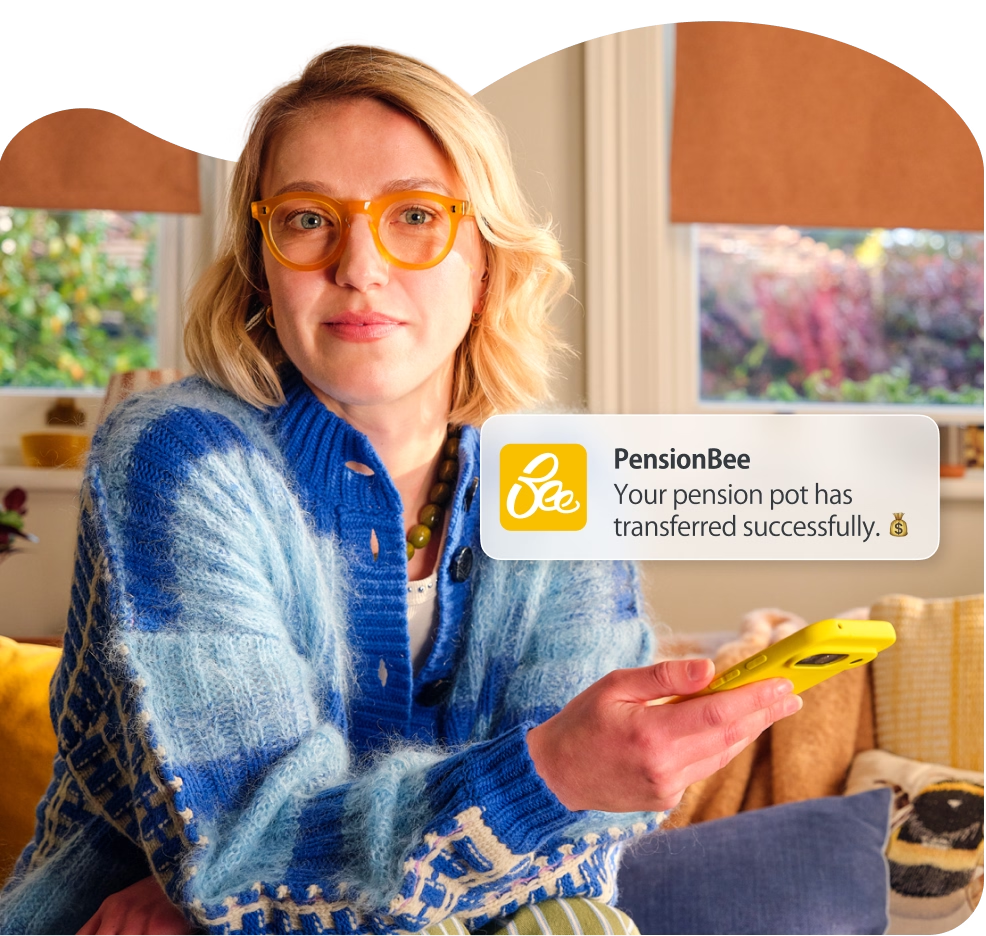
New PensionBee research found a stark gap in retirement savings. Disabled people who work part-time could retire with £245,000 less than a non-disabled full-time worker. Our Sick, Tired and Never Retired report looks at why.
The hidden retirement gap facing disabled people
One-in-four people in the UK is disabled, up from one-in-five a decade ago.
But the pension system wasn't built to reflect that reality. It was designed around a fairly traditional idea of working life. Stable employment, regular contributions, and a working life that followed a predictable path.
But illness and disability don't work to a schedule.
Health challenges don't just affect your day-to-day life. They can also make it harder to earn, save and plan for the future. And unlike many financial setbacks, the impact can begin years before retirement is even on the horizon.
To better understand this, PensionBee surveyed more than 900 disabled people of working age and in retirement.
The findings showed:
- 91% are worried about their future financial security;
- 48% have no pension provision beyond the State Pension;
- 52% of those with private pension savings have saved less than £10,000; and
- 46% became disabled before the age of 30.
When you become disabled has an impact too. PensionBee's modelling shows a non-disabled full-time worker could retire with £355,213. A disabled person working part-time could have just £109,886. That's a gap of £245,327.
The impact can start in childhood. The proportion of disabled children in the UK has nearly doubled in a decade, from 7% to 12%. Many of these children face extra barriers to education and work as they grow up. That makes building financial security harder from the start.
Why does disability affect pensions so much?
It's rarely one thing alone. Lower earnings, time out of work and higher day-to-day costs can all make it harder to save for the future. Over the course of a working life, those pressures can add up and leave disabled people with less in retirement.
Lower earnings
Disabled workers earn less on average than non-disabled workers. Many also work part-time or in flexible roles. While flexible work can make employment possible, some part-time roles fall below the £10,000 Auto-Enrolment threshold - the minimum earnings level at which employers must automatically enrol eligible workers into a pension scheme. That’s why pension contributions may not start automatically, meaning the savings gap can begin before it's even noticed.
Gaps in employment
Periods of illness, treatment and recovery can interrupt employment. While any worker may experience time away from their job, disabled people are often more likely to face repeated interruptions over the course of their career.
Higher costs in later life
For most people, retirement brings a chance to slow down. But disability-related costs don't necessarily ease with age. In some cases, they may even increase.
Expenses linked to care, mobility, specialist equipment or support can continue well into later life. That can leave disabled retirees balancing ongoing needs against savings that may have taken longer to build.
Housing inequalities
Disabled adults are less likely to own their home. Lower incomes, time out of work and difficulty getting a mortgage all play a part. More disabled people rent into retirement as a result. That puts extra pressure on their income later in life.
What practical steps can help?
Although many of these barriers are outside an individual's control, there are still ways to build greater financial security for later life.
Check what pension savings you already have
If you've worked for different employers over the years, you may have previous pension pots you've forgotten about.
The government's free Pension Tracing Service can help you track them down. Having a clear picture of your savings is often the first step.
Don't overlook National Insurance credits
If you receive certain benefits, you may qualify for National Insurance (NI) credits that protect your State Pension entitlement, even during periods when you're unable to work.
This includes recipients of:
Checking your NI record can help you spot any gaps.
Contribute when you can
Not everyone can afford to save regularly. But even small contributions can benefit from tax relief. Most UK taxpayers get a 25% tax top up from the government. So if you pay in £100, HMRC usually adds £25, bringing your total to £125. If your income varies month-to-month, a personal pension can give you the flexibility to contribute when you're able.
You can still save even if you're not working
You don't need to be in paid work to contribute to a personal pension. If you can set money aside, you can contribute up to £2,880 a year (2026/27) and the government will usually top it up to £3,600 through tax relief.
Carer's Credit can help protect your State Pension record while you're caring. A personal pension may also help you keep building private savings during those years.
Are you receiving the support you're entitled to?
PensionBee’s research found that half of people who meet the legal definition of disability aren't claiming disability benefits.
Benefits such as PIP aren't means-tested. That means it doesn't matter how much you earn or have in savings. Eligibility is based on how your condition affects your daily life, not your finances. If you've never applied, or if a previous application was unsuccessful, it may be worth reviewing your options. Find out more about disability benefits.
If you're still working, check your workplace pension status
If you earn below the Auto-Enrolment threshold, it's worth asking your employer about joining their pension scheme. Some will still contribute on your behalf, even if they're not required to.
What friends and family can do to help
If you know a person who lives with a disability, you may already support them in lots of ways. That could mean helping with day-to-day tasks, offering emotional support, or simply being there when they need you.
But support can also extend to their financial future. There are practical ways friends and family may be able to help a disabled person build greater financial security in retirement.
Talk about pensions
Many people don't identify as disabled, even when they are. And many carers don't realise how much their caring role can affect their long-term savings. Starting that conversation and sharing your knowledge can be the first step towards someone getting support they didn't know existed.
Contribute to their pension directly
You can pay into someone else's pension through what's known as a third party contribution.
As with personal contributions, the government tops up what you pay in. You can contribute up to £2,880 a year (2026/27) and this usually becomes £3,600.
Help them check what they're entitled to
Many people who qualify for disability-related support don't realise they're eligible. Helping someone explore benefits such as PIP, Carer's Credit or NI credits could help protect both their current finances and their future retirement income.
You can watch our full carer's series on YouTube.
The bigger picture: what a fairer system looks like
The solutions to these challenges lie beyond personal responsibility. Lasting progress will depend on reforms across employment, pensions policy and public services.
PensionBee is calling on the Pensions Commission and the Timms Review to consider:
- Removing the £10,000 Auto-Enrolment threshold - contributions should start from the first pound earned.
- Introducing a disability pension credit - to help offset savings gaps caused by reduced hours or time out of work.
- Reforming disability benefits with retirement in mind - future changes should consider long-term impact on retirement, not just short-term costs.
- Encouraging genuinely inclusive employment - flexible and accessible workplaces help disabled people stay in work and keep saving.
- Increasing public awareness - too many disabled people don't know what financial support they're entitled to. Raising awareness could help close some of the gaps in support and retirement savings.
For nearly half of disabled people, the State Pension is the only pension they have. That's why decisions about disability support matter not just in the short term, but for retirement outcomes decades from now.
Read the full findings and policy recommendations in our Sick, Tired and Never Retired report.
Risk warning
As always with investments, your capital is at risk. The value of your investment can go down as well as up, and you may get back less than you invest. This information should not be regarded as financial advice.
Period | Market Event | FTSE World TR GBP (%) | 4Plus Plan (%) |
|---|---|---|---|
4Plus Plan’s inception – 6 Sept 2013 | QE Tapering, China Interbank Crisis and its aftermath | -5.44 | -2.41 |
3 Oct 2014 – 15 May 2015 | Oil price drop, Eurozone deflation fears & Greek election outcome | -5.87 | -1.77 |
7 Jan 2016 – 14 Mar 2016 | China’s currency policy turmoil, collapse in oil prices and weak US activity | -7.26 | -1.54 |
15 June 2016 – 30 June 2016 | BREXIT referendum | -2.05 | -1.07 |










%201.png)